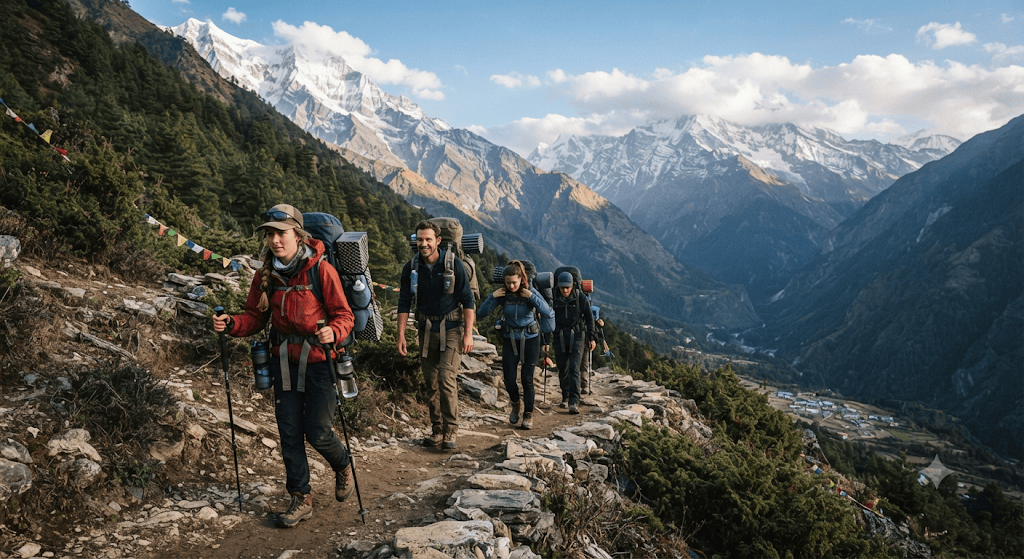
Every first-time trekker imagines the trail before actually walking it — and almost always gets a few things wrong. It’s not about lacking fitness or gear; it’s the small, practical lessons that only show up once you’re actually on the mountain. Here’s what tends to surprise most people the first time around.
Fitness Isn’t the Same as Trek-Readiness
Being generally active doesn’t automatically prepare your body for hours of continuous incline, altitude changes, and uneven terrain. Trek-specific training — stairs, weighted walks, longer walking sessions — matters far more than general gym fitness.
Breaking In Shoes Is Non-Negotiable
New trekking shoes worn for the first time on the trail is one of the most common rookie mistakes. Blisters that seem minor on day one can derail an entire trek by day two. Shoes need to be worn and walked in well before the actual trip.
Layering Beats Bulk
Carrying one heavy jacket “just in case” is less effective than multiple thin layers. Weather on a trek can shift quickly — layers let you adjust in minutes instead of overheating or freezing for hours.
Pace Yourself, Not the Group
New trekkers often try to match the pace of fitter or more experienced people in the group, which leads to early exhaustion. A slow, steady pace almost always outperforms a fast start followed by a forced crawl.
Altitude Sickness Doesn’t Care About Fitness Level
Even strong, fit trekkers can be hit by altitude sickness, since it’s about acclimatization, not stamina. Ignoring early symptoms like headaches or nausea, hoping they’ll pass, is a mistake that can escalate quickly.
Pack Less Than You Think You Need
First-time trekkers tend to overpack “just in case” items that never get used, while underestimating how much extra weight slows them down. A tighter, well-thought-out pack beats a heavier “prepared for everything” one.
The Silence Is the Real Reward
No amount of research prepares you for how different the mountains feel in person — the quiet, the scale, the disconnect from everyday noise. It’s usually not the summit photo that stays with people, but that unexpected stillness along the way.
Bottom Line
A first trek always teaches more than any blog or packing list can. But knowing what’s coming — the blisters, the pacing mistakes, the altitude surprises — makes that first trail a little less overwhelming, and a lot more enjoyable.

