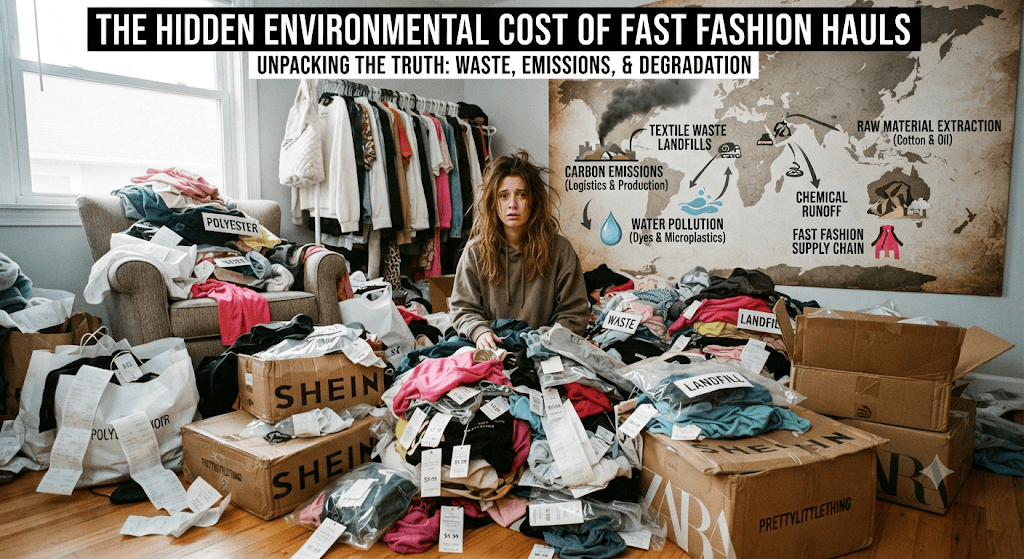
The Hidden Environmental Cost of Fast Fashion Hauls

A ₹300 top that’s trendy for one season and forgotten the next feels harmless in isolation. Multiplied across millions of similar purchases, though, fast fashion carries an environmental cost that rarely shows up on the price tag.

The Resource Cost Before It Even Reaches You

Producing a single garment involves significant water and energy use — particularly for cotton cultivation and dyeing processes — well before it ever reaches a store shelf. Fast fashion’s business model depends on producing at massive volume and speed, multiplying this resource cost across an enormous number of garments made to be worn only briefly.

The Waste Problem After You’re Done

Garments designed for short-term trend cycles are often made from cheaper, lower-quality materials that don’t hold up to repeated wear or resale. Much of this clothing ends up discarded within a year or two, contributing to a fast-growing volume of textile waste, most of which isn’t recycled and ends up in landfills.

Synthetic Fabrics and Microplastics

A large share of fast fashion is made from synthetic fibers like polyester, which shed microplastic fibers with every wash — fibers that eventually make their way into waterways and, ultimately, the food chain. This is a slower, less visible cost, but a real one.

The “Haul Culture” Problem

Social media content built around hauls and constant new outfits normalizes a pace of consumption that has little to do with actual need. It reframes buying and quickly discarding clothing as entertainment, which quietly increases demand for the fastest, cheapest production cycles.

What a Lighter Approach Looks Like

  • Buy fewer, better pieces that are likely to be worn repeatedly, not just once for content
  • Check fabric composition and lean toward natural fibers where possible, which tend to last longer and shed less
  • Repair before replacing — a small tear or loose button doesn’t always mean a garment is done
  • Resell or donate rather than discard, extending a garment’s life beyond your own closet

Bottom Line

Fast fashion’s low price hides a cost that shows up elsewhere — in water use, textile waste, and microplastic pollution that isn’t part of the transaction at checkout. None of this means giving up new clothes entirely; it just means being a little more deliberate about how often, and how much, gets bought and discarded.
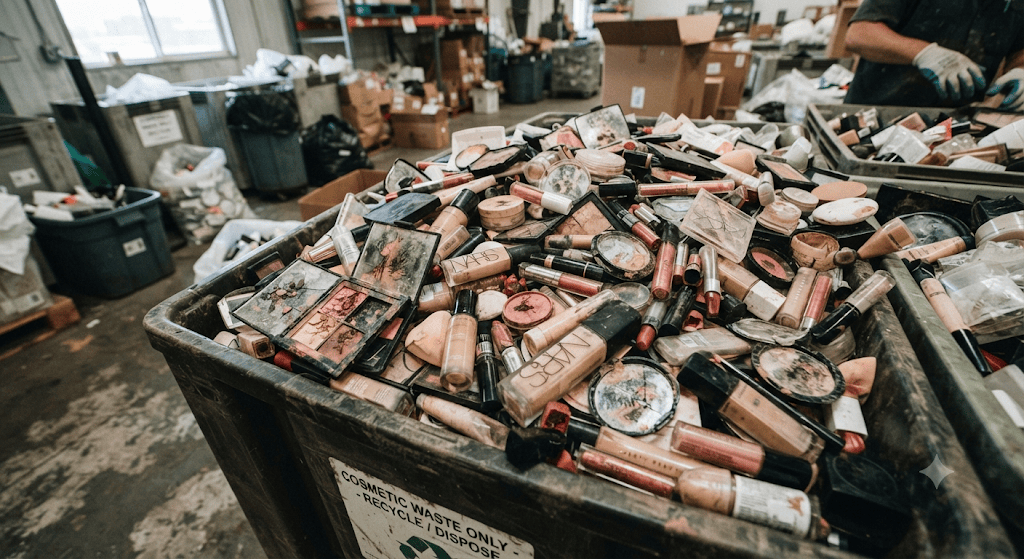
The Environmental Cost of “Fast Beauty” (Skincare & Makeup Waste)

Fast fashion gets most of the criticism, but the beauty industry runs on a nearly identical model — cheap, frequently replaced products, endless new launches, and packaging designed to be thrown away, not reused. “Fast beauty” is the quieter cousin of fast fashion, and its environmental footprint deserves just as much attention.

The Packaging Problem

Skincare and makeup packaging is notoriously hard to recycle. Small plastic components, mixed materials (like a plastic tube with a metal cap), and leftover product residue mean most beauty packaging never actually makes it through standard recycling systems, even when it carries a recycling symbol.

The “Empties” Culture

Social media has turned finishing a product into content — “empties” videos and hauls celebrate rapid consumption as a lifestyle. This normalizes buying and discarding at a pace that has little to do with actual need, driven more by trend cycles than genuinely running out of something.

Ingredients Have a Footprint Too

Beyond packaging, many beauty ingredients carry their own environmental cost — palm oil linked to deforestation, mica linked to unregulated mining, and synthetic microbeads that persist in waterways long after they’re washed down the drain.

Expiry-Driven Waste

Skincare and makeup have shorter shelf lives than most products people own, and much of what’s purchased is never fully used before it expires or goes out of trend. Half-used products piling up in drawers is its own quiet form of waste.

What a Lighter Beauty Routine Looks Like

  • Buy what you’ll actually finish, not what’s trending this week
  • Choose multi-use products over single-purpose items that duplicate what you already own
  • Look for refillable packaging, which is slowly becoming more available from larger brands
  • Support brands with take-back or recycling programs, where empties are collected and properly processed
  • Resist the urge to constantly rotate — a smaller, well-used collection beats a large, half-finished one

Bottom Line

Beauty products aren’t going away, and they don’t need to. But the pace at which they’re bought, used, and discarded is where the real environmental cost lies. A slower, more intentional approach to skincare and makeup doesn’t mean giving anything up — it just means using what you already have a little more fully before reaching for the next thing.