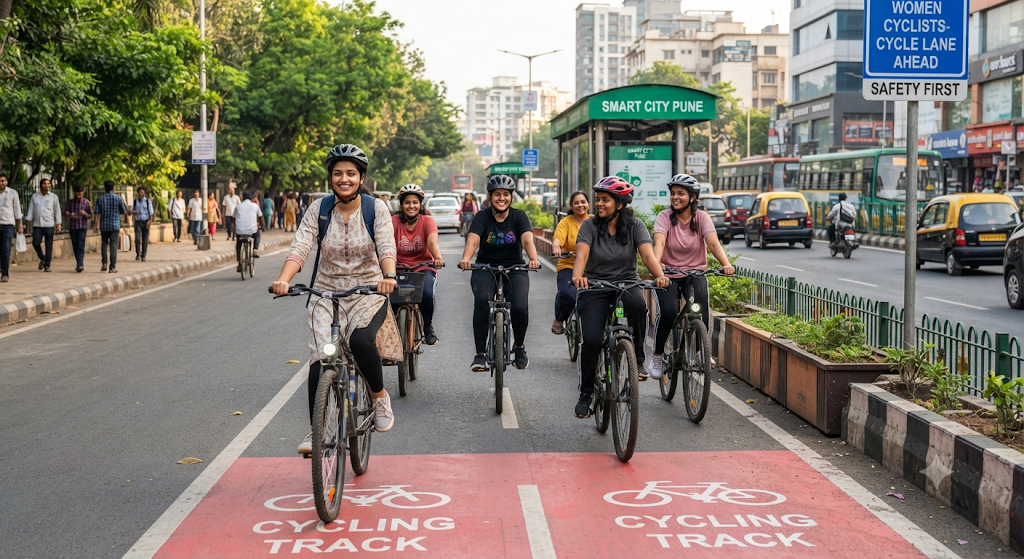
How Indian Cities Are (Slowly) Becoming More Cycle-Friendly for Women

The Gender Gap Is Real

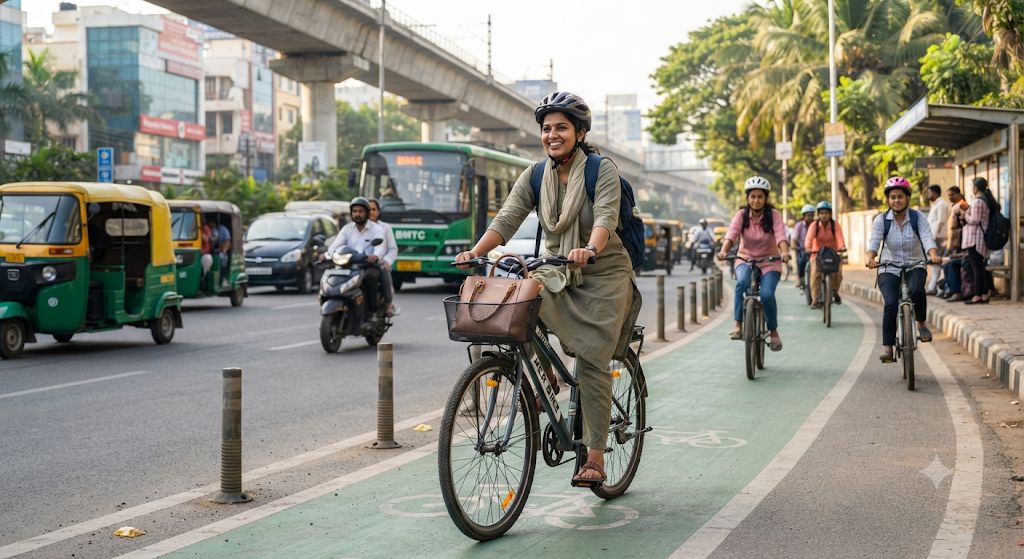
Studies on cycling in Indian cities have flagged a clear pattern: women cyclists face unwarranted gestures and hostile behaviour from male motorists, which pushes many to avoid cycling altogether or change their routes to stick to busier, better-lit streets. Urban infrastructure, researchers note, has largely been designed around able-bodied, middle-class men — not around the women and girls who might benefit most from cheap, independent transport.

What’s Slowly Changing

Under the Smart Cities Mission, the India Cycles4Change Challenge pushed dozens of Indian cities to pilot cycling infrastructure, with gender-inclusive design increasingly part of the brief. A 2020 roundtable convened by Bengaluru’s transport authority with WRI India specifically flagged issues that matter to women cyclists: better street lighting for evening riders, safe cycle parking and a connected network of cycle tracks. Some cities have also piloted cycle-repair clinics so women aren’t stranded by a flat tyre with no one to help.

Cycling Hasn’t Disappeared — It’s Been Pushed to the Margins

Recent research across Maharashtra cities found that cycling volumes remain high at peak hours even where infrastructure is incomplete — cyclists haven’t gone away, they’ve simply become less visible on streets not designed with them in mind. A broader 2026 multi-city study covering Delhi and Chennai found that policy, implementation and gender gaps continue to hold back safer cycling for women specifically.

What Actually Helps

  1. Protected, well-lit cycling lanes rather than painted lines on traffic-heavy roads
  2. Cycle parking near markets, schools and transit stations
  3. Enforcement against harassment, not just infrastructure
  4. Involving women cyclists directly in planning, not just consulting them after the fact

Bottom Line

Cities that want more women cycling need to design for them from the start — lighting, safety and respect, not just paint on the road. Until then, the gender gap on India’s streets will keep outpacing the gains in infrastructure.


The Rise of Farm Stays: Why City Women Are Booking Them

The Backlash to Perfectly Curated Trips

After a few years of hyper-Instagrammable resorts and infinity pools, a countertrend has emerged: farm stays that offer nothing more polished than fresh air, home-cooked meals, and actual physical work like harvesting vegetables or milking. For urban women whose daily life is screen-heavy and schedule-bound, the appeal is precisely the lack of curation.

What a Farm Stay Actually Looks Like

Most farm stays in India are run by families on working farms — coffee estates in Coorg, orchards in Himachal, paddy fields in Kerala — who host a small number of guests in simple rooms and include home-cooked meals as part of the experience. The draw isn’t luxury; it’s proximity to a slower, more physical rhythm of life that city routines don’t allow.

Why Women Specifically Are Driving the Trend

Many farm stays are also women-run, with host families where the woman of the house manages cooking, guest experience, and often the farm’s produce-based income stream. For urban women visiting, that creates a different kind of connection — less transactional tourist-host dynamic, more genuine exchange between women running very different lives.

A Break From Decision Fatigue

Part of the mental relief of a farm stay is the absence of choice paralysis — there’s no menu of forty activities to optimize, just the farm’s actual daily rhythm to join or not. For anyone whose regular life is full of constant micro-decisions, that structural simplicity is doing real psychological work, not just aesthetic work.

Bottom Line

Farm stays aren’t trying to compete with luxury resorts, and that’s exactly why they’re gaining ground — they’re offering something resorts structurally can’t: an actual break from being managed and catered to.

How to Plan a Multi-Generational Family Trip Without Chaos

Accept That One Itinerary Won’t Fit Everyone

Grandparents want rest and familiar comforts, parents are managing kids and logistics, and younger family members want to actually explore. Trying to build a single schedule that satisfies all three is where most multi-generational trips start to strain. The fix isn’t compromise on every activity — it’s building in optional branches within the same trip.

Choose a Base, Not a Circuit

A single well-located base with day trips radiating out works far better than a moving itinerary with multiple hotel changes. It cuts down on the packing-unpacking cycle that’s exhausting for kids and genuinely hard on older joints, while still giving everyone new things to see each day.

Talk Budget Before You Talk Destination

Money is the fastest way a family trip turns tense, especially across generations with different financial comfort zones. Deciding upfront how costs will be split — evenly, by income, or with one generation treating a portion — avoids the awkward math happening in real time at checkout.

Build In Deliberate Together-Time and Apart-Time

Not every meal or activity needs the whole group. Scheduling a few must-do shared moments — one big dinner, one shared excursion — while leaving other blocks open for smaller groups to split off keeps the trip feeling like a choice rather than an obligation.

Plan for the Medical “What Ifs” Early

With older and younger travelers in the same group, having a shared understanding of medications, allergies, and the nearest reliable hospital at each stop isn’t paranoia — it’s the kind of prep that lets everyone actually relax once the trip starts.

Bottom Line

A multi-generational trip works when it’s designed around flexibility, not around forcing everyone into the same pace. Plan for difference, and the trip becomes a lot less chaotic than it looks on paper.

Why More Indian Women Are Switching to Cycling Commutes

The Gap Is Real, and It’s Been Huge

As of the 2011 census, roughly 20 percent of Indian men commuted by bicycle compared to under 5 percent of women — a gender gap researchers have called among the highest in the world for cycling specifically. That number is the backdrop against which any “rise in women’s cycling” story has to be told honestly.

Where the Real Movement Is Happening

The most measurable shift so far isn’t in cities — it’s among rural schoolgirls. A peer-reviewed study tracking national survey data found cycling among rural girls more than doubled between 2007 and 2017, a change researchers linked to free bicycle distribution schemes originally designed to keep girls in school by cutting down long, exhausting walks. Researchers have described it as a quiet but genuine revolution in female mobility.

Urban Women Are Starting to Follow

In cities, the shift is slower but visible — driven partly by rising health consciousness and partly by advocacy groups documenting women reclaiming road space that’s historically felt unsafe or unwelcoming to them. Manufacturers have also started designing bicycles with women’s comfort specifically in mind, rather than treating cycling gear as a one-size-fits-all category.

Why This Isn’t Just a Fitness Trend

Cycling addresses something bicycles have historically done for women everywhere — independence of movement that doesn’t depend on being driven, escorted, or waiting for shared transport. In a country where women’s mobility outside the home is still measurably constrained, a bicycle is a small but concrete tool for autonomy.

Bottom Line

Indian women aren’t cycling at parity with men yet, not close. But the direction of change — especially among the next generation of girls — suggests this gap is finally starting to narrow, one commute at a time.

The Environmental Cost of Destination Weddings

The Guest Travel Problem

The single biggest environmental cost of a destination wedding often isn’t the venue — it’s getting a hundred-plus guests there by flight for a single weekend. Multiply that across India’s peak wedding season and the cumulative footprint is significant, even before a single flower is arranged.

Single-Use Decor, Multiplied

Elaborate floral installations, printed welcome kits, single-use drapes, and themed props are frequently built for one event and discarded after. What looks like abundance in photographs is, functionally, a large volume of short-lived material waste — much of it non-biodegradable.

Water-Stressed Destinations, Water-Heavy Events

Many popular Indian wedding destinations — hill towns, desert palaces, lakeside venues — already deal with seasonal water stress. Multi-day events with pools, elaborate catering, and daily linen changes place real strain on local water systems that locals live with long after the wedding party leaves.

What a Lower-Impact Version Looks Like

Couples opting for local sourcing of flowers and food, rental decor instead of custom-built installations, digital invites, and smaller guest lists are quietly changing what a “big fat Indian wedding” can look like — without giving up the celebration itself.

Bottom Line

Destination weddings aren’t going away, but the assumption that scale and spectacle are the only way to celebrate is worth questioning — especially in places that will carry the environmental cost long after the guests go home.

Packing for a Trip in Under 30 Minutes: A Practical System

Packing has a way of expanding to fill however much time you give it — an hour of deliberation over outfit combinations, second-guessing what to bring, refolding things that were already fine. With a repeatable system, most trips can be packed in well under 30 minutes.

Keep a Standing “Base Kit” Ready

Toiletries, chargers, adapters, and basic first-aid items are needed on nearly every trip, yet get re-packed from scratch each time. Keeping a dedicated, always-ready pouch with these essentials means one major packing category is already done before you even start.

Use the “3-Day Rule” for Clothing

Rather than packing a different outfit for every single day, plan around a small set of mix-and-matchable pieces that can be worn in different combinations across roughly three days, then repeated with minor variation — this alone cuts packing decisions dramatically for longer trips.

Pick a Color Scheme Before Choosing Items

Selecting clothes from within one or two coordinating color families means almost anything you grab can be paired with anything else, removing the need to individually plan each outfit combination in advance.

Lay Everything Out Before Packing the Bag

A quick flat layout of everything you’re bringing — clothes, essentials, extras — lets you spot immediately what’s missing or excessive, which is far faster than packing and repacking directly into the bag while second-guessing choices.

Roll, Don’t Fold

Rolling clothing instead of folding saves both space and time, and tends to reduce wrinkling as a side benefit — a small technique that speeds up the actual packing motion once everything is laid out and ready.

Use a Fixed Packing Order

Packing in the same sequence every time — bottom-heavy items first, then clothing, then anything fragile or frequently accessed on top — removes the decision fatigue of figuring out bag organization from scratch on every trip.

Keep a Reusable Packing Checklist

A saved checklist (digital or printed) covering your standard trip essentials means packing becomes a quick scan-and-confirm process rather than trying to mentally reconstruct everything you might need each time.

Accept That Minor Forgetting Is Fine

Most forgotten items are replaceable at the destination without much hassle. Letting go of the need to pack “perfectly” removes a significant chunk of the deliberation time that slows packing down in the first place.

Bottom Line

Fast packing isn’t about rushing — it’s about removing repeated decisions through a standing system: a ready base kit, a simple color scheme, and a fixed process. Once the system is set up once, most trips genuinely can be packed in well under half an hour.

The Hidden Environmental Cost of Fast Fashion Hauls

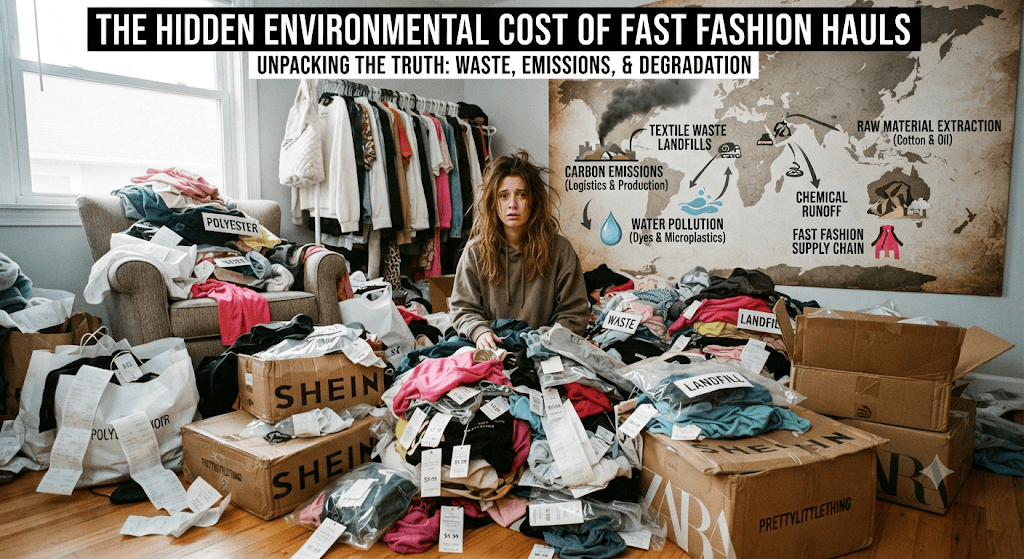
A ₹300 top that’s trendy for one season and forgotten the next feels harmless in isolation. Multiplied across millions of similar purchases, though, fast fashion carries an environmental cost that rarely shows up on the price tag.

The Resource Cost Before It Even Reaches You

Producing a single garment involves significant water and energy use — particularly for cotton cultivation and dyeing processes — well before it ever reaches a store shelf. Fast fashion’s business model depends on producing at massive volume and speed, multiplying this resource cost across an enormous number of garments made to be worn only briefly.

The Waste Problem After You’re Done

Garments designed for short-term trend cycles are often made from cheaper, lower-quality materials that don’t hold up to repeated wear or resale. Much of this clothing ends up discarded within a year or two, contributing to a fast-growing volume of textile waste, most of which isn’t recycled and ends up in landfills.

Synthetic Fabrics and Microplastics

A large share of fast fashion is made from synthetic fibers like polyester, which shed microplastic fibers with every wash — fibers that eventually make their way into waterways and, ultimately, the food chain. This is a slower, less visible cost, but a real one.

The “Haul Culture” Problem

Social media content built around hauls and constant new outfits normalizes a pace of consumption that has little to do with actual need. It reframes buying and quickly discarding clothing as entertainment, which quietly increases demand for the fastest, cheapest production cycles.

What a Lighter Approach Looks Like

  • Buy fewer, better pieces that are likely to be worn repeatedly, not just once for content
  • Check fabric composition and lean toward natural fibers where possible, which tend to last longer and shed less
  • Repair before replacing — a small tear or loose button doesn’t always mean a garment is done
  • Resell or donate rather than discard, extending a garment’s life beyond your own closet

Bottom Line

Fast fashion’s low price hides a cost that shows up elsewhere — in water use, textile waste, and microplastic pollution that isn’t part of the transaction at checkout. None of this means giving up new clothes entirely; it just means being a little more deliberate about how often, and how much, gets bought and discarded.

Slow Travel vs Fast Travel: Why Fewer Places Might Mean More

Somewhere along the way, travel started being measured by how many places you can visit, not how well you actually experienced any of them. Slow travel pushes back against that — fewer destinations, more time in each, and a very different kind of trip.

What Fast Travel Actually Gives You

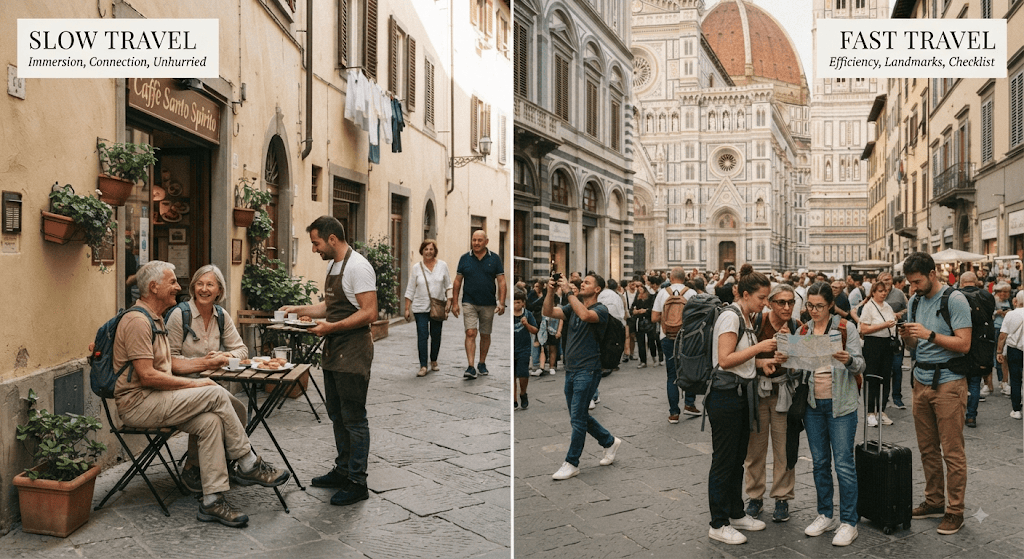
Fast travel — five countries in ten days, a new city every 48 hours — delivers photos, checkmarks, and a broad surface-level sense of many places. It works well for people who genuinely want a highlight-reel overview, or who may not get the chance to return.

What Fast Travel Costs You

The tradeoff is depth. A city seen for one rushed day rarely allows for the kind of unplanned moments — a conversation with a shopkeeper, getting comfortably lost, revisiting a spot that mattered — that tend to be what people actually remember months later.

What Slow Travel Looks Like in Practice

Slow travel means picking fewer destinations and staying longer in each — days or weeks instead of hours. It allows time to settle into a place: understanding the rhythm of daily life there, not just its landmarks.

The Case for Repetition

Returning to the same café, market, or neighborhood multiple times over a longer stay builds a kind of familiarity that a first visit never can. Slow travel often means less novelty per day, but more genuine connection to the place by the end.

It’s Often Kinder to Your Budget and Body Too

Constant movement — new hotels, new transport, new logistics every day or two — is exhausting and expensive. Staying longer in fewer places usually means better accommodation deals, less transit cost, and considerably less travel fatigue.

Choosing What’s Right for the Trip

Fast travel isn’t wrong — sometimes a short window genuinely calls for covering more ground. But when time allows, slow travel tends to leave a much stronger, more personal impression of a place than a checklist of destinations ever does.

Bottom Line

A trip isn’t measured by how many pins you can drop on a map. Spending real time in fewer places, letting a destination unfold slowly instead of rushing through it, often leaves you with something a fast itinerary simply can’t — an actual sense of having been somewhere, not just passed through it.

Urban Gardening: Growing Your Own Vegetables in a Small City Home

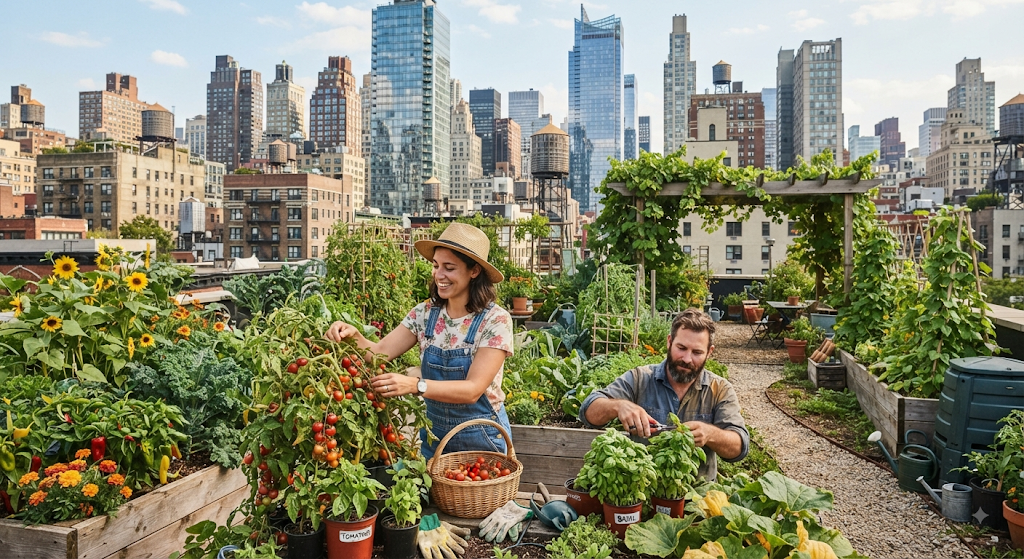
Growing your own vegetables sounds like something reserved for people with a farm or a sprawling backyard. In reality, a few pots, some sunlight, and a bit of consistency are enough to start — even in a compact city apartment.

Start With What Gets Sunlight

Most vegetables need at least 4-6 hours of direct sunlight. Before choosing what to grow, observe your balcony or window ledge across a day to see where light actually falls — this single factor determines more about your success than almost anything else.

Easiest Vegetables for Beginners

Leafy greens like spinach and fenugreek (methi), along with herbs like mint and coriander, grow quickly and forgive beginner mistakes more easily than fruiting vegetables like tomatoes or chillies, which need more consistent care and space.

Containers Don’t Need to Be Fancy

Grow bags, old buckets with drainage holes, or even repurposed plastic containers work just as well as expensive ceramic pots. What matters more is adequate depth for root growth and proper drainage to avoid waterlogging.

Get the Soil Mix Right

A simple mix of garden soil, compost, and coco peat (roughly equal parts) gives most vegetables enough nutrients and drainage to thrive in containers, where nutrients deplete faster than in open ground.

Water Consistently, Not Excessively

Overwatering is one of the most common mistakes in container gardening. Checking whether the top inch of soil is dry before watering again — rather than watering on a fixed daily schedule — prevents root rot and keeps plants healthier.

Compost What You Can

Kitchen scraps composted at home (even a small balcony setup) provide a steady, free nutrient source for your containers, closing the loop between your kitchen waste and your garden’s growth.

Manage Expectations

Urban gardening won’t replace your grocery shopping, and that’s fine — even a small harvest of fresh herbs or greens reduces some dependency on store-bought produce while giving a satisfying, hands-on connection to your food.

Bottom Line

A small city home doesn’t need to rule out growing your own food. A few well-chosen pots, some consistent care, and a little patience are often all it takes to turn an unused balcony corner into a small, functioning garden.