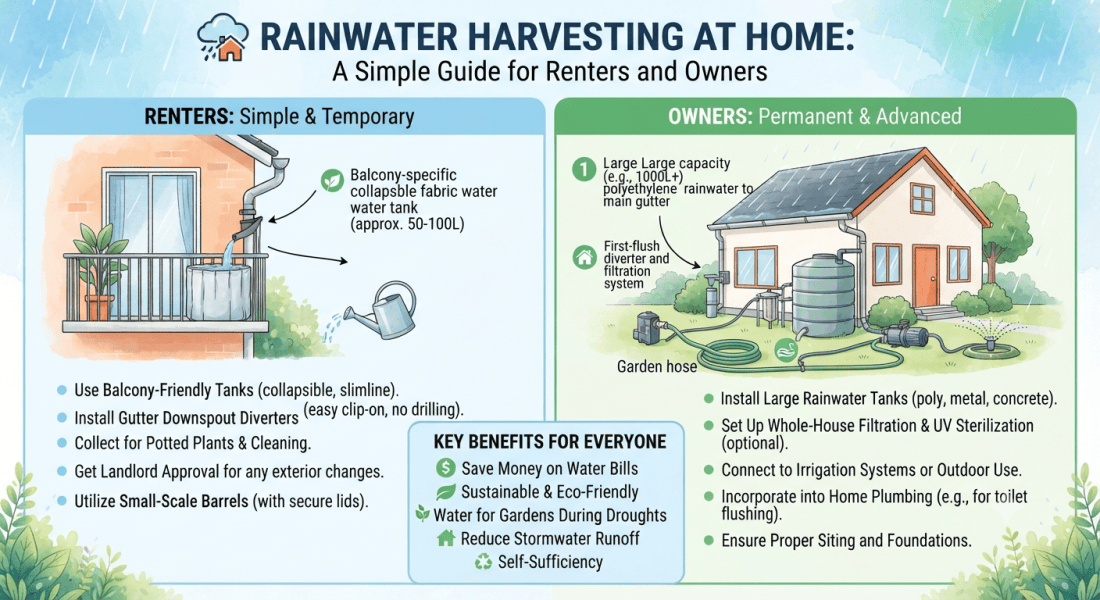
Rainwater harvesting sounds like a major home renovation project reserved for house owners with a big budget. In reality, there are options across a wide range of scale and investment — including simple setups that work even for renters in apartments.
Why It’s Worth Doing
Beyond reducing dependence on municipal or groundwater supply, rainwater harvesting helps recharge local groundwater tables and reduces stormwater runoff that would otherwise overwhelm drainage systems, especially in cities where over-extraction has caused water tables to drop significantly over the years.
For Renters: Small-Scale Options
Balcony collection barrels — a simple barrel or large container positioned to catch runoff from a balcony roof or overhang can supply water for plants, cleaning, or non-drinking household use
Diverting downspout water temporarily into a container during heavy rain, where structurally possible without permanent modification
Using harvested water for gardening specifically, which avoids the more complex filtration needed for potable use
For Homeowners: A More Complete System
Rooftop catchment — channeling roof runoff through gutters into a storage tank, ideally with a first-flush diverter to remove initial dirty runoff before storage
A basic filtration setup — mesh filters to remove debris, followed by sand or charcoal filtration for water intended for non-drinking uses like gardening or cleaning
A recharge pit or well, if space allows, to direct excess collected water back into the ground rather than letting it run off into street drainage
What Rainwater Should (and Shouldn’t) Be Used For
Without proper purification, harvested rainwater is best used for gardening, washing, or topping up non-potable needs — not drinking water, unless a more thorough filtration and treatment system is specifically installed and maintained for that purpose.
Basic Maintenance Matters
Even a simple barrel setup needs periodic cleaning to prevent mosquito breeding and algae buildup, and any filtration components need regular checking — a rainwater system that’s neglected can create more problems than it solves.
Government Incentives Worth Checking
Several Indian cities have introduced rainwater harvesting mandates or incentives for new constructions, and some municipal bodies offer subsidies or guidance for retrofitting existing homes — worth checking local regulations, since incentives and requirements vary significantly by city.
Bottom Line
Rainwater harvesting isn’t an all-or-nothing project — a renter with one balcony barrel and a homeowner with a full rooftop catchment system are both meaningfully contributing to the same larger goal. Starting small is a legitimate entry point, not a lesser version of “doing it properly.”

