A Field That Was Not Built for Them
For decades, wildlife research in India was largely a male profession. Women who wanted to do fieldwork faced a society that saw it as unsuitable work for them, and a career path that barely existed. The Wildlife Institute of India and the Salim Ali School of Ecology and Environmental Sciences were among the first institutions to open postgraduate wildlife programmes to women, and many more women have entered the field since.
Pioneers Worth Knowing
The book Women in the Wild, edited by Anita Mani, collects stories of some of these researchers. A few of the names it covers:
- Jamal Ara, often described as India’s first woman ornithologist, who taught herself in the field and published in the Bombay Natural History Society journal in 1949
- J. Vijaya, a herpetologist whose research into the killing of olive ridley turtles is credited with helping lead to a ban on the turtle trade
- Vidya Athreya, among the first in India to do long-term research on big cats using radio collars
- Uma Ramakrishnan, whose genetic work helps scientists understand tiger populations
- Divya Mudappa, who works on restoring degraded rainforest and shola habitat in the Western Ghats
What Fieldwork Actually Involves
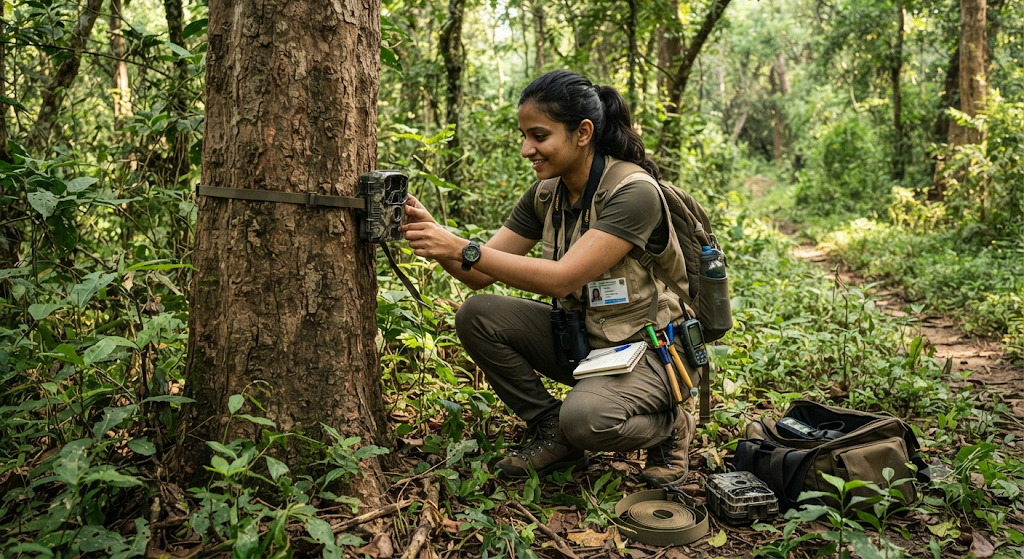
Researchers walk transects, set camera traps, collect scat and track animals, often in remote areas with basic accommodation. Work on nocturnal species means going out at night, and monsoon surveys mean leeches, mud and long stretches without a signal.
The Extra Hurdles Women Face
Women researchers describe safety concerns in remote areas, sexism from colleagues or locals, and fewer chances to be hired for field roles. Some landscapes are considered unsafe for women to work in at all. Although the POSH Act, 2013 covers workplace harassment, researchers point out that field-specific protocols and training are still thin.
Why Visitors Should Care
Many of these women work with local communities, train guides and share findings that shape conservation policy. When you visit a reserve, you are walking through places they have spent years studying.
How to Support Them
- Read their books and follow their research organisations
- Book safaris and tours with trained naturalists, including women guides
- Donate to field research programmes
- Respect research equipment such as camera traps if you spot it
Bottom Line
Most of what we know about India’s wildlife came from people who stayed out in the field longer than anyone else. More women are among them now, and that is changing what we learn and who gets to learn it.

