Night Trains in India: A Woman’s Guide to Sleeper and AC Coaches

First, a Fair Note

Safety shouldn’t depend only on a woman’s vigilance. But until systems improve everywhere, preparation helps. Millions of women use Indian Railways, so you’re far from alone.

Choosing Your Coach

  • AC coaches (3AC and 2AC) are generally quieter and more controlled than sleeper class
  • Ladies’ coaches exist on many suburban and some long-distance services
  • Lower berths are often easier for quick exits and for keeping bags in sight

Indian Railways also reserves a set of lower berths per coach in sleeper, 3AC and 2AC for senior citizens, women aged 45 and above and pregnant women, subject to availability.

Help You Can Actually Use

  • 139 is the railway helpline, integrated with the national emergency number 112 and available 24×7
  • Rail Madad lets you file complaints online or by app
  • Meri Saheli is a Railways initiative with dedicated women RPF teams focused on women travelling alone on long-distance trains
  • 1091 is the national women’s helpline

Save these before you board, not after.

Before You Board

  1. Share your train number, coach and berth with someone you trust
  2. Reach the platform early and locate your coach in daylight if possible
  3. Keep your phone charged and a power bank handy
  4. Use a small chain or cable lock for your bag

On Board

  • Note where the TTE, attendants and RPF escorts are during the journey
  • Keep valuables on your person, not under the berth
  • If someone makes you uncomfortable, change seats, speak to the staff or call 139 immediately
  • Trust your instincts; you don’t owe anyone politeness at the cost of safety

Bottom Line

A night train can be one of India’s best travel experiences. Choose your coach wisely, keep the helplines saved and remember that asking for help early is always the right call.
Women Planting Mangroves: Coastal Shields Built by Hand

Why Mangroves Matter

Mangroves are salt-tolerant forests that grow where land meets sea. Their tangled roots slow waves, trap sediment and shelter fish and crabs. They also store carbon at high rates. India is reported to rank third globally in mangrove area, and areas sitting behind mangroves suffered less damage than exposed coasts when the 2004 tsunami struck.

Women Are Leading the Work

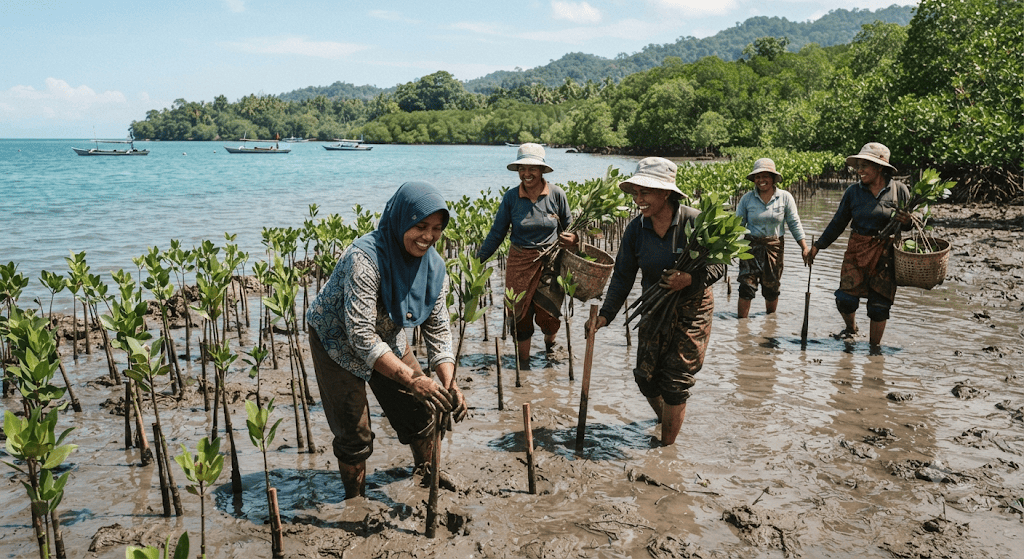
Across Andhra Pradesh, Odisha, Tamil Nadu, Maharashtra, West Bengal and Karnataka, women are managing mangrove nurseries, planting saplings and guarding forests. With many men away fishing for long periods, women have taken on the daily labour of restoration.

Stories From the Coast

Sundarbans, West Bengal. Women’s self-help groups raise saplings in nurseries and plant them along embankments. One NGO reports that 17 women’s groups there run mangrove nurseries, using an approach that links restoration to local income. The Sundarbans work later fed into a national mangrove plantation programme called MISHTI.

Puri, Odisha. Fisherwomen in Sana Jhadling tend mangrove saplings, motivated partly by memories of the devastating 1999 super cyclone.

Palghar, Maharashtra. A self-help group called Healthy Harvest restored degraded mangroves and also learned crab farming, earning about ₹85,000 a year collectively.

The Hard Part

Planting is hard, muddy work, often done knee-deep in clay. Restoration programmes are sometimes seasonal or short-lived, and weak enforcement and fragmented governance can undermine long-term success. Planting alone isn’t enough; trees need protection and follow-up for years.

How Travellers Can Help

  1. Choose guided mangrove walks or boat trips run by local cooperatives
  2. Stay quiet and keep boats at slow speed near nesting areas
  3. Never pick propagules or break roots
  4. Pay for local guides and buy from women-run stalls

Bottom Line

Mangrove restoration is slow, wet and unglamorous. The women doing it aren’t waiting for a rescue plan. They are building the coastline’s best defence themselves, one sapling at a time.

Women Who Run Community Seed Banks in India

Seed Keeping Has Always Been Women’s Work

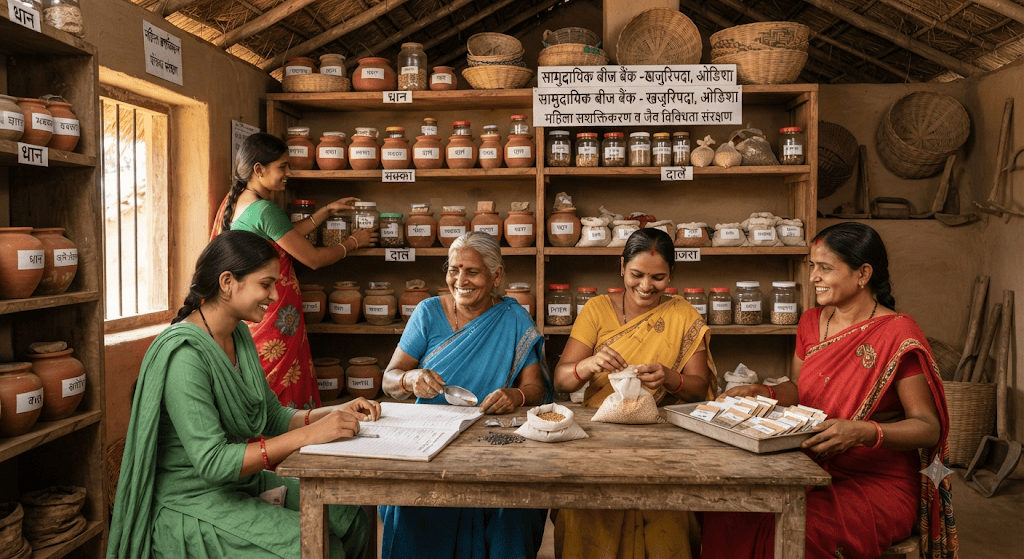
In much of rural and tribal India, women are the traditional seed-keepers. They decide which grains to save, how to store them and which varieties to plant next season. That knowledge is rarely written down, but it holds generations of experience about soil, rainfall and taste.

How a Community Seed Bank Works

A community seed bank is not a vault. It is a shared, village-run system. In Karnataka, the GREEN Foundation, which began in 1996 with five women farmers and a handful of indigenous seeds, helped set up seed banks managed by women’s self-help groups. Members take seeds free of cost, sow and harvest them, then return double the quantity to the bank. The stock grows, and the seeds stay in local hands.

What These Banks Protect

  • Native varieties suited to drought-prone, low-fertility land
  • Millets, pulses and traditional vegetables that commercial seed catalogues often ignore
  • Farmer independence, since women don’t have to buy new seed from outside companies every season

A national-level survey found around 887 traditional varieties across 71 crops being kept by community seed banks and individual custodians in 15 states. In Telangana and Madhya Pradesh, one women’s-collective seed bank is reported to hold more than 80 traditional varieties of millets, pulses, dryland rice and oilseeds.

Small Banks, Real Impact

In Odisha’s Koraput district, a women-run seed bank serves around 25 households and preserves roughly 20 varieties, including paddy, ragi, maize, chilli and beans. In Meghalaya’s West Jaintia Hills, 36 women farmers dry seeds in the sun, wrap them in cloth and store them in glass jars, using simple methods their families have relied on for generations.

The Challenges

Small seed banks struggle with pest control, proper storage and steady funding. Many also depend on NGO support to keep running.

How You Can Support This Work

  1. Buy millets, pulses and vegetables grown from native seed when you can
  2. Support organisations that fund community seed banks
  3. Visit farm stays that grow heirloom varieties and ask about their seeds

Bottom Line

A seed bank run by village women is one of the cheapest and most practical forms of climate insurance. When a crop fails elsewhere, the seeds they saved may be the ones that grow.

Women Who Restored Abandoned Stepwells Across India

Structures Built Around Women’s Lives

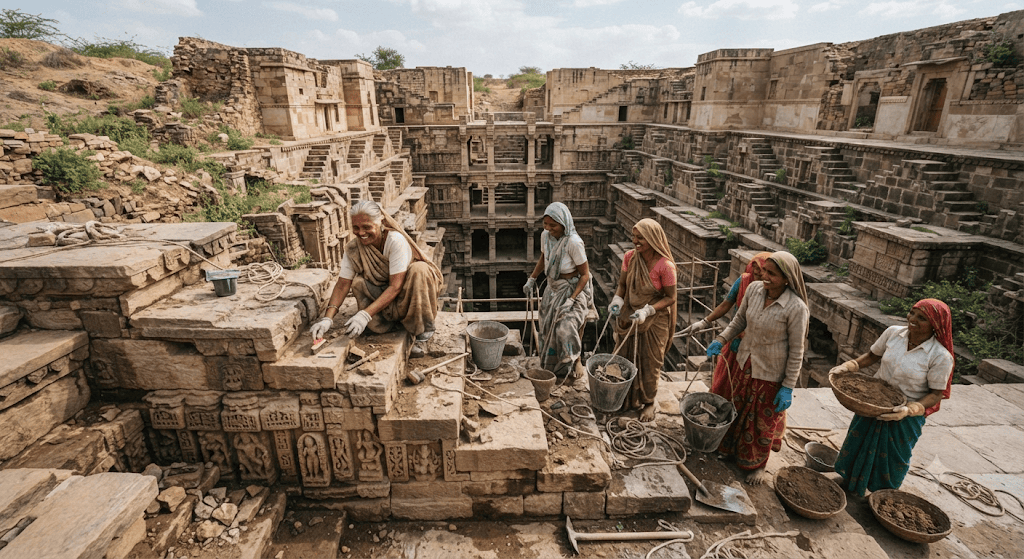
Stepwells, known as baolis or vavs, date back over a thousand years across western and northern India. Historically, they were integral to women’s daily routines — collecting water, doing laundry, meeting friends — away from the confines of home. Many were even funded by queens and women of means as acts of public philanthropy.

From Forgotten to Functional

Decades of neglect left thousands of stepwells filled with debris, sewage or simply forgotten beneath modern cities. In Secunderabad, architect Kalpana Ramesh led the revival of the centuries-old Bansilalpet stepwell — a project that took over 500 days and more than a thousand workers to bring a structure once “filled with sewage, bandicoots and rats” back into use. Ramesh’s broader restoration work has also mobilised hundreds of families to repair defunct borewells and boost groundwater levels across Hyderabad.

Community-Led Revivals

In Udhampur, Jammu and Kashmir, residents launched the Bowli Bachao Abhiyan (“Save the Stepwells Mission”) and revived 65 stepwells in just four months — largely volunteer-funded and community-driven. In Rajasthan, restoration partnerships have revived stepwells like Bhanpur Kala Ki Bawri, restoring clean water access to thousands of people and specifically easing the burden on women and children who previously walked kilometres daily to fetch water.

Why This Work Matters Beyond Heritage

Stepwells aren’t just architectural relics — they’re functioning groundwater recharge systems. A single restored stepwell in Delhi has been found to add tens of thousands of gallons of water to the local system daily; one project in Jodhpur contributes millions of gallons for irrigation and domestic use. In water-stressed regions, that’s not nostalgia — it’s infrastructure.

How to Support This Work

  1. Visit restored stepwells respectfully and support local guides
  2. Follow and donate to organisations running stepwell and water-body revivals
  3. Share these stories — most tourists have never heard of stepwells as living water systems, not just photo spots

Bottom Line

The women restoring India’s stepwells aren’t just preserving beautiful architecture — they’re reviving water systems that once centred women’s lives, and could again ease the water burden so many still carry.

The Rise of Women-Led Bird watching Tours in India

A Field That’s Been Mostly Male

Wildlife guiding in India has historically skewed heavily male, and birdwatching has been no exception, even though India is one of the world’s most visited destinations for it. That’s beginning to shift — slowly, through training programs and community initiatives that are putting binoculars in the hands of women who’d never held one before.

From First-Time Birders to Leading Tours

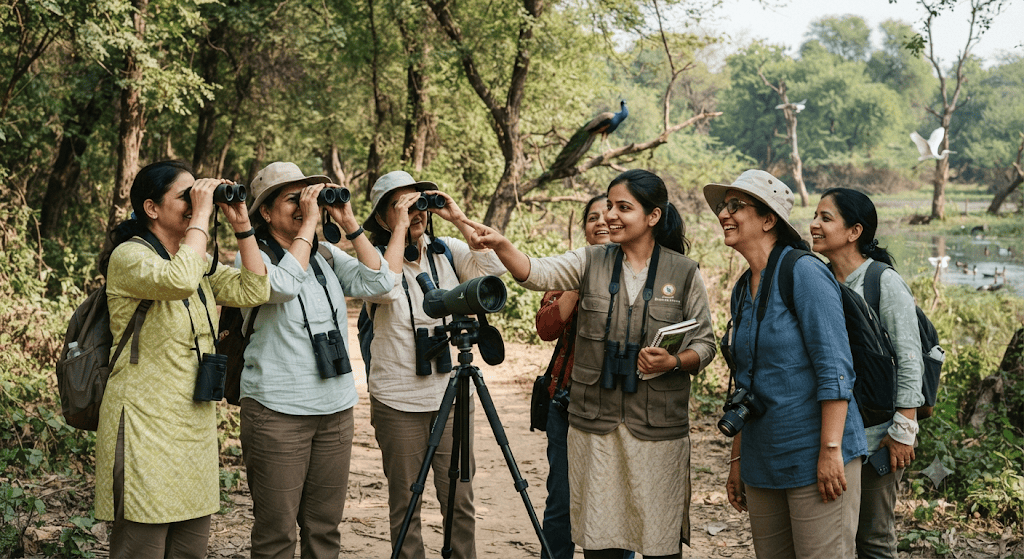
In Tadoba, a workshop introduced a group of women — many holding binoculars for the first time — to birdwatching as a guiding skill. Within months, the same women were leading birding teams during an annual bird race and actively contributing to citizen science challenges through platforms like eBird. What started as training became a new professional identity.

A Growing, Visible Community

Bird Count India’s ongoing “Women in Birding” profile series has featured women birders from cities, villages, coastal regions, mountains, forests and islands across the country — naturalists, researchers, hobbyists and citizen scientists, each with a different route into the field. Annual events like Big Bird Day have also become spaces where women birders explicitly build community and swap field notes, not just species counts.

Why This Matters for Travel

A women-led or women-friendly birding tour often changes more than who’s holding the binoculars — it can mean different pacing, different safety considerations and local knowledge shaped by a different relationship to the landscape. For women travellers specifically, it can also mean a more comfortable group dynamic for early-morning or remote outings.

How to Find and Support These Tours

  1. Look for women naturalists and guides at wildlife reserves and sanctuaries
  2. Follow regional birding clubs — many now have women coordinators
  3. Join citizen science birding events, which often include guided women-led walks
  4. Ask tour operators directly whether they employ women naturalists

Bottom Line

Birdwatching rewards patience over physical strength, which may be exactly why more women are finding their place in it — first as hobbyists, then increasingly as the ones leading others into the field.

The Rise of Women-Led Pottery and Craft Cooperatives

From Family Trade to Cooperative Business

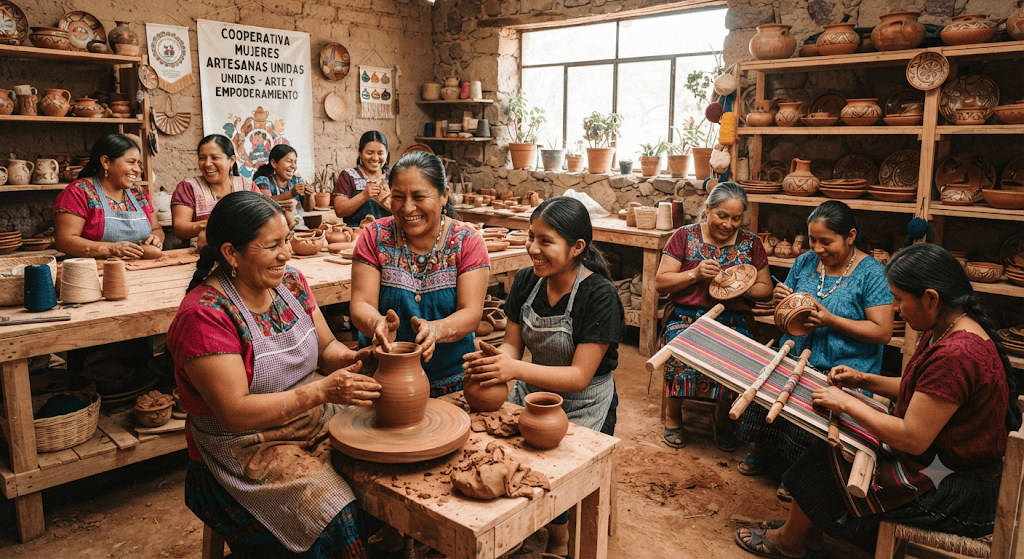
In Tamil Nadu’s Tirunelveli district, a potter earning a modest annual income from her family’s traditional pottery business started a self-help group to revive and modernise the craft. With support and small loans for raw material and labour, the group trained local women in pottery-making, eventually exporting their handcrafted pots to buyers as far as the United States.

Manipur’s Black Clay Potters

In the hills of Manipur, women artisans from the Thankhul Naga community hand-build black clay pottery entirely without a potter’s wheel — a technique passed down for generations. The craft is central to daily life in the region, but until recently, limited market access meant it generated little income. Partnerships connecting these artisans directly to international buyers have started changing that.

Why the Cooperative Model Works

Self-help groups let women artisans pool resources, share training and access markets that would be out of reach individually. Cooperatives negotiate better prices collectively, provide financial literacy and business training, and in some cases partner with fair trade organisations to ensure artisans are paid fairly for work that used to be badly undervalued.

Beyond Pottery

The same model is reviving other crafts across India — mat weaving in Tamil Nadu, Kantha embroidery in West Bengal, Chamba Rumal embroidery in Himachal Pradesh — each preserving a regional tradition while giving women a route to independent income and, often, digital tools like WhatsApp to run their businesses.

How to Support These Cooperatives

  1. Buy directly from cooperative-run stores or their verified online pages
  2. Look for craft council or SHG certification rather than mass-produced “ethnic style” copies
  3. Ask sellers where and by whom a piece was made
  4. Value the process — handmade pottery takes time that machine production doesn’t

Bottom Line

These cooperatives are doing more than keeping old crafts alive — they’re rebuilding local economies around them, with women holding the wheel, quite literally.

The Women Divers Reviving India’s Coral Reefs

Why India’s Reefs Need Help


India’s coral reefs are concentrated in four regions: the Gulf of Mannar, the Gulf of Kutch, the Andaman and Nicobar Islands, and the atolls of Lakshadweep. In the Gulf of Mannar, decades of coral mining and, more recently, repeated bleaching events have pushed reef cover into decline. Scientists attribute the damage largely to warming seas rather than tourism alone, but every additional stress — including careless diving — narrows the reef’s margin to recover.


A Homemaker Who Learned to Dive at 49


One of the more striking stories from this space is that of a Chennai-based homemaker who learned scuba diving in her late forties. Her underwater paintings and diving work around the Gulf of Mannar’s coral reefs eventually grew into an awareness movement, using art to draw attention to coral bleaching and inspire youth ambassadors for reef conservation.


The Unglamorous Restoration Work


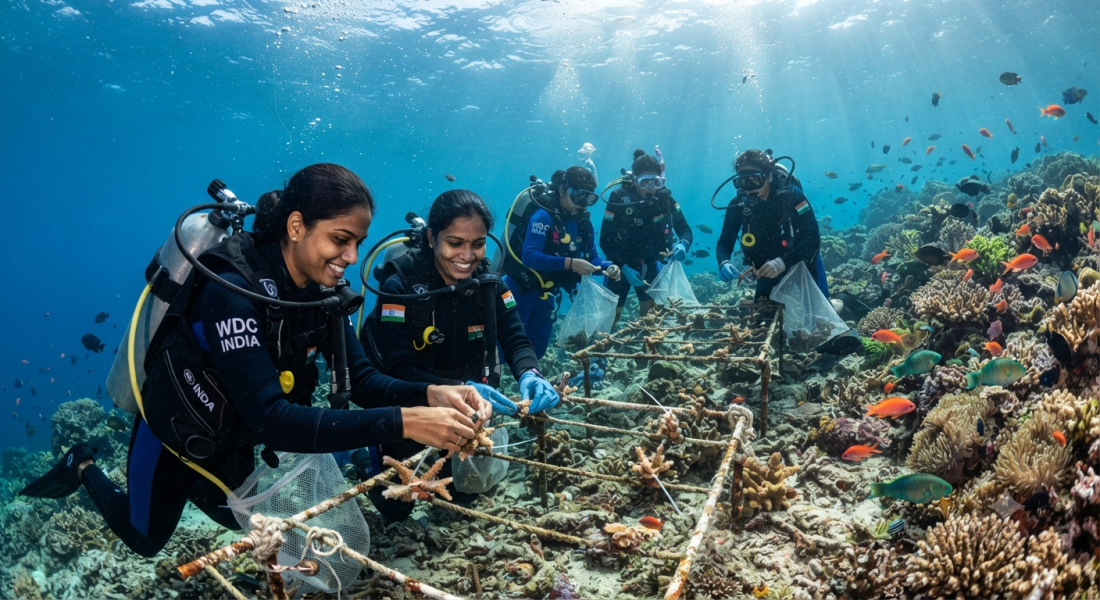
Reviving a reef isn’t a single dramatic act — it’s slow, repetitive underwater labour: clearing marine debris like abandoned fishing nets and ropes that smother live coral, transplanting coral fragments onto artificial structures, and monitoring recovery over months and years. Reef surveys around the Gulf of Mannar have found debris affecting a meaningful stretch of reef area, much of it fishing gear that has to be carefully removed by trained divers without damaging the coral beneath it.

Why This Work Suits — and Needs — More Women


Marine conservation and diving have historically skewed male, but reef restoration rewards patience, precision and steady hands over brute strength — qualities that make it a natural fit for more women to enter the field. Programs training women divers elsewhere in Asia have shown that all-female teams can run entire restoration operations, from underwater fieldwork to community outreach.

How to Support This Work as a Traveller


1. Dive only with operators who follow no-touch, no-collection rules.

2. Choose trips that include a marine conservation briefing.

3. Support NGOs and community groups doing reef debris cleanups.

4. Avoid buying coral or shell souvenirs.


Bottom Line


The women reviving India’s reefs aren’t chasing headlines — they’re doing the patient, underwater work of undoing decades of damage, fragment by fragment. The least the rest of us can do is dive, and travel, in a way that doesn’t undo their work.

Women Who Turned Their Hobby Into a Travel Business

It Usually Starts With “Can You Plan Ours Too?”

Most of these businesses don’t begin with a business plan. They begin with a friend group saying, “You always plan the best trips — can you organise ours?” A woman who loves photography walks becomes a heritage-walk guide. A home cook who travels for regional recipes starts running food trails. A regular trekker starts leading small, women-only batches.

Why Hobby-Led Travel Businesses Work

  • Genuine expertise. You already know the route, the best time to visit and the tea stall worth stopping at.
  • Built-in trust. Early customers are friends and friends-of-friends, which matters a lot in travel.
  • Low starting cost. Many begin with a WhatsApp group and an Instagram page, not an office.

The Unglamorous Parts

Turning a hobby into a business means dealing with what hobbies never ask of you: permits and local registrations, insurance, refund policies, vendor payments and last-minute cancellations. Women who make it work usually get the basics sorted early — a clear cancellation policy, a written itinerary and a small emergency fund for things that go wrong.

Starting Small Without Burning Out

  1. Run one or two trips a season before quitting anything.
  2. Partner with local guides and homestays instead of doing everything yourself.
  3. Keep groups small — it protects both safety and the quality of the experience.
  4. Collect honest feedback after every trip and actually use it.

Bottom Line

Your hobby already taught you the hardest part — knowing a place well enough to make others fall for it. The rest is systems, and systems can be learned one trip at a time.

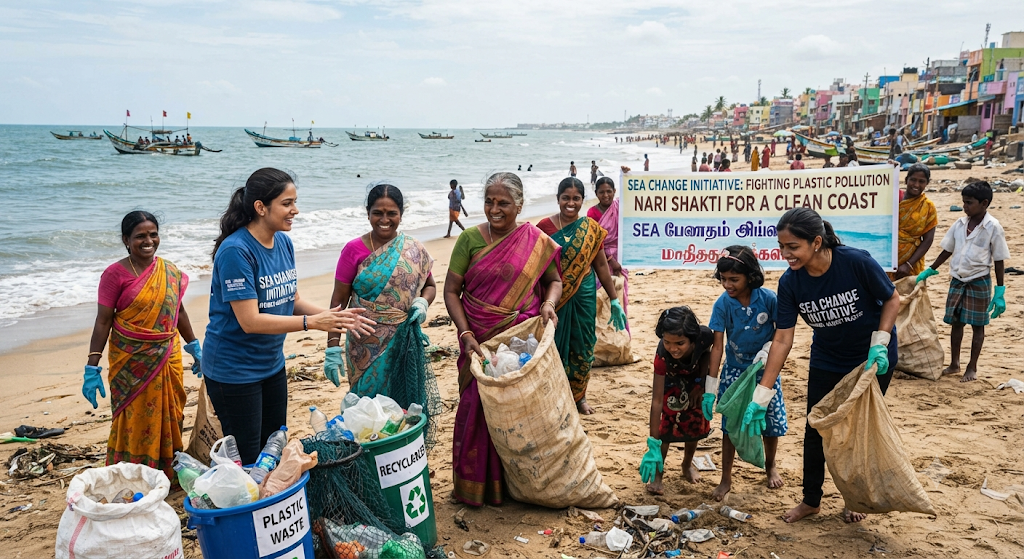
Women-Led NGOs Fighting Plastic Pollution in Coastal India

The Scale of What Coastal Communities Are Facing

In parts of coastal Karnataka, local fishing boats reportedly bring in catches where plastic waste makes up nearly half of what’s pulled from the water — a daily reality for around 700,000 people living in those communities. Coastal litter in Kerala has been measured at roughly three times the global average, layering an environmental crisis directly on top of existing economic hardship.

Turning Waste Collection Into Formal Employment

Baeru, founded by Divya Hegde, trains women in coastal Karnataka to run structured waste collection and segregation systems rather than leaving the work informal and unpaid. The initiative has helped divert large volumes of waste from contaminating the coast and the Western Ghats while creating predictable income — with social security — for over 150 women who were previously working without either protection.

Kerala’s Self-Help Group Model

In Kerala, where coastal litter runs unusually high and female workforce participation runs unusually low, projects like rePurpose’s Hara Kal have built almost entirely women-led (over 98 percent) first-mile plastic collection networks in partnership with local self-help groups. The model treats plastic interception and women’s income generation as the same project, not two separate goals.

Kudumbashree: A Template Built Two Decades Ago

Kerala’s Kudumbashree network, a state-run women’s self-help group system established in 1998, has become the backbone many newer waste-management initiatives build on — organizing women into enterprises that now also produce plastic alternatives and manage municipal waste operations under formal government partnership.

Bottom Line

The most durable answers to coastal plastic pollution in India aren’t just cleanup drives — they’re systems that pay women fairly to do work that was already happening informally, and give that work the infrastructure to actually scale.

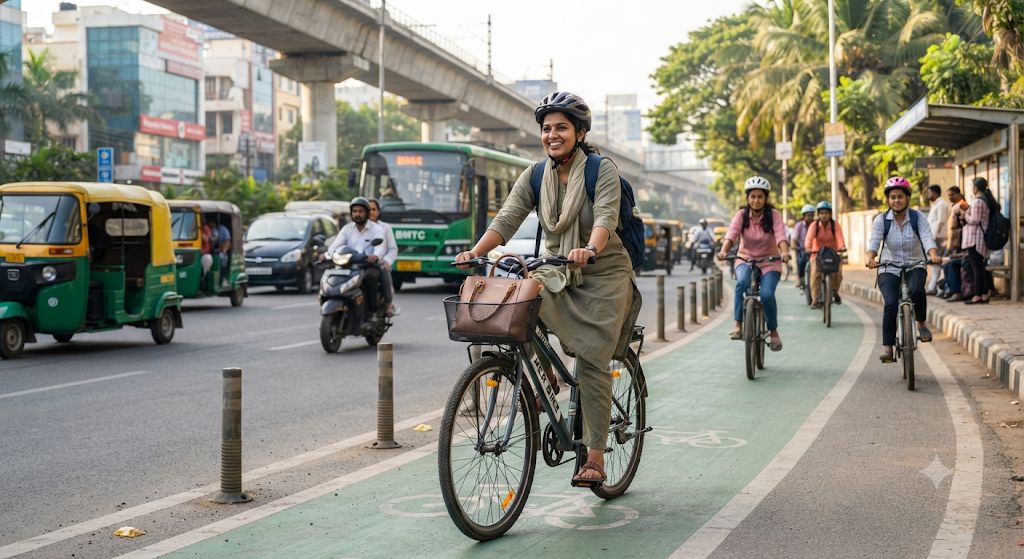
Why More Indian Women Are Switching to Cycling Commutes

The Gap Is Real, and It’s Been Huge

As of the 2011 census, roughly 20 percent of Indian men commuted by bicycle compared to under 5 percent of women — a gender gap researchers have called among the highest in the world for cycling specifically. That number is the backdrop against which any “rise in women’s cycling” story has to be told honestly.

Where the Real Movement Is Happening

The most measurable shift so far isn’t in cities — it’s among rural schoolgirls. A peer-reviewed study tracking national survey data found cycling among rural girls more than doubled between 2007 and 2017, a change researchers linked to free bicycle distribution schemes originally designed to keep girls in school by cutting down long, exhausting walks. Researchers have described it as a quiet but genuine revolution in female mobility.

Urban Women Are Starting to Follow

In cities, the shift is slower but visible — driven partly by rising health consciousness and partly by advocacy groups documenting women reclaiming road space that’s historically felt unsafe or unwelcoming to them. Manufacturers have also started designing bicycles with women’s comfort specifically in mind, rather than treating cycling gear as a one-size-fits-all category.

Why This Isn’t Just a Fitness Trend

Cycling addresses something bicycles have historically done for women everywhere — independence of movement that doesn’t depend on being driven, escorted, or waiting for shared transport. In a country where women’s mobility outside the home is still measurably constrained, a bicycle is a small but concrete tool for autonomy.

Bottom Line

Indian women aren’t cycling at parity with men yet, not close. But the direction of change — especially among the next generation of girls — suggests this gap is finally starting to narrow, one commute at a time.