Souvenir shopping feels like a harmless, even supportive part of travel — but not every souvenir actually benefits the place it comes from, and some genuinely work against it. A little awareness turns souvenir shopping into something that actually gives back.
What to Look For
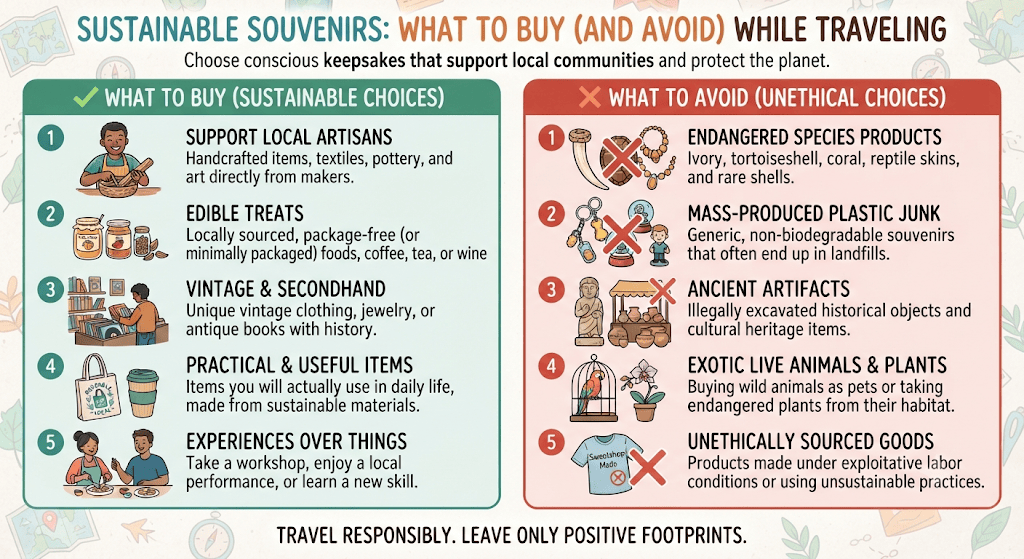
- Handmade, locally produced items — textiles, pottery, woodwork — made by artisans in the region you’re visiting, rather than imported items simply sold there
- Products from cooperatives or artisan collectives, which often ensure fairer pay reaches the actual makers rather than being absorbed by middlemen
- Items made from sustainably sourced materials, particularly relevant for wood, shell, or plant-based products
- Food items and spices sourced and packaged locally, which support regional agriculture directly
What to Avoid
- Wildlife products — anything made from coral, ivory, animal skins, shells, or feathers, which often drives illegal poaching or environmental damage regardless of how it’s marketed
- Mass-produced “local” items that are actually manufactured elsewhere and shipped in, offering no real benefit to the local economy despite the packaging
- Ancient or archaeological artifacts, genuine or convincingly fake, which are frequently illegal to export and contribute to looting when authentic
- Single-use or excessive packaging, which undercuts the sustainability of an otherwise reasonable purchase
Ask Before You Buy
A simple question to the seller — “who makes this, and where?” — often reveals a lot. Sellers proud of local, artisan-made goods are usually happy to share the story behind them; vague or evasive answers are often a signal the item isn’t what it’s marketed as.
Consider the Souvenir’s Actual Life After the Trip
A souvenir that ends up unused in a drawer within a year has the same environmental footprint as any other unnecessary purchase, regardless of how ethically it was sourced. Choosing something genuinely useful or meaningful — rather than buying for the sake of having bought something — reduces this kind of eventual waste.
Supporting the Economy Beyond Souvenirs
Buying meals, tours, and accommodations from local, small-scale businesses often has a bigger positive economic impact than souvenir shopping alone — souvenirs are one part of a broader pattern of how travel spending reaches (or bypasses) the local community.
Bottom Line
A souvenir can genuinely support a destination’s artisans and economy, or it can quietly contribute to exploitation, environmental harm, or a local economy that sees none of the benefit. A little curiosity about where an item actually comes from turns an ordinary purchase into a more meaningful one.

