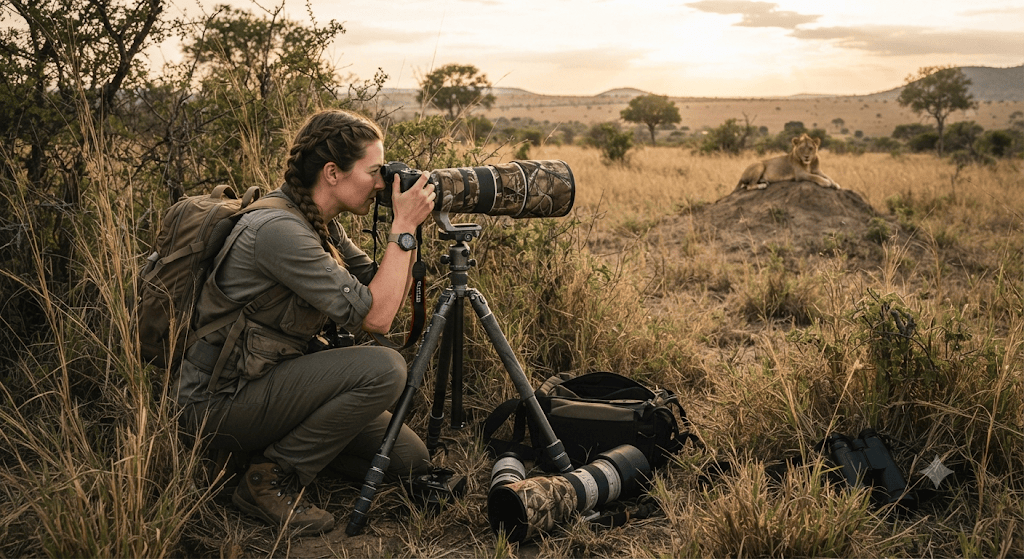
Wildlife photography has long carried an image of rugged, solitary men crouched in the bush for hours. That image is steadily being challenged by a growing number of women building genuine, respected careers in a field that demands patience, physical endurance, and a real tolerance for risk.
The Unglamorous Reality of the Work
Wildlife photography involves far more waiting than shooting — hours or even days positioned near a waterhole or den site, in extreme heat or cold, often with no guarantee that the anticipated shot will ever materialize. The romantic image of the “perfect frame” hides an enormous amount of unglamorous, physically demanding patience.
Facing Skepticism in the Field
Women wildlife photographers have often described being underestimated by local guides, forest staff, or even fellow photographers early in their careers — an assumption that physically demanding fieldwork wasn’t a natural fit for them, an attitude that’s shifted considerably but hasn’t disappeared entirely.
Building Technical Expertise From Scratch
Wildlife photography requires specific technical mastery — understanding animal behavior to predict movement, working with specialized long lenses, managing unpredictable lighting in the field — skills built over years of dedicated practice, same as any photographer regardless of gender, though often without as many visible mentors or role models to learn from directly.
The Physical and Safety Risks Involved
Working in proximity to wild animals, navigating remote terrain, and spending extended periods in isolated locations carries genuine physical risk — risk that doesn’t discriminate by gender, but that women in the field have sometimes had to actively push back against being told they shouldn’t take on.
Bringing a Different Perspective to the Work
Some women wildlife photographers have spoken about approaching their subjects with a particular sensitivity to behavior and storytelling — less focused purely on the dramatic “action shot,” and more interested in quieter, relationship-driven moments within animal groups, adding a distinct voice to a field often dominated by a narrower visual style.
Mentorship and Visibility Growing Slowly
As more women’s work gains recognition through awards, publications, and social media visibility, it’s gradually becoming easier for newer photographers to see a viable path into the field — role models that simply didn’t exist as visibly a generation ago.
Bottom Line
Wildlife photography rewards patience, technical skill, and a willingness to sit with real discomfort and risk for the sake of a single frame — qualities that have nothing to do with gender, but that women in the field have had to prove repeatedly regardless. Their growing presence is slowly reshaping who gets to be seen as an authority in this space.

