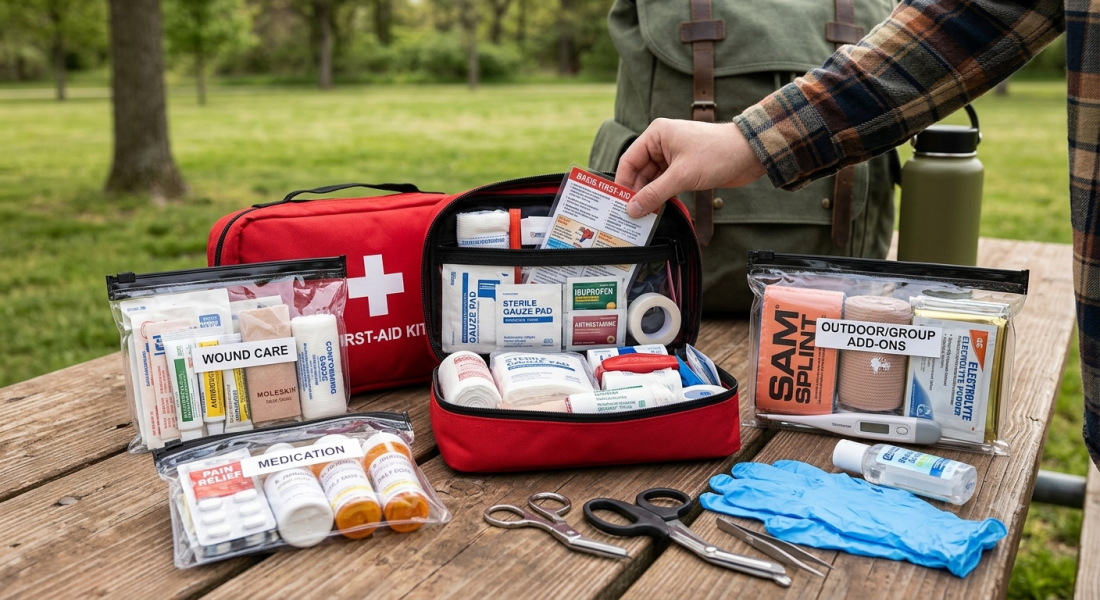
Most travelers land on one of two extremes with first-aid — an overstuffed kit that never gets opened, or nothing at all beyond a few loose painkillers in a bag pocket. A well-thought-out, right-sized kit sits comfortably in between, and doesn’t take up much space.
The Non-Negotiables
Adhesive bandages in a few sizes, for minor cuts and blisters
Antiseptic wipes or solution to clean wounds before bandaging
Basic pain relief and fever medication, in a quantity that matches your trip length
Oral rehydration salts, especially important for longer trips or hotter destinations
Any personal prescription medication, packed with extra buffer days in case of delays
Genuinely Useful, Often Forgotten
Motion sickness tablets, especially for winding hill routes or boat travel
Antihistamines, useful for unexpected allergic reactions to food, insect bites, or new environments
A digital thermometer, small and lightweight, but useful for judging whether a fever needs medical attention
Blister plasters, specifically designed for foot blisters on long walking days
A small tube of antiseptic cream, for minor scrapes that don’t need a full bandage
For Trekking or Outdoor-Heavy Trips
A crepe bandage for minor sprains
Tweezers, useful for splinters, thorns, or tick removal
Rehydration and electrolyte sachets, given the higher exertion and dehydration risk
A whistle, more of a safety item than medical, but worth including in the same pouch for outdoor trips
What to Skip
Heavy, bulky items like large trauma kits or excessive quantities of any single medication rarely get used and just add unnecessary weight — a first-aid kit should cover likely, minor scenarios, not attempt to replace an actual hospital.
Packing It Smart
A small, clearly labeled pouch — not loose items scattered across your bag — makes the kit actually usable in a moment of need. Keeping it in an easily accessible part of your bag, rather than buried at the bottom, matters more than most people initially plan for.
For Group Trips
One well-stocked shared kit is usually more efficient than everyone carrying a smaller, incomplete version — but it helps to double-check that anyone with specific allergies or prescriptions also carries their own personal essentials separately, not solely relying on the shared kit.
Bottom Line
A good travel first-aid kit isn’t about preparing for everything — it’s about covering the handful of minor, likely scenarios that actually come up on most trips. A small, well-organized pouch usually does more real good than an oversized kit that never leaves the bottom of the bag.
How to Pack a First-Aid Kit for Any Trip (Solo or Group)