Sustainable Souvenirs: What to Buy (and Avoid) While Traveling

Souvenir shopping feels like a harmless, even supportive part of travel — but not every souvenir actually benefits the place it comes from, and some genuinely work against it. A little awareness turns souvenir shopping into something that actually gives back.

What to Look For

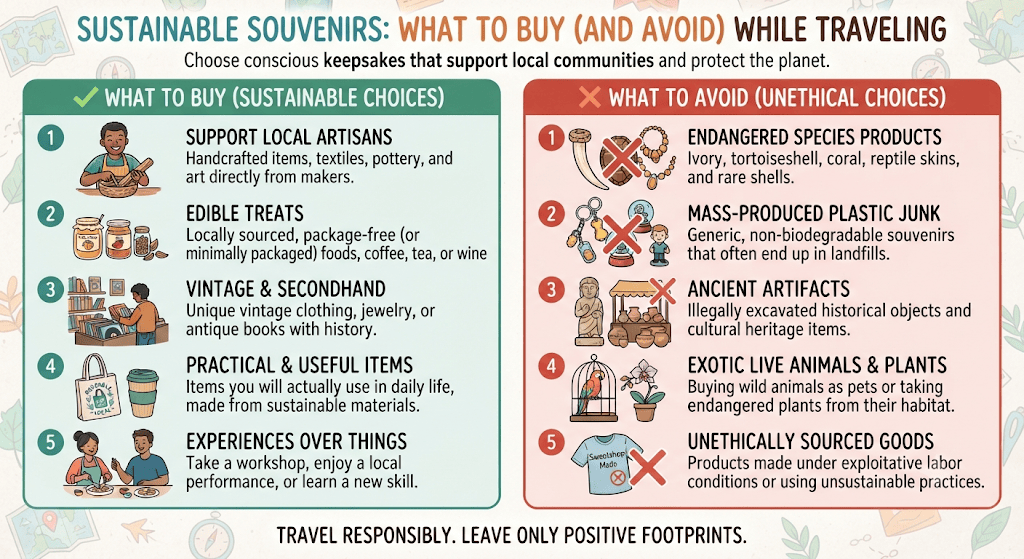
  • Handmade, locally produced items — textiles, pottery, woodwork — made by artisans in the region you’re visiting, rather than imported items simply sold there
  • Products from cooperatives or artisan collectives, which often ensure fairer pay reaches the actual makers rather than being absorbed by middlemen
  • Items made from sustainably sourced materials, particularly relevant for wood, shell, or plant-based products
  • Food items and spices sourced and packaged locally, which support regional agriculture directly

What to Avoid

  • Wildlife products — anything made from coral, ivory, animal skins, shells, or feathers, which often drives illegal poaching or environmental damage regardless of how it’s marketed
  • Mass-produced “local” items that are actually manufactured elsewhere and shipped in, offering no real benefit to the local economy despite the packaging
  • Ancient or archaeological artifacts, genuine or convincingly fake, which are frequently illegal to export and contribute to looting when authentic
  • Single-use or excessive packaging, which undercuts the sustainability of an otherwise reasonable purchase

Ask Before You Buy

A simple question to the seller — “who makes this, and where?” — often reveals a lot. Sellers proud of local, artisan-made goods are usually happy to share the story behind them; vague or evasive answers are often a signal the item isn’t what it’s marketed as.

Consider the Souvenir’s Actual Life After the Trip

A souvenir that ends up unused in a drawer within a year has the same environmental footprint as any other unnecessary purchase, regardless of how ethically it was sourced. Choosing something genuinely useful or meaningful — rather than buying for the sake of having bought something — reduces this kind of eventual waste.

Supporting the Economy Beyond Souvenirs

Buying meals, tours, and accommodations from local, small-scale businesses often has a bigger positive economic impact than souvenir shopping alone — souvenirs are one part of a broader pattern of how travel spending reaches (or bypasses) the local community.

Bottom Line

A souvenir can genuinely support a destination’s artisans and economy, or it can quietly contribute to exploitation, environmental harm, or a local economy that sees none of the benefit. A little curiosity about where an item actually comes from turns an ordinary purchase into a more meaningful one.
The Environmental Impact of Tourist Overcrowding in Hill Stations

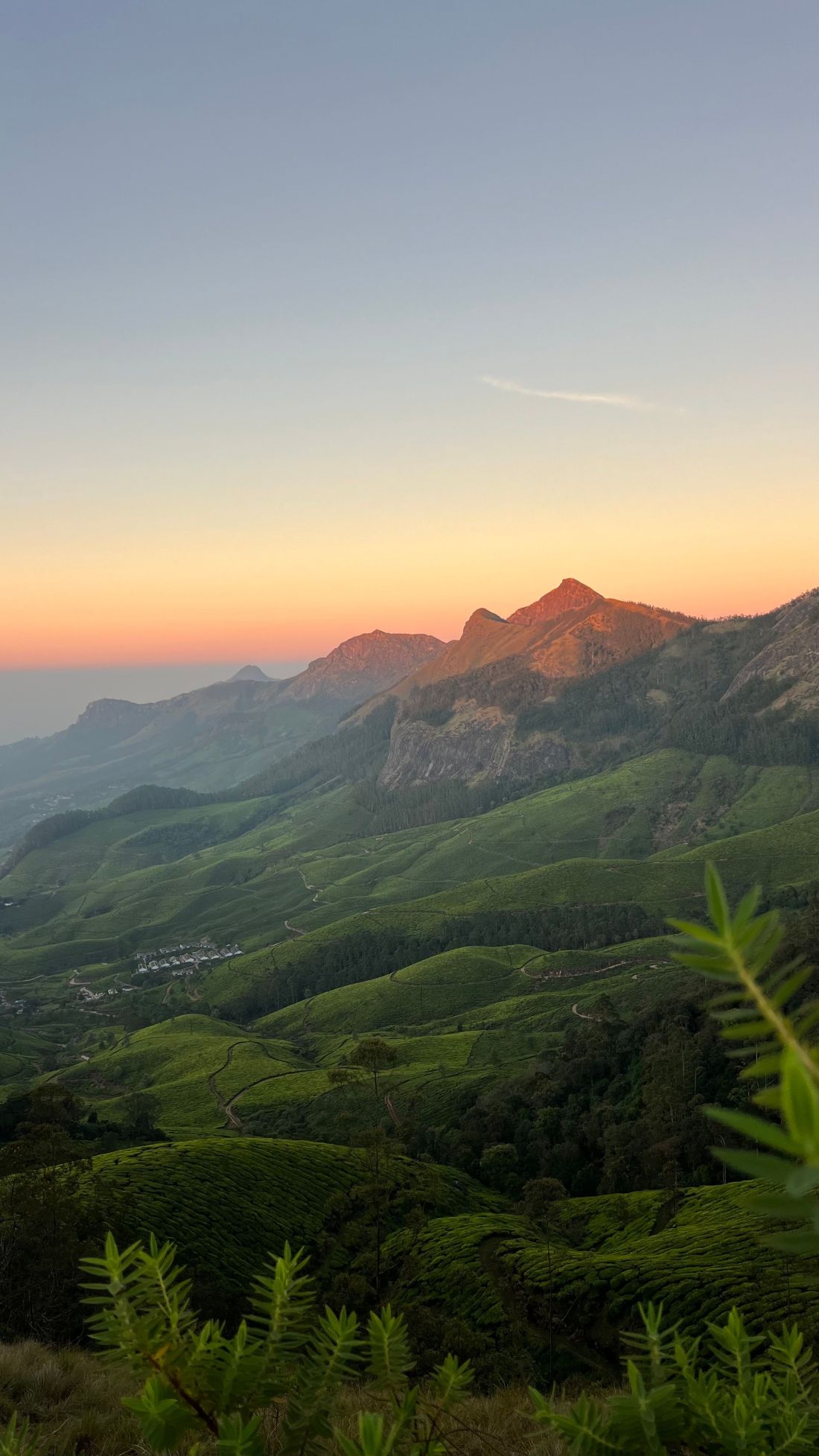
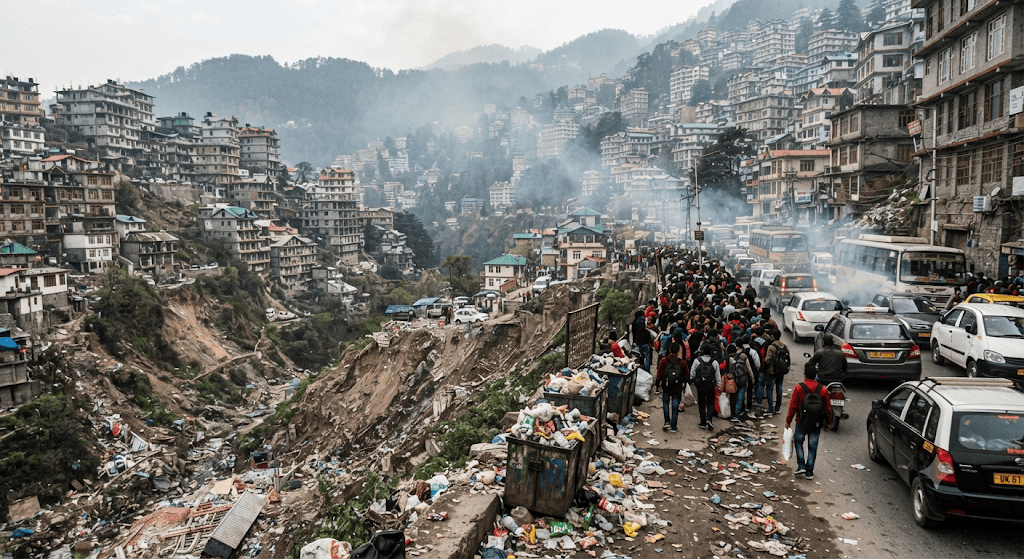
Every summer and long weekend, India’s popular hill stations see traffic jams stretching for kilometers, hotels overbooked well past reasonable capacity, and a strain on infrastructure never built for these numbers. The scenery that draws people there is quietly paying the price.

Water Systems Under Pressure

Many hill towns rely on limited natural water sources — springs, small reservoirs — that were never designed to support the seasonal population spikes tourism now brings. Water shortages during peak season have become a recurring issue in several well-known hill destinations, ironically driven by the very visitors drawn to their natural beauty.

Waste Management Falling Behind

Hill towns typically lack the large-scale waste processing infrastructure of bigger cities, and tourist season generates waste volumes far beyond what local systems can handle. This often results in visible littering, overflowing landfills at town edges, and waste finding its way into streams and forest areas.

Traffic and Air Quality

Long queues of idling vehicles on narrow hill roads, combined with unregulated parking on slopes never meant for heavy vehicle traffic, contribute to localized air pollution and slope stability concerns — a particularly serious issue in landslide-prone regions.

Construction Racing to Keep Up

Rising tourist demand has driven rapid, sometimes poorly regulated construction of new hotels and guesthouses, often on unstable slopes or encroaching on forest land — development that increases both environmental strain and genuine safety risk in these areas.

Impact on Local Wildlife and Vegetation

Increased foot traffic, off-trail wandering, and noise from a high volume of visitors disturbs local wildlife patterns and puts pressure on native vegetation, particularly in areas without clearly marked and enforced trail boundaries.

What More Sustainable Hill Station Travel Looks Like

  • Visit during shoulder seasons rather than peak weekends, spreading demand more evenly
  • Choose smaller, less-visited hill towns as alternatives to the most crowded, well-known destinations
  • Carry out your own waste, especially in areas without visible processing infrastructure
  • Support locally-run accommodations over large new constructions that add strain without local benefit
  • Stick to marked trails rather than off-path exploration that damages fragile vegetation

Bottom Line

The hill stations most affected by overcrowding are often loved precisely for qualities that overcrowding itself is steadily eroding. A more spread-out, mindful approach to visiting these places isn’t about avoiding them — it’s about making sure they’re still worth visiting years from now.

Women-Owned Cafes and Homestays Worth Supporting on Your Next Trip

Every trip involves dozens of small spending decisions — where to eat, where to stay, whose business gets your money. Most of these choices are made on convenience alone. But a growing number of travelers are starting to ask one more question: who actually owns this place? Seeking out women-owned cafes and homestays is a small shift that adds up to real support.

Why It Matters

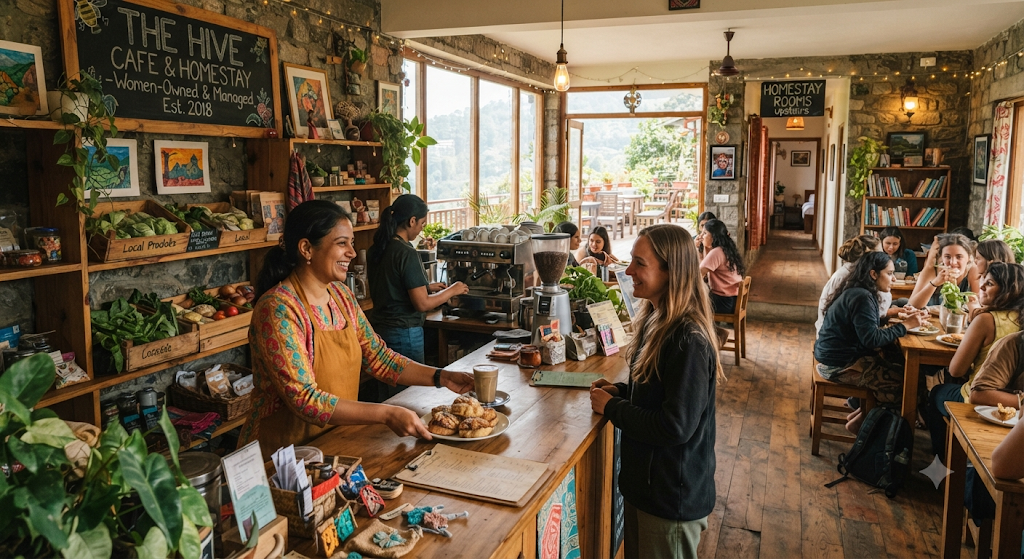
Women entrepreneurs, especially in hospitality and food service, often face harder paths to funding, land ownership, and business credit than their male counterparts. A homestay or café run by a woman — particularly in smaller towns or rural areas — frequently represents not just a business, but a hard-won foothold in local economic life. Choosing to spend there is a direct, tangible way to back that effort.

What These Places Often Offer

Women-run homestays in particular tend to lean into hospitality that feels personal rather than transactional — home-cooked meals, local recipes passed down through family, and a level of care that larger commercial stays rarely replicate. Cafés run by women often double as community spaces, sometimes hiring other local women and reinvesting in the neighborhood around them.

How to Find Them While Traveling

  • Ask locally, not just online. Tourism boards and local women’s self-help groups often know of homestays that never make it onto big booking platforms.
  • Look for cooperative and self-help group listings. Many regions have women-run hospitality collectives, especially in rural and hill areas, that list multiple homestays together.
  • Check reviews for ownership mentions. Guests often note “run by [name] and her family” — a good sign of a woman-led stay.
  • Support cafés that hire visibly. A café that trains and employs local women, not just serves good coffee, extends the impact further.

Beyond the Trip

Supporting women-owned spaces while traveling isn’t just a nice gesture — it directly channels tourist spending into hands that often see the least of it. It’s a small, deliberate choice that turns an ordinary trip into something with a slightly wider impact.

Budget-Friendly Sustainable Travel Destinations Near Delhi/NCR

You don’t need a big budget or a long vacation to travel more sustainably. Some of the best eco-conscious getaways are just a few hours from Delhi — easy on the pocket, and easy on the planet too.

1. Sultanpur National Park (Gurugram)
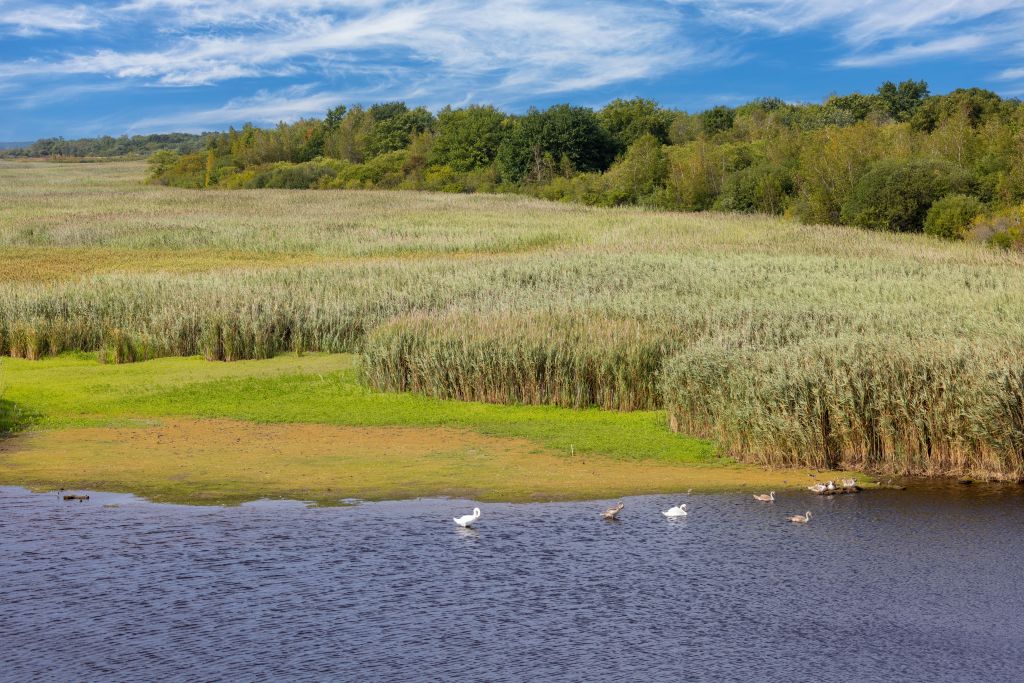
Just an hour from Delhi, this bird sanctuary is perfect for a low-impact day trip. No fancy resorts needed — go early morning, carry a reusable water bottle, and enjoy one of the richest birdwatching spots near the city, almost entirely on foot.

2. Sariska Tiger Reserve (Rajasthan)
A few hours away, Sariska combines wildlife conservation with budget-friendly stays in nearby villages. Choose a local homestay over a big resort — it supports the community directly and usually costs a fraction of the price.

3. Bharatpur — Keoladeo National Park (Rajasthan)
A UNESCO World Heritage bird sanctuary, best explored by cycle-rickshaw or on foot rather than a vehicle. It’s one of the most sustainable ways to experience wildlife tourism near Delhi, and entry fees are modest.

4. Morni Hills (Haryana)
One of the least commercialized hill destinations near Delhi — quiet, green, and largely untouched by mass tourism. Local guesthouses over big chains keep both your budget and your footprint small.

5. Dhanaulti (Uttarakhand)
Less crowded than Mussoorie, Dhanaulti has an eco-park and forest trails ideal for slow, mindful travel. Public buses connect well from Delhi, cutting down on the need for a private vehicle.

A few sustainable travel habits worth carrying along, wherever you go:

  • Carry a reusable bottle and cloth bag (ties back nicely to our plastic-swap habits!)
  • Choose homestays or local guesthouses over big resorts when possible
  • Public transport or shared cabs over solo drives
  • Leave no trace — carry your trash back if bins aren’t available

Sustainable travel doesn’t have to mean expensive eco-resorts. Sometimes it’s just choosing the slower, simpler, more local option — which usually turns out lighter on the wallet too.