How Fast Fashion Returns Policies Quietly Hurt the Environment

The Hidden Cost of “Just Return It”

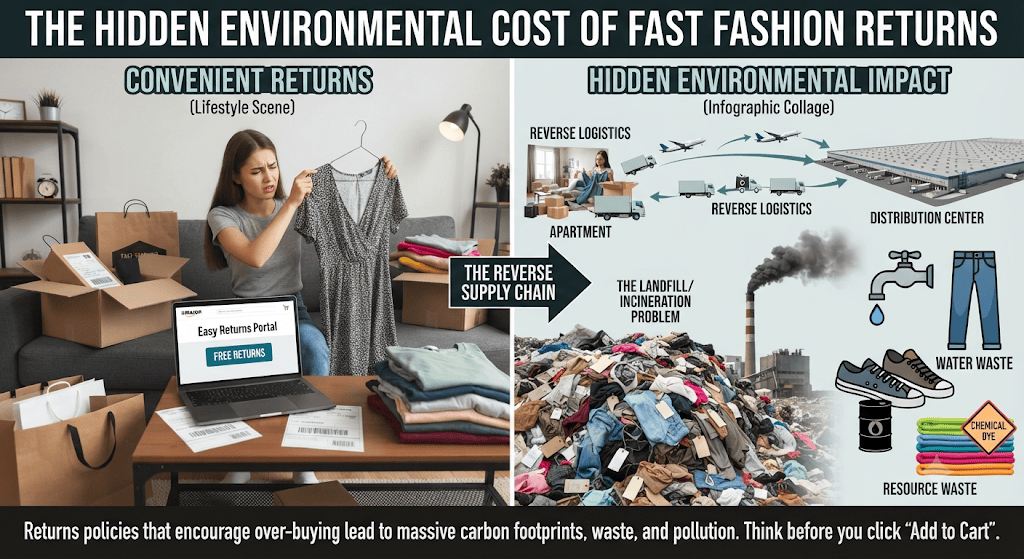
Easy return policies encourage overbuying — ordering multiple sizes or styles with the plan to send back what doesn’t work. It feels low-risk for the shopper, but each return triggers a second delivery journey, doubling transportation emissions on top of the original purchase.

Fashion Has the Worst Returns Problem

The fashion industry records the highest online return rates of any retail category, with customers sending back up to 40% of garments ordered — far above the roughly 30% average return rate across online shopping generally. In the US alone, fashion returns have been estimated to generate carbon emissions equivalent to about three million cars on the road for a year.

Where Returned Clothes Actually Go

Because reprocessing, restocking and reselling a returned item often costs more than the item is worth — especially for cheaply made fast fashion — a significant share of returns are sent straight to landfill instead of resale. Due to the synthetic fibres common in fast fashion, items that do end up there can take up to 100 years to decompose, releasing greenhouse gases and leaching chemicals into soil as they break down.

It’s Not Just About Landfill

Return logistics add packaging waste too — much of it in plastic wraps and mixed materials that are difficult to recycle. And the carbon cost of the return leg alone can add significantly on top of the emissions from the original delivery.

What Shoppers Can Actually Do

  1. Check size charts and read reviews carefully before ordering, instead of over-ordering “to be safe”
  2. Buy fewer, better-made pieces that fit the first time
  3. Choose brands and retailers transparent about what happens to returns
  4. Resist “bracketing” — ordering several sizes/colours intending to return most

Bottom Line

A free return isn’t actually free — it’s a second trip with its own emissions, and often, a one-way ticket to landfill. The most sustainable return is the one you never have to make.
The Hidden Environmental Cost of Fast Fashion Hauls

A ₹300 top that’s trendy for one season and forgotten the next feels harmless in isolation. Multiplied across millions of similar purchases, though, fast fashion carries an environmental cost that rarely shows up on the price tag.

The Resource Cost Before It Even Reaches You

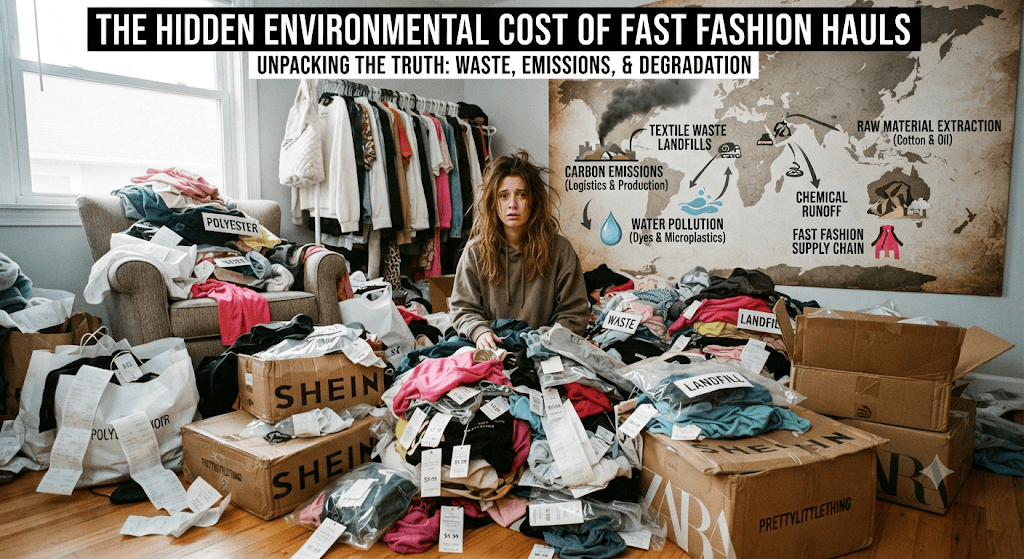
Producing a single garment involves significant water and energy use — particularly for cotton cultivation and dyeing processes — well before it ever reaches a store shelf. Fast fashion’s business model depends on producing at massive volume and speed, multiplying this resource cost across an enormous number of garments made to be worn only briefly.

The Waste Problem After You’re Done

Garments designed for short-term trend cycles are often made from cheaper, lower-quality materials that don’t hold up to repeated wear or resale. Much of this clothing ends up discarded within a year or two, contributing to a fast-growing volume of textile waste, most of which isn’t recycled and ends up in landfills.

Synthetic Fabrics and Microplastics

A large share of fast fashion is made from synthetic fibers like polyester, which shed microplastic fibers with every wash — fibers that eventually make their way into waterways and, ultimately, the food chain. This is a slower, less visible cost, but a real one.

The “Haul Culture” Problem

Social media content built around hauls and constant new outfits normalizes a pace of consumption that has little to do with actual need. It reframes buying and quickly discarding clothing as entertainment, which quietly increases demand for the fastest, cheapest production cycles.

What a Lighter Approach Looks Like

  • Buy fewer, better pieces that are likely to be worn repeatedly, not just once for content
  • Check fabric composition and lean toward natural fibers where possible, which tend to last longer and shed less
  • Repair before replacing — a small tear or loose button doesn’t always mean a garment is done
  • Resell or donate rather than discard, extending a garment’s life beyond your own closet

Bottom Line

Fast fashion’s low price hides a cost that shows up elsewhere — in water use, textile waste, and microplastic pollution that isn’t part of the transaction at checkout. None of this means giving up new clothes entirely; it just means being a little more deliberate about how often, and how much, gets bought and discarded.