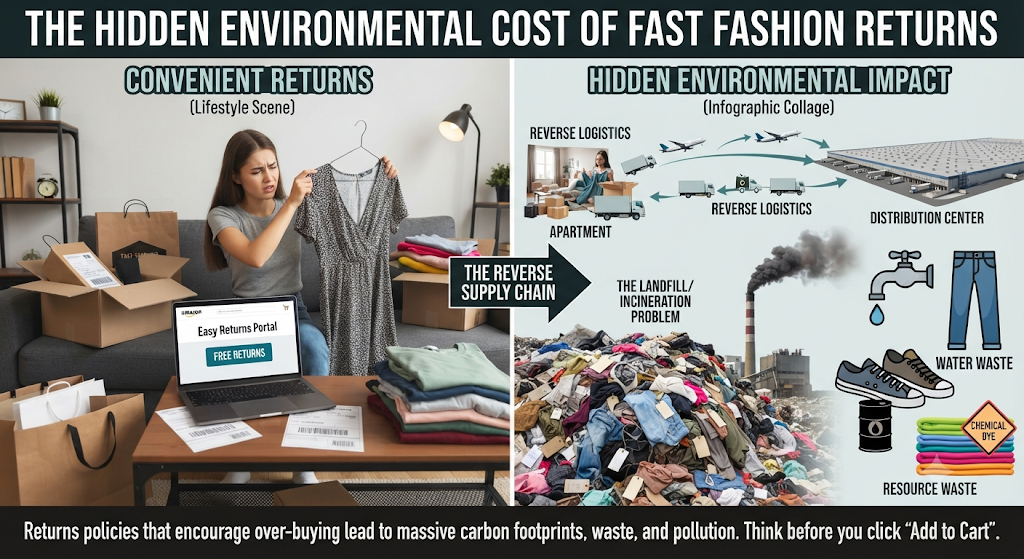
The Hidden Cost of “Just Return It”
Easy return policies encourage overbuying — ordering multiple sizes or styles with the plan to send back what doesn’t work. It feels low-risk for the shopper, but each return triggers a second delivery journey, doubling transportation emissions on top of the original purchase.
Fashion Has the Worst Returns Problem
The fashion industry records the highest online return rates of any retail category, with customers sending back up to 40% of garments ordered — far above the roughly 30% average return rate across online shopping generally. In the US alone, fashion returns have been estimated to generate carbon emissions equivalent to about three million cars on the road for a year.
Where Returned Clothes Actually Go
Because reprocessing, restocking and reselling a returned item often costs more than the item is worth — especially for cheaply made fast fashion — a significant share of returns are sent straight to landfill instead of resale. Due to the synthetic fibres common in fast fashion, items that do end up there can take up to 100 years to decompose, releasing greenhouse gases and leaching chemicals into soil as they break down.
It’s Not Just About Landfill
Return logistics add packaging waste too — much of it in plastic wraps and mixed materials that are difficult to recycle. And the carbon cost of the return leg alone can add significantly on top of the emissions from the original delivery.
What Shoppers Can Actually Do
- Check size charts and read reviews carefully before ordering, instead of over-ordering “to be safe”
- Buy fewer, better-made pieces that fit the first time
- Choose brands and retailers transparent about what happens to returns
- Resist “bracketing” — ordering several sizes/colours intending to return most
Bottom Line
A free return isn’t actually free — it’s a second trip with its own emissions, and often, a one-way ticket to landfill. The most sustainable return is the one you never have to make.


