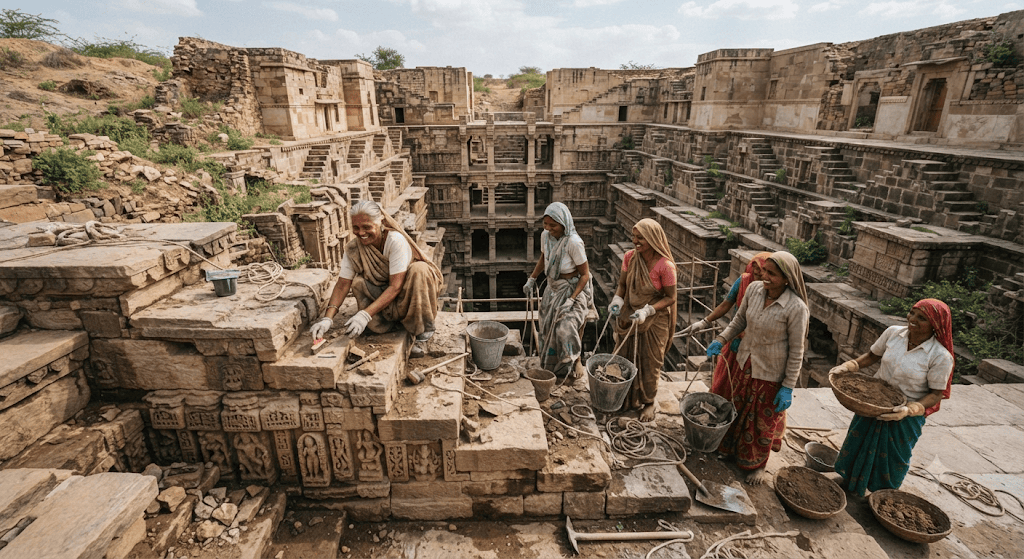
Structures Built Around Women’s Lives
Stepwells, known as baolis or vavs, date back over a thousand years across western and northern India. Historically, they were integral to women’s daily routines — collecting water, doing laundry, meeting friends — away from the confines of home. Many were even funded by queens and women of means as acts of public philanthropy.
From Forgotten to Functional
Decades of neglect left thousands of stepwells filled with debris, sewage or simply forgotten beneath modern cities. In Secunderabad, architect Kalpana Ramesh led the revival of the centuries-old Bansilalpet stepwell — a project that took over 500 days and more than a thousand workers to bring a structure once “filled with sewage, bandicoots and rats” back into use. Ramesh’s broader restoration work has also mobilised hundreds of families to repair defunct borewells and boost groundwater levels across Hyderabad.
Community-Led Revivals
In Udhampur, Jammu and Kashmir, residents launched the Bowli Bachao Abhiyan (“Save the Stepwells Mission”) and revived 65 stepwells in just four months — largely volunteer-funded and community-driven. In Rajasthan, restoration partnerships have revived stepwells like Bhanpur Kala Ki Bawri, restoring clean water access to thousands of people and specifically easing the burden on women and children who previously walked kilometres daily to fetch water.
Why This Work Matters Beyond Heritage
Stepwells aren’t just architectural relics — they’re functioning groundwater recharge systems. A single restored stepwell in Delhi has been found to add tens of thousands of gallons of water to the local system daily; one project in Jodhpur contributes millions of gallons for irrigation and domestic use. In water-stressed regions, that’s not nostalgia — it’s infrastructure.
How to Support This Work
- Visit restored stepwells respectfully and support local guides
- Follow and donate to organisations running stepwell and water-body revivals
- Share these stories — most tourists have never heard of stepwells as living water systems, not just photo spots
Bottom Line
The women restoring India’s stepwells aren’t just preserving beautiful architecture — they’re reviving water systems that once centred women’s lives, and could again ease the water burden so many still carry.

