Women Who Run Community Seed Banks in India

Seed Keeping Has Always Been Women’s Work

In much of rural and tribal India, women are the traditional seed-keepers. They decide which grains to save, how to store them and which varieties to plant next season. That knowledge is rarely written down, but it holds generations of experience about soil, rainfall and taste.

How a Community Seed Bank Works

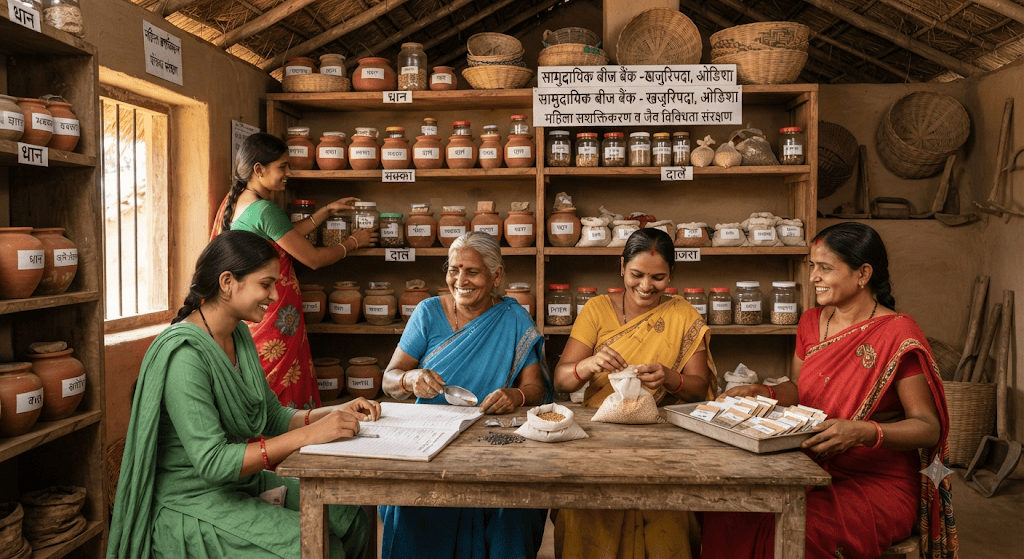
A community seed bank is not a vault. It is a shared, village-run system. In Karnataka, the GREEN Foundation, which began in 1996 with five women farmers and a handful of indigenous seeds, helped set up seed banks managed by women’s self-help groups. Members take seeds free of cost, sow and harvest them, then return double the quantity to the bank. The stock grows, and the seeds stay in local hands.

What These Banks Protect

  • Native varieties suited to drought-prone, low-fertility land
  • Millets, pulses and traditional vegetables that commercial seed catalogues often ignore
  • Farmer independence, since women don’t have to buy new seed from outside companies every season

A national-level survey found around 887 traditional varieties across 71 crops being kept by community seed banks and individual custodians in 15 states. In Telangana and Madhya Pradesh, one women’s-collective seed bank is reported to hold more than 80 traditional varieties of millets, pulses, dryland rice and oilseeds.

Small Banks, Real Impact

In Odisha’s Koraput district, a women-run seed bank serves around 25 households and preserves roughly 20 varieties, including paddy, ragi, maize, chilli and beans. In Meghalaya’s West Jaintia Hills, 36 women farmers dry seeds in the sun, wrap them in cloth and store them in glass jars, using simple methods their families have relied on for generations.

The Challenges

Small seed banks struggle with pest control, proper storage and steady funding. Many also depend on NGO support to keep running.

How You Can Support This Work

  1. Buy millets, pulses and vegetables grown from native seed when you can
  2. Support organisations that fund community seed banks
  3. Visit farm stays that grow heirloom varieties and ask about their seeds

Bottom Line

A seed bank run by village women is one of the cheapest and most practical forms of climate insurance. When a crop fails elsewhere, the seeds they saved may be the ones that grow.
Women Who Restored Abandoned Stepwells Across India

Structures Built Around Women’s Lives

Stepwells, known as baolis or vavs, date back over a thousand years across western and northern India. Historically, they were integral to women’s daily routines — collecting water, doing laundry, meeting friends — away from the confines of home. Many were even funded by queens and women of means as acts of public philanthropy.

From Forgotten to Functional

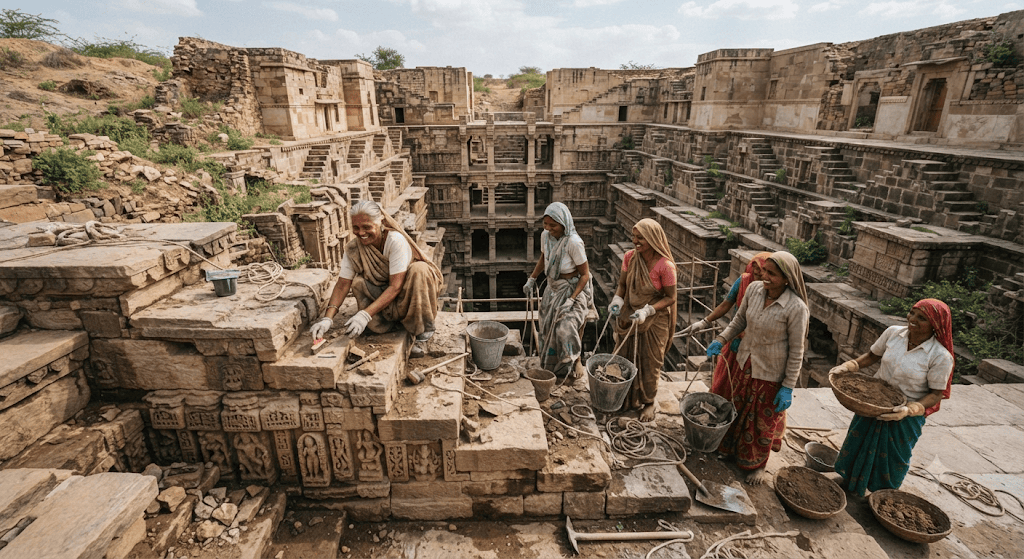
Decades of neglect left thousands of stepwells filled with debris, sewage or simply forgotten beneath modern cities. In Secunderabad, architect Kalpana Ramesh led the revival of the centuries-old Bansilalpet stepwell — a project that took over 500 days and more than a thousand workers to bring a structure once “filled with sewage, bandicoots and rats” back into use. Ramesh’s broader restoration work has also mobilised hundreds of families to repair defunct borewells and boost groundwater levels across Hyderabad.

Community-Led Revivals

In Udhampur, Jammu and Kashmir, residents launched the Bowli Bachao Abhiyan (“Save the Stepwells Mission”) and revived 65 stepwells in just four months — largely volunteer-funded and community-driven. In Rajasthan, restoration partnerships have revived stepwells like Bhanpur Kala Ki Bawri, restoring clean water access to thousands of people and specifically easing the burden on women and children who previously walked kilometres daily to fetch water.

Why This Work Matters Beyond Heritage

Stepwells aren’t just architectural relics — they’re functioning groundwater recharge systems. A single restored stepwell in Delhi has been found to add tens of thousands of gallons of water to the local system daily; one project in Jodhpur contributes millions of gallons for irrigation and domestic use. In water-stressed regions, that’s not nostalgia — it’s infrastructure.

How to Support This Work

  1. Visit restored stepwells respectfully and support local guides
  2. Follow and donate to organisations running stepwell and water-body revivals
  3. Share these stories — most tourists have never heard of stepwells as living water systems, not just photo spots

Bottom Line

The women restoring India’s stepwells aren’t just preserving beautiful architecture — they’re reviving water systems that once centred women’s lives, and could again ease the water burden so many still carry.

The Women Documenting India’s Disappearing Traditions Through Photography

Many of India’s traditional crafts, rural rituals, and regional ways of life are fading faster than they’re being recorded — a generational shift that risks losing not just skills but the visual memory of how things were done. A growing number of women photographers are working specifically to document this before it disappears entirely.

Why This Documentation Matters

Oral traditions and hands-on crafts often exist only in the memory and practice of an aging generation, with little formal documentation. Photography captures not just the final product of a tradition — a woven textile, a ritual object — but the process, the hands, and the context that a museum piece alone can never fully convey.

Access Built on Trust, Not Just Skill

Photographing intimate community rituals, women-only ceremonies, or closed craft workshops often requires a level of trust that’s easier to build as a woman photographer, particularly in more conservative or gender-segregated community settings where a male photographer might simply never be given access.

Documenting Craft, Not Just Culture

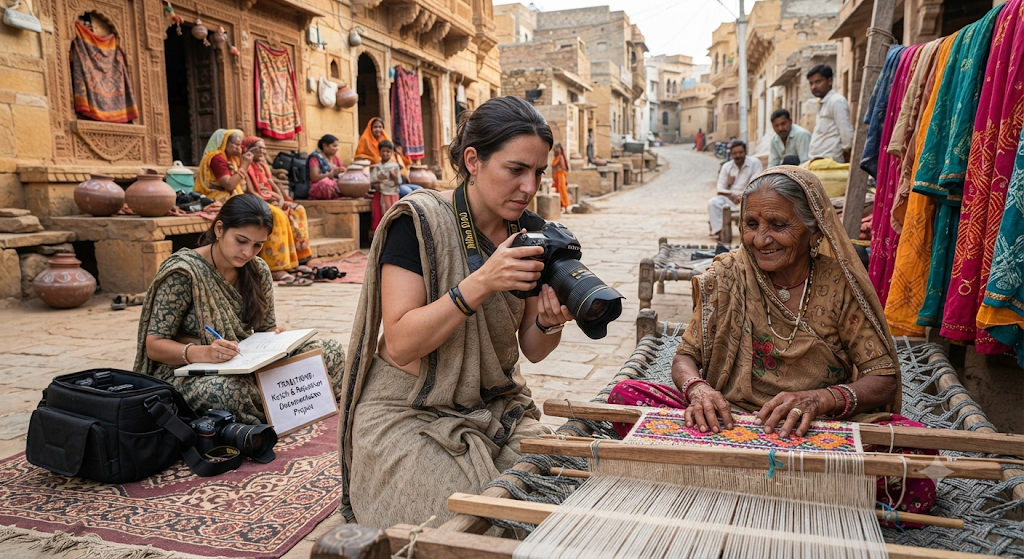
Beyond rituals and ceremonies, many women photographers focus specifically on documenting disappearing craft techniques — a particular embroidery style, a pottery method, a weaving technique — often working closely alongside the artisans themselves, sometimes over years, rather than a single visit.

The Race Against Time

Many of these traditions are held by artisans and practitioners now in their 70s and 80s, with no younger generation continuing the practice. Photographers working in this space often describe their work with real urgency — knowing that a specific technique or ritual may simply not exist to document again in a few years’ time.

Beyond Just Preservation

This work isn’t purely archival — much of it also aims to bring visibility and, ideally, economic support back to the communities and artisans being documented, connecting traditional practices to broader audiences who might otherwise never encounter them.

The Emotional Weight of the Work

Photographers doing this work often describe it as deeply personal, not purely professional — building real relationships with the people and communities they document over repeated visits, rather than treating subjects as simply visual material to be captured and left behind.

Bottom Line

As India modernizes rapidly, a quiet but important body of documentation work is being done by women photographers determined to make sure these disappearing traditions aren’t lost without a visual record. It’s patient, relationship-driven work — and increasingly urgent.

The Women Behind India’s Handloom Revival

Handloom weaving is one of India’s oldest crafts, and today, much of its quiet revival is being carried forward by women — as weavers, cooperative leaders, and entrepreneurs bringing traditional textiles back into modern relevance.

A Craft Historically Carried by Women

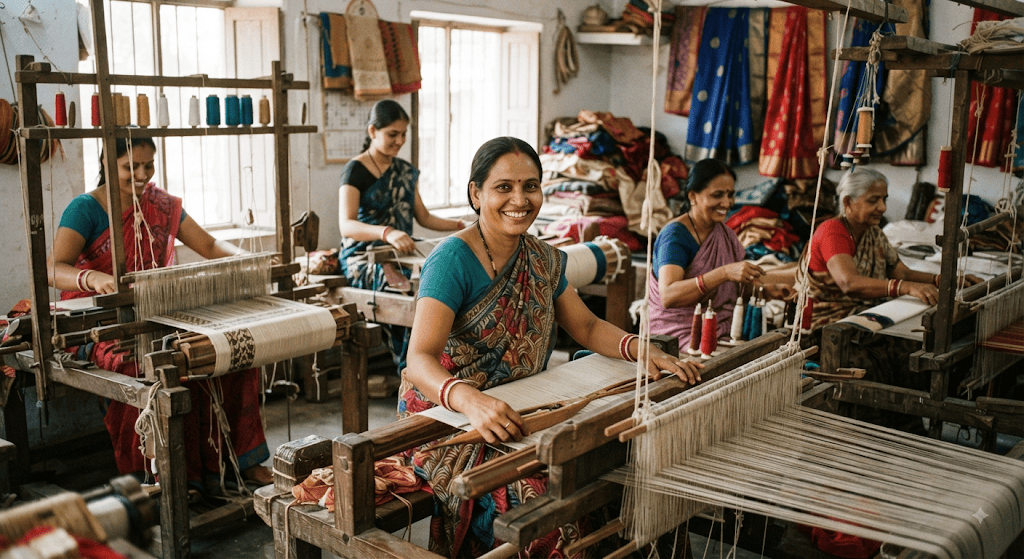
In many weaving communities, spinning, dyeing, and finishing work has traditionally fallen to women, even when the loom itself was operated by men. Today, that role is expanding — more women are running looms directly, not just supporting the process around them.

Cooperatives Changing the Economics

Handloom work has long struggled with unfair pricing, as individual weavers often had little bargaining power against middlemen. Women-led cooperatives are changing that by pooling production, negotiating collectively, and connecting weavers directly to buyers — cutting out layers that used to eat into their earnings.

Reviving Techniques That Were Nearly Lost

Several regional weaving techniques had dwindled to a handful of practitioners, mostly older women holding onto skills with no one to pass them to. Deliberate revival efforts — training programs, design collaborations, documentation projects — are helping some of these near-extinct techniques find a new generation of weavers.

Bringing Handloom Into Contemporary Design

Rather than treating handloom as purely traditional, many women-led initiatives are pairing it with contemporary silhouettes and designs, making the fabric appealing to younger, urban buyers who might otherwise never consider a handwoven piece.

The Economic Stakes

For many rural women, handloom work isn’t a hobby or a cultural footnote — it’s a primary source of income, sometimes the only one available locally. A stronger handloom market directly translates into greater financial independence for the women producing it.

Bottom Line

India’s handloom revival isn’t just a design trend — it’s substantially a women’s economic movement, powered by skill passed down through generations and a growing market willing to pay for what that skill actually represents.