For years, a “good haul” meant five new things for the price of two, worn a handful of times, replaced the moment they looked slightly tired. I didn’t think of it as wasteful — I thought of it as smart shopping. It took me a while to realize how much was hiding behind that word “smart.”
The cost that doesn’t show up on the price tag
Fast fashion is cheap at checkout because the real cost gets pushed somewhere else — onto water systems polluted by dyeing processes, onto landfills piling up with clothes that take decades to break down, onto garment workers paid too little to make clothes designed to fall apart in a year. None of that shows up on the tag. It just gets quietly absorbed somewhere we don’t have to look at.
The average piece of fast fashion is worn only a handful of times before it’s discarded. That’s not a flaw in how we use clothes — it’s the business model working exactly as designed. Cheap enough to feel disposable, trendy enough to feel outdated fast, so the next order feels necessary rather than optional.
What made me actually stop and look
It wasn’t one dramatic moment — it was noticing my own closet. Half of it barely worn, the rest already pilling or fading after a few washes. I’d spent more money buying “more” than I would have spent buying “better,” and had less to show for it in the long run. That math finally bothered me enough to change something.
What I switched to instead
Cost-per-wear over cost-per-item. A ₹3,000 piece worn fifty times costs far less per wear than a ₹500 piece worn three times before it falls apart. I started asking myself not “can I afford this” but “will I actually wear this fifty times” — a much harder, much more honest question.
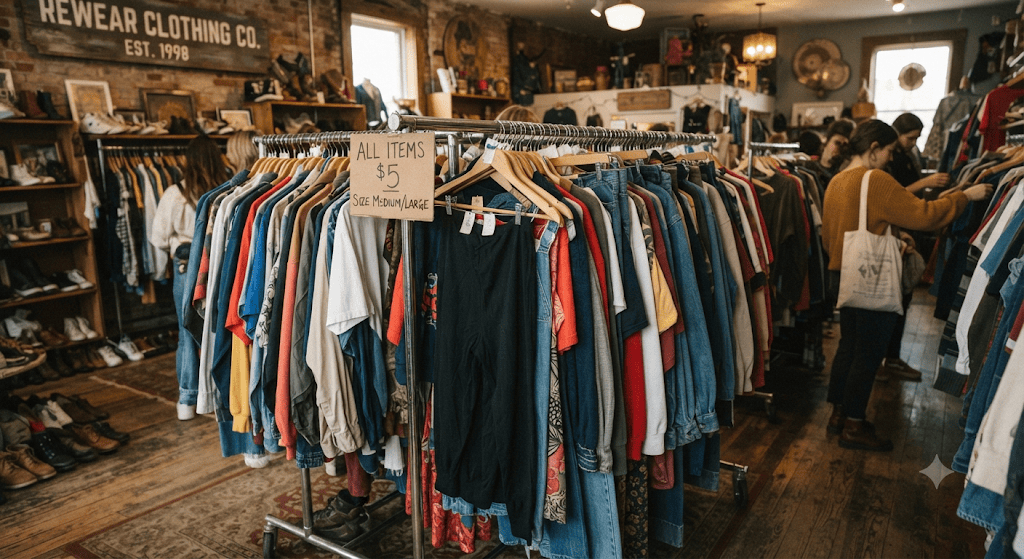
Thrift and pre-loved first. Some of my favorite pieces now are secondhand — better quality than what I could’ve afforded new, and no new production required at all. It took some adjusting to enjoy the hunt instead of expecting instant matches, but it’s become one of my favorite ways to shop.
Repair before replace. A loose button or a small tear used to mean the end of a garment’s life for me. Now it means five minutes with a needle and thread, or a trip to the local tailor. It’s a small habit, but it’s kept clothes in rotation far longer than they would have lasted otherwise.
Fewer, better basics. Instead of chasing every trend, I built a smaller wardrobe of pieces that mix and match easily and don’t scream “this season only.” It’s less exciting in the moment of buying, but far more satisfying every single day after.
Supporting slower, local brands when I can. They cost more upfront, almost always. But knowing where something was made, and that the people making it were paid fairly, has made spending on clothes feel less like guilt and more like an actual choice.
This isn’t about guilt
I still buy new clothes. I still enjoy getting dressed up for something. This isn’t about swearing off fashion or judging anyone’s closet — it’s about noticing that “cheap” and “smart” aren’t always the same thing, and that slowing down the buying just a little changes both what ends up in your closet and what ends up outside it, in places we don’t see.
Small shifts in how we shop won’t fix an entire industry on their own. But they do change what we’re quietly funding every time we check out — and that’s worth paying attention to.
Have you made any changes to how you shop for clothes? I’d love to hear what’s worked for you.