Cutting your carbon footprint doesn’t require a lifestyle overhaul. Most of the impact comes from small, repeatable habits — the kind that fit into an already busy day without feeling like a sacrifice.
Rethink Your Commute
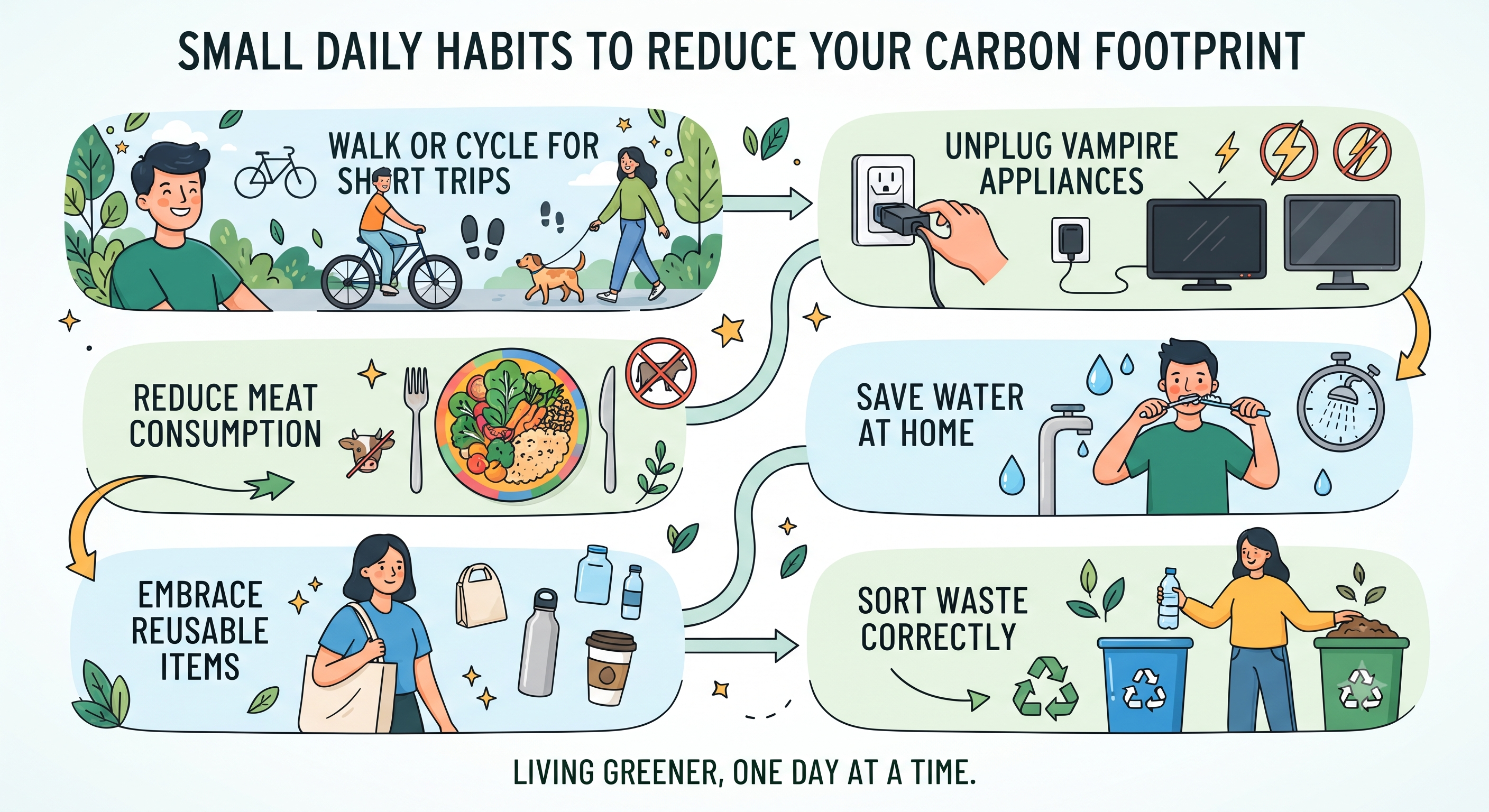
Even swapping one or two car trips a week for walking, cycling, or public transport adds up over a year. If a full switch isn’t practical, carpooling with a colleague or neighbor cuts emissions per person without changing your route.
Unplug What You’re Not Using
Devices left plugged in — chargers, appliances, routers on standby — draw small amounts of power constantly. Unplugging them when not in use, or using a power strip you can switch off at once, is a near-zero-effort habit with a real cumulative effect.
Cut Down on Single-Use Plastic
Carrying a reusable water bottle, a cloth bag, or a steel tiffin instead of relying on single-use plastic each day reduces both your waste output and the emissions tied to producing that plastic in the first place.
Eat a Little More Local, a Little Less Processed
Food that travels shorter distances and requires less processing generally has a smaller carbon footprint. You don’t need to go fully local or vegetarian overnight — even shifting one or two meals a week toward local, less-processed options makes a difference over time.
Be Deliberate About Water Use
Shorter showers, turning off the tap while brushing your teeth or washing dishes, and fixing leaky taps promptly all reduce the energy used to heat, pump, and treat water — a footprint most people don’t think about day to day.
Buy Less, Use Longer
Fast fashion and short-lived gadgets both carry a heavy production footprint. Choosing quality over quantity, repairing instead of replacing, and reusing what you already have cuts down on manufacturing emissions far more than any single “eco” purchase can.
Bottom Line
None of these habits require a big budget or a dramatic lifestyle change. They’re small adjustments that, done consistently, add up to a meaningfully lighter footprint — proof that everyday choices matter just as much as big environmental policies.


