The Rise of Eco-Friendly Period Products in Indian Villages

A Problem Hiding in Plain Sight

Disposable sanitary pads don’t biodegrade for decades, and in villages without formal waste management, they’re routinely burned or buried near homes. For years, the environmental cost of periods was rarely discussed alongside the more visible issue of period poverty — but the two problems share a solution.

Cloth Pads Are Having a Comeback

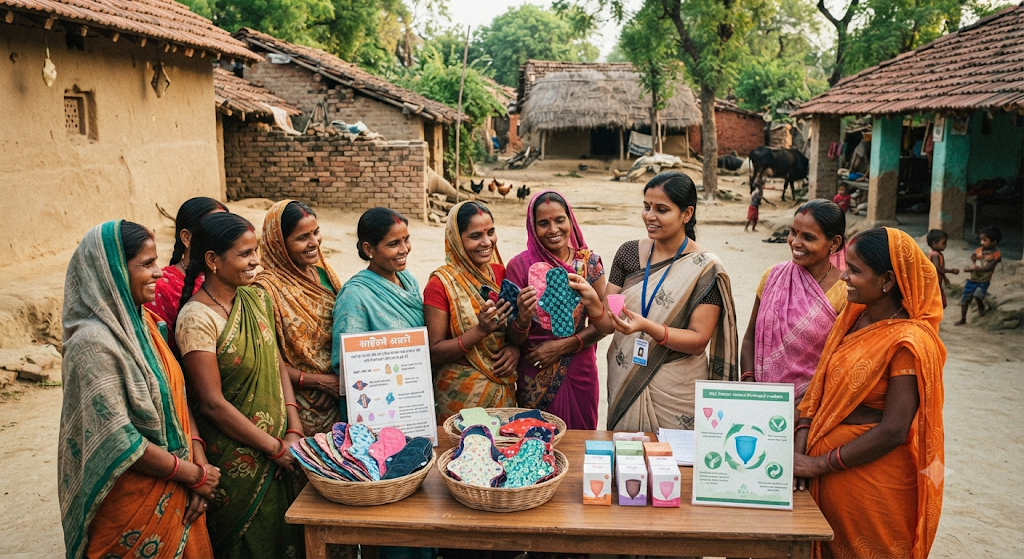
Reusable cloth pads, once dismissed as outdated, are being redesigned by women-led self-help groups and social enterprises with better absorbency, washable liners, and dignity-focused packaging. Several rural manufacturing units now train local women to stitch and sell these pads within their own communities, creating both income and access in one move.

Menstrual Cups Enter the Conversation

Menstrual cups are a newer addition to rural health workshops, though adoption is slower — it requires comfort with the body that many first-time users need guided support to build. NGOs running these workshops often pair the product demo with basic menstrual health education, since the two barriers (cost and stigma) rarely get addressed separately.

Why the Environmental Angle Matters Here

Framing reusable products purely as “eco-friendly” can miss the point in a village context — the bigger win is often affordability and reduced dependence on shops that may not stock pads reliably. The environmental benefit is real, but it works best as a bonus argument, not the opening one.

Bottom Line

The eco-friendly period movement in rural India isn’t a trend borrowed from urban sustainability circles — it’s a practical answer to cost, access, and waste, built by women for women.
Traveling on Your Period: Products, Prep, and Peace of Mind

A trip landing right on your period can feel like an added complication on top of everything else travel already requires. With a bit of preparation, though, it’s entirely manageable — and doesn’t need to change how much you enjoy the trip.

Choosing the Right Product for the Trip

  • Menstrual cups work well for longer trips with limited access to frequent changing facilities, since they can be worn for extended periods safely
  • Period underwear is a low-effort backup or standalone option, especially useful on travel days involving long transit
  • Tampons or pads remain simplest for shorter trips or destinations where familiarity and convenience matter more than sustainability

Trying any new product well before the trip — not for the first time while traveling — avoids unnecessary stress from an unfamiliar routine.

Packing Smart

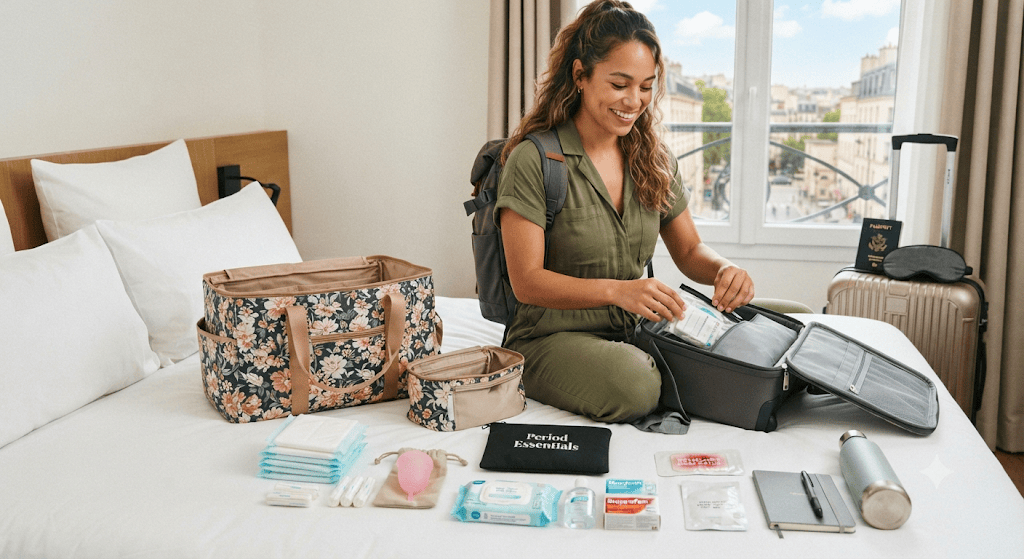
Carrying more supplies than you think you’ll need, plus a few extra just in case of delays or unexpectedly heavy flow days, avoids the stress of hunting for specific products in an unfamiliar place, especially abroad where preferred brands may not be available.

Managing Cramps While in Transit

Packing pain relief medication in your carry-on (not checked luggage), along with a small heating patch for long flights or train journeys, helps manage discomfort without needing to search for a pharmacy immediately upon arrival.

Hygiene During Long Travel Days

Wet wipes, a small pouch for used products, and hand sanitizer make managing hygiene easier during long flights, train rides, or bus journeys where clean facilities may not always be readily available.

Planning Activities Around Your Cycle, If Helpful

For trips with flexible itineraries, scheduling more intense activities (like a long trek or a full day of sightseeing) around lighter flow days, where possible, can make the overall trip feel more comfortable — though it’s entirely optional, not a requirement.

A Quick Pre-Trip Checklist

  • Pack more supplies than the trip length suggests you’ll need
  • Carry pain relief in your immediate hand luggage
  • Research pharmacy or product availability at your destination in advance
  • Pack a small, discreet hygiene pouch for transit days

Bottom Line

A period during travel isn’t a reason to alter plans or feel anxious about the trip — a little product preparation and a small hygiene kit handle most of what actually comes up. It’s a manageable, ordinary part of travel, not a genuine obstacle to it.

Menstrual Health on the Trail: What No One Tells You Before a Trek

Most trekking guides cover fitness, gear, and altitude in detail — but rarely address something half of all trekkers eventually deal with: managing a period on the trail. Here’s the practical information that’s usually left unsaid.

Trekking During Your Period Is Completely Possible

There’s a persistent myth that menstruating and high-altitude trekking don’t mix well. In reality, most people can trek comfortably during their period with the right preparation — it’s rarely a reason to cancel or delay a planned trek.

Choose the Right Products for the Terrain

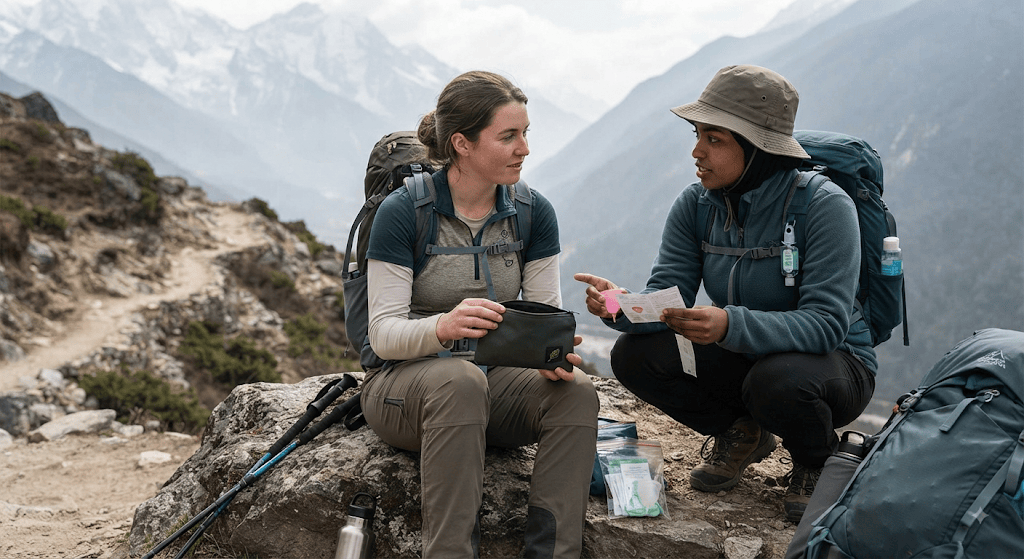
Multi-day treks with limited access to disposal facilities make menstrual cups or period underwear far more practical than pads or tampons, which require more frequent changing and generate more waste to carry out. Trying a new product at home well before the trek — not for the first time on the trail — avoids unpleasant surprises.

Pack Out, Don’t Leave Behind

Any used menstrual products need to be carried out in a sealed bag, exactly like other non-biodegradable waste — leaving them on the trail (even buried) is both an environmental and hygiene issue in fragile mountain ecosystems.

Managing Hygiene With Limited Water

Carrying wet wipes, a small bottle of water for rinsing, and hand sanitizer covers most hygiene needs when a proper toilet or shower isn’t available for a day or two. Planning a private moment during breaks, rather than waiting for a “perfect” spot, usually works better than expecting ideal conditions.

Cramps and Altitude

Cramps can occasionally feel more intense at altitude due to increased blood flow and exertion. Carrying a basic pain reliever, staying hydrated, and pacing more gently on heavier flow days helps manage this without derailing the whole trek.

Talk to Your Trek Leader If Needed

A good trek leader has dealt with this before and can help plan slightly longer breaks or adjust pace if needed — bringing it up isn’t awkward, it’s practical trip planning, same as mentioning any other physical consideration.

Bottom Line

A period is not a valid reason to skip a trek you’ve been looking forward to. With the right products, a little extra planning, and a practical mindset about waste and hygiene, it’s entirely manageable — it just rarely gets talked about openly enough for first-timers to know that going in.