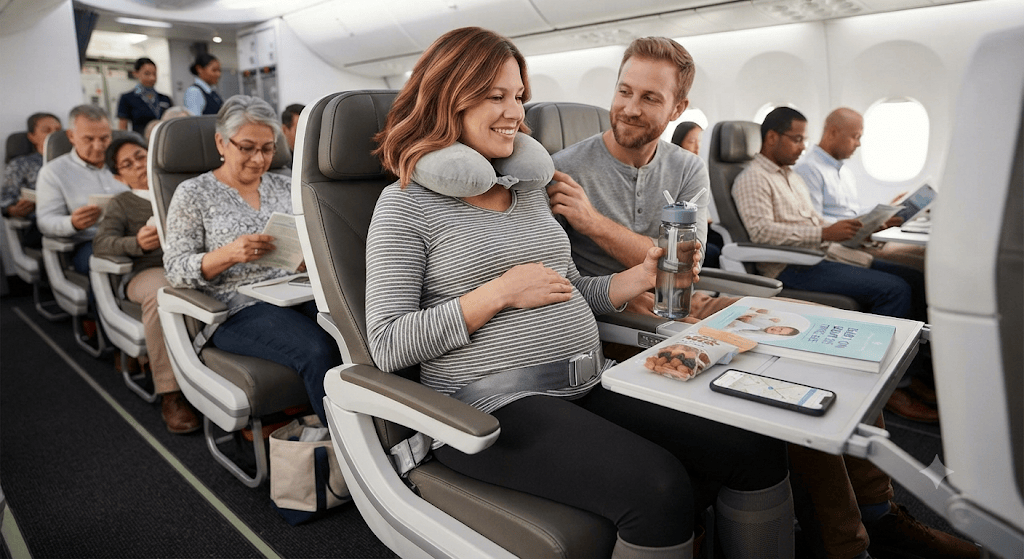
The Second Trimester Is Usually the Sweet Spot
Most of the nausea and extreme fatigue of the first trimester has typically eased by the second, and the size and discomfort of the third haven’t set in yet. This is why most doctors and experienced travelers point to weeks 14–27 as the most comfortable window for trips, though every pregnancy is different enough that this is a general pattern, not a guarantee.
Get the Green Light First, Not as an Afterthought
A quick check-in with your doctor before booking — not just before departure — helps you plan around any pregnancy-specific risk factors, flag destinations with limited medical access, and get clarity on any airline documentation you might need closer to your due date.
Comfort Gear Is Not Optional Luxury
A compression sock pair, a travel pillow that actually supports your lower back, and snacks that settle an unpredictable stomach aren’t indulgences on a pregnancy trip — they’re the difference between a manageable journey and a miserable one. Packing light matters more than usual, since you’ll have less patience for wrestling heavy bags.
Build In More Stops Than You Think You Need
Long stretches without movement increase discomfort and circulation issues. Choosing itineraries with natural breaks — a stopover flight instead of one long haul, a road trip with planned rest points — makes a real difference in how your body handles the trip.
Know Where the Nearest Hospital Is, Always
This isn’t about expecting something to go wrong — it’s about removing one more thing to figure out under stress if it does. Knowing the nearest reliable medical facility at every stop is a five-minute research task that buys real peace of mind.
Bottom Line
Traveling while pregnant isn’t off-limits — it just asks for more intentional planning than your usual trips did. Get the medical go-ahead, pack for comfort, and build slack into the schedule.

