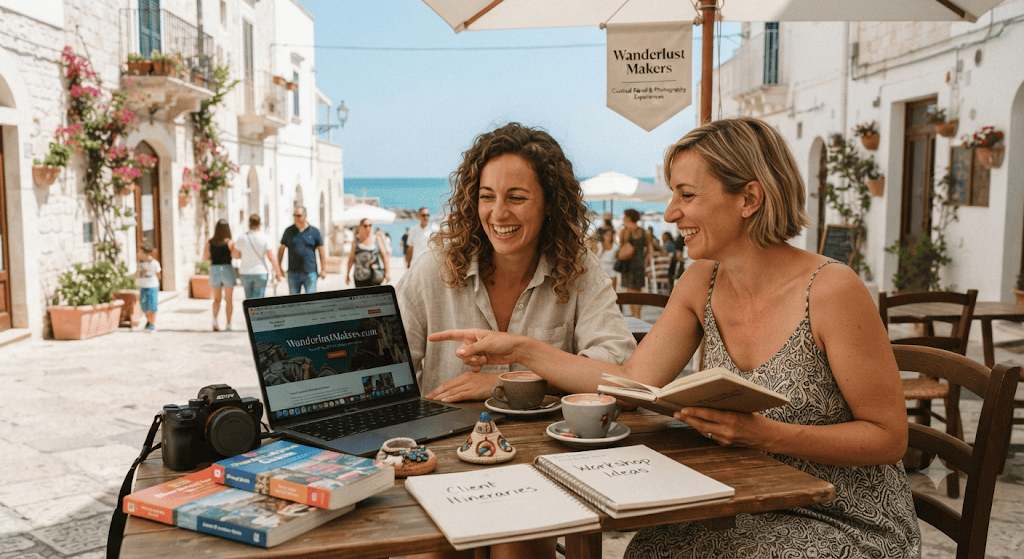
It Usually Starts With “Can You Plan Ours Too?”
Most of these businesses don’t begin with a business plan. They begin with a friend group saying, “You always plan the best trips — can you organise ours?” A woman who loves photography walks becomes a heritage-walk guide. A home cook who travels for regional recipes starts running food trails. A regular trekker starts leading small, women-only batches.
Why Hobby-Led Travel Businesses Work
- Genuine expertise. You already know the route, the best time to visit and the tea stall worth stopping at.
- Built-in trust. Early customers are friends and friends-of-friends, which matters a lot in travel.
- Low starting cost. Many begin with a WhatsApp group and an Instagram page, not an office.
The Unglamorous Parts
Turning a hobby into a business means dealing with what hobbies never ask of you: permits and local registrations, insurance, refund policies, vendor payments and last-minute cancellations. Women who make it work usually get the basics sorted early — a clear cancellation policy, a written itinerary and a small emergency fund for things that go wrong.
Starting Small Without Burning Out
- Run one or two trips a season before quitting anything.
- Partner with local guides and homestays instead of doing everything yourself.
- Keep groups small — it protects both safety and the quality of the experience.
- Collect honest feedback after every trip and actually use it.
Bottom Line
Your hobby already taught you the hardest part — knowing a place well enough to make others fall for it. The rest is systems, and systems can be learned one trip at a time.

