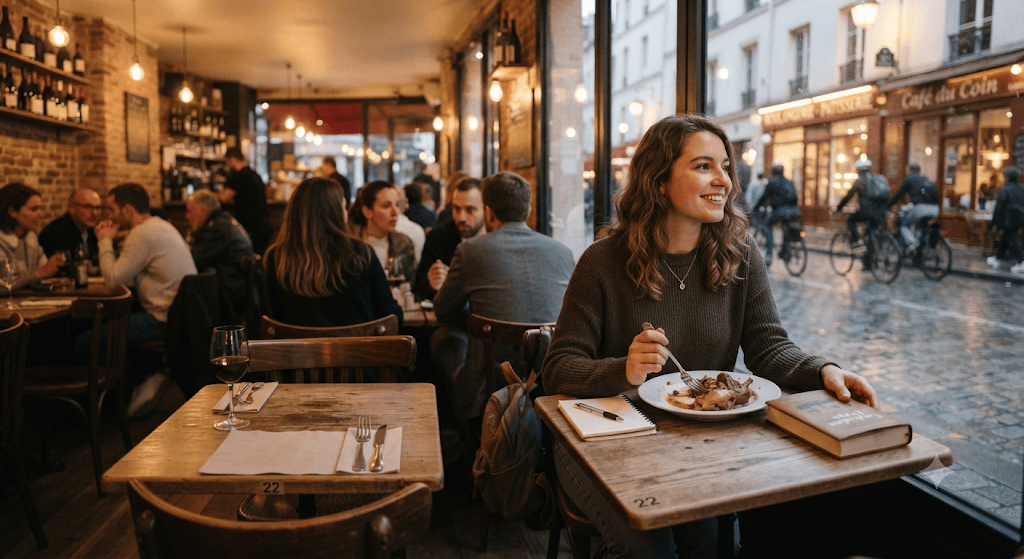
Solo travelers often say the same thing: navigating a new city alone feels fine, but sitting down alone at a restaurant table still triggers a wave of self-consciousness unlike almost anything else about traveling solo. Here’s how to work through that, and eventually enjoy it.
Why It Feels Different From Other Solo Moments
Walking around a city alone feels purposeful — you’re clearly doing something. Sitting at a table alone, with nothing to visibly “do,” can feel exposed in a way that triggers an irrational worry that everyone around you is noticing and judging. In reality, almost no one is paying attention at all.
Start With Lower-Pressure Settings
Cafés, casual street-food spots, or counter seating at a small eatery are far less intimidating first steps than a formal sit-down restaurant. Building comfort in lower-stakes settings first makes the transition to a proper solo restaurant meal feel much less daunting.
Bring Something, But Don’t Hide Behind It
A book, journal, or phone can ease the initial self-consciousness, but constantly staring at it defeats part of the purpose of solo dining — actually noticing the place you’re in. A middle ground works well: something to glance at occasionally, without using it as a permanent shield.
Choose Seating That Feels Comfortable
Many restaurants offer counter seating, window tables, or people-watching spots that feel more natural for solo diners than a large table clearly meant for groups. Requesting this specifically, rather than defaulting to wherever you’re seated, makes a real difference.
Order With Confidence, Not Apology
There’s no need to explain or apologize for dining alone — a confident, simple order communicates that this is a normal, deliberate choice, not something requiring justification to the staff or anyone else in the room.
Use the Time Intentionally
Solo meals are a rare, uninterrupted window to actually notice a place — the way people talk, the specific flavors, the atmosphere — attention that’s often lost in group settings where conversation dominates. Framing it as an experience rather than something to get through changes how it feels.
It Gets Easier Fast
Almost every solo traveler describes the same arc — intense self-consciousness the first time or two, followed by growing comfort, and eventually genuine enjoyment of solo meals as one of the more reflective parts of traveling alone.
Bottom Line
Solo dining feels like the hardest part of traveling alone mostly because it’s unfamiliar, not because anyone is actually watching. A few deliberate first attempts in lower-pressure settings usually turns this into one of the more rewarding parts of solo travel, not the most dreaded.

