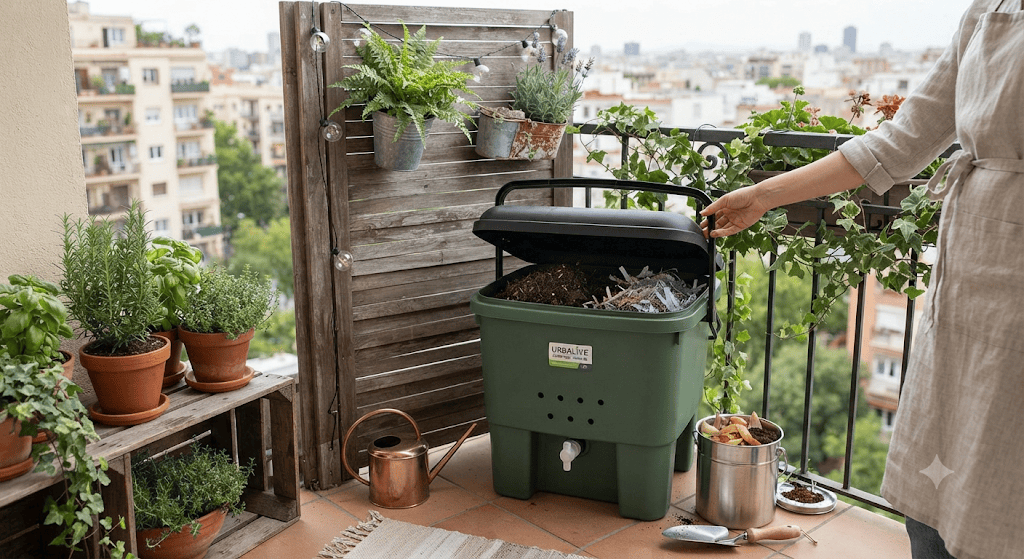
Composting for Beginners: A Simple Balcony Guide

Composting sounds like something that needs a big backyard or a rural setup — but it’s entirely doable on a city balcony, with nothing more than a small bin and some patience. Here’s a simple starting guide for anyone who wants to turn kitchen waste into something useful instead of trash.

Why Bother Composting on a Balcony

A large share of household waste is organic — vegetable peels, fruit scraps, tea leaves — and most of it ends up in landfills, where it breaks down slowly and releases methane. Composting it at home instead turns that same waste into nutrient-rich soil for your own plants, cutting down what you send out while feeding what you grow.

What You’ll Need

  • A compost bin or container with a lid — a simple plastic bucket, terracotta pot, or a stacked compost bin works fine
  • Some drainage holes drilled into the container if it doesn’t already have any
  • A base layer of dry material like dried leaves, newspaper, or coco peat
  • A small stick or trowel for turning and mixing

What You Can (and Can’t) Compost

Yes: vegetable and fruit peels, tea leaves, coffee grounds, eggshells, dry leaves, paper (non-glossy)

No: cooked food, oily or dairy items, meat, citrus peels in large quantities, diseased plant matter

Sticking to this list keeps the compost from smelling and prevents pest issues, which is the number one reason beginners give up early.

The Balance: Greens and Browns

Compost needs two types of material — “greens” (wet, nitrogen-rich scraps like vegetable peels) and “browns” (dry, carbon-rich material like dried leaves or shredded paper). A rough ratio of one part greens to two or three parts browns keeps the mix balanced, odor-free, and breaking down properly.

The Basic Routine

  1. Layer it — browns at the bottom, then alternate with greens as you add kitchen scraps
  2. Turn it every few days — mixing the pile with a stick or trowel adds air, which speeds up decomposition and prevents smell
  3. Keep it moist, not wet — it should feel like a damp sponge, not soaked
  4. Be patient — balcony composting typically takes 4 to 8 weeks to produce usable compost, depending on conditions

Signs It’s Working (or Not)

A healthy compost pile smells earthy, not rotten. If it smells bad, it usually means too many wet “greens” and not enough dry “browns” — add more dry material and turn it more often. If nothing seems to be breaking down, it may be too dry — add a little water and mix.

What to Do With Finished Compost

Once it looks dark, crumbly, and smells like soil rather than food waste, it’s ready. Mix it into potting soil for your balcony plants, or share it with a neighbor who gardens — either way, waste that would have gone to a landfill is now feeding something living.

Bottom Line

Balcony composting isn’t about doing it perfectly — it’s about doing it consistently. Even a small bin, tucked into a corner of an apartment balcony, can meaningfully cut down kitchen waste while giving your plants something landfill-bound scraps never could.
The Hidden Environmental Cost of Fast Fashion (And What I Switched To Instead)

For years, a “good haul” meant five new things for the price of two, worn a handful of times, replaced the moment they looked slightly tired. I didn’t think of it as wasteful — I thought of it as smart shopping. It took me a while to realize how much was hiding behind that word “smart.”

The cost that doesn’t show up on the price tag

Fast fashion is cheap at checkout because the real cost gets pushed somewhere else — onto water systems polluted by dyeing processes, onto landfills piling up with clothes that take decades to break down, onto garment workers paid too little to make clothes designed to fall apart in a year. None of that shows up on the tag. It just gets quietly absorbed somewhere we don’t have to look at.

The average piece of fast fashion is worn only a handful of times before it’s discarded. That’s not a flaw in how we use clothes — it’s the business model working exactly as designed. Cheap enough to feel disposable, trendy enough to feel outdated fast, so the next order feels necessary rather than optional.

What made me actually stop and look

It wasn’t one dramatic moment — it was noticing my own closet. Half of it barely worn, the rest already pilling or fading after a few washes. I’d spent more money buying “more” than I would have spent buying “better,” and had less to show for it in the long run. That math finally bothered me enough to change something.

What I switched to instead

Cost-per-wear over cost-per-item. A ₹3,000 piece worn fifty times costs far less per wear than a ₹500 piece worn three times before it falls apart. I started asking myself not “can I afford this” but “will I actually wear this fifty times” — a much harder, much more honest question.

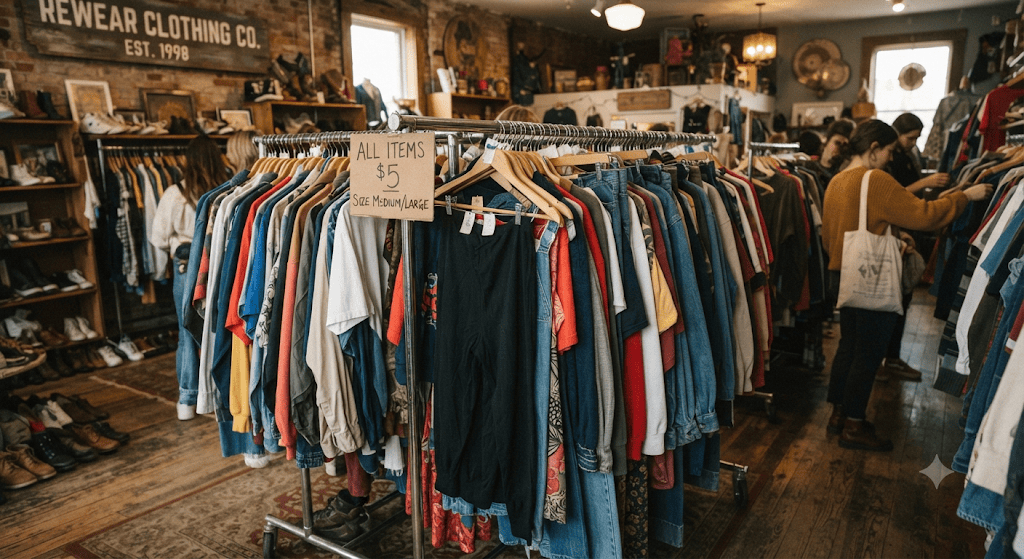
Thrift and pre-loved first. Some of my favorite pieces now are secondhand — better quality than what I could’ve afforded new, and no new production required at all. It took some adjusting to enjoy the hunt instead of expecting instant matches, but it’s become one of my favorite ways to shop.

Repair before replace. A loose button or a small tear used to mean the end of a garment’s life for me. Now it means five minutes with a needle and thread, or a trip to the local tailor. It’s a small habit, but it’s kept clothes in rotation far longer than they would have lasted otherwise.

Fewer, better basics. Instead of chasing every trend, I built a smaller wardrobe of pieces that mix and match easily and don’t scream “this season only.” It’s less exciting in the moment of buying, but far more satisfying every single day after.

Supporting slower, local brands when I can. They cost more upfront, almost always. But knowing where something was made, and that the people making it were paid fairly, has made spending on clothes feel less like guilt and more like an actual choice.

This isn’t about guilt

I still buy new clothes. I still enjoy getting dressed up for something. This isn’t about swearing off fashion or judging anyone’s closet — it’s about noticing that “cheap” and “smart” aren’t always the same thing, and that slowing down the buying just a little changes both what ends up in your closet and what ends up outside it, in places we don’t see.

Small shifts in how we shop won’t fix an entire industry on their own. But they do change what we’re quietly funding every time we check out — and that’s worth paying attention to.

Have you made any changes to how you shop for clothes? I’d love to hear what’s worked for you.

Small Daily Habits That Reduce Your Carbon Footprint

Cutting your carbon footprint doesn’t require a lifestyle overhaul. Most of the impact comes from small, repeatable habits — the kind that fit into an already busy day without feeling like a sacrifice.

Rethink Your Commute

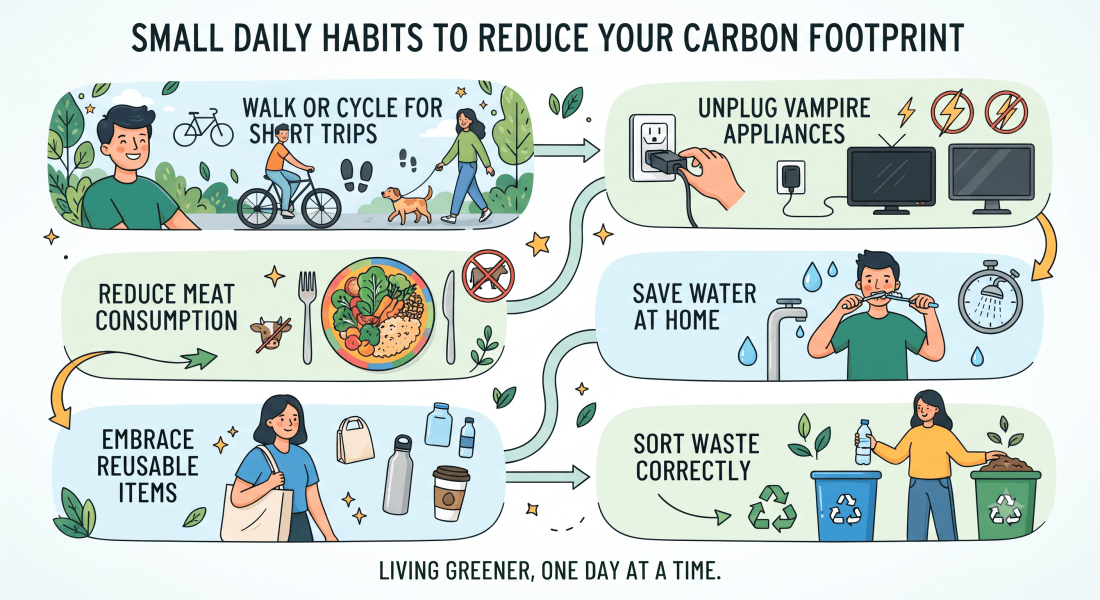
Even swapping one or two car trips a week for walking, cycling, or public transport adds up over a year. If a full switch isn’t practical, carpooling with a colleague or neighbor cuts emissions per person without changing your route.

Unplug What You’re Not Using

Devices left plugged in — chargers, appliances, routers on standby — draw small amounts of power constantly. Unplugging them when not in use, or using a power strip you can switch off at once, is a near-zero-effort habit with a real cumulative effect.

Cut Down on Single-Use Plastic

Carrying a reusable water bottle, a cloth bag, or a steel tiffin instead of relying on single-use plastic each day reduces both your waste output and the emissions tied to producing that plastic in the first place.

Eat a Little More Local, a Little Less Processed

Food that travels shorter distances and requires less processing generally has a smaller carbon footprint. You don’t need to go fully local or vegetarian overnight — even shifting one or two meals a week toward local, less-processed options makes a difference over time.

Be Deliberate About Water Use

Shorter showers, turning off the tap while brushing your teeth or washing dishes, and fixing leaky taps promptly all reduce the energy used to heat, pump, and treat water — a footprint most people don’t think about day to day.

Buy Less, Use Longer

Fast fashion and short-lived gadgets both carry a heavy production footprint. Choosing quality over quantity, repairing instead of replacing, and reusing what you already have cuts down on manufacturing emissions far more than any single “eco” purchase can.

Bottom Line

None of these habits require a big budget or a dramatic lifestyle change. They’re small adjustments that, done consistently, add up to a meaningfully lighter footprint — proof that everyday choices matter just as much as big environmental policies.