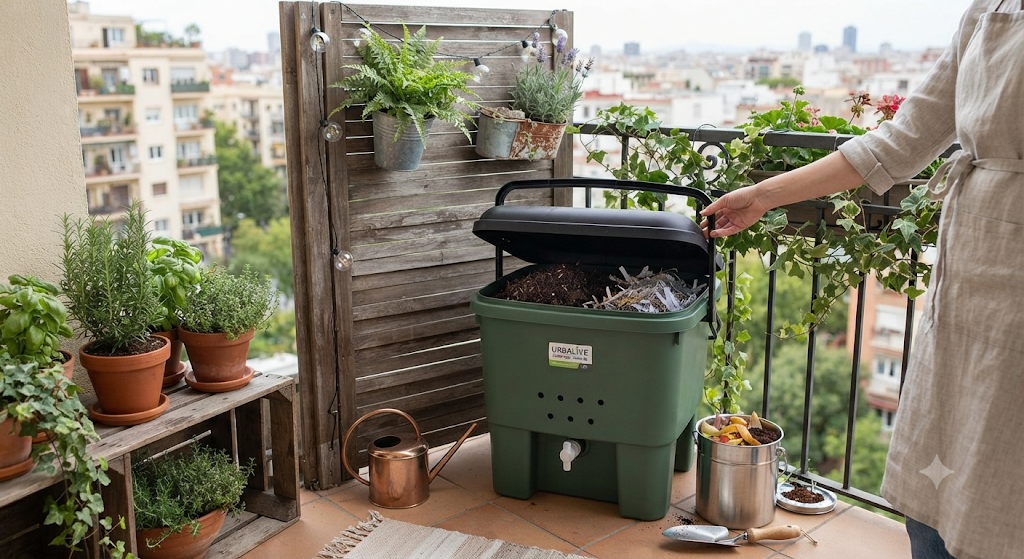
Composting sounds like something that needs a big backyard or a rural setup — but it’s entirely doable on a city balcony, with nothing more than a small bin and some patience. Here’s a simple starting guide for anyone who wants to turn kitchen waste into something useful instead of trash.
Why Bother Composting on a Balcony
A large share of household waste is organic — vegetable peels, fruit scraps, tea leaves — and most of it ends up in landfills, where it breaks down slowly and releases methane. Composting it at home instead turns that same waste into nutrient-rich soil for your own plants, cutting down what you send out while feeding what you grow.
What You’ll Need
- A compost bin or container with a lid — a simple plastic bucket, terracotta pot, or a stacked compost bin works fine
- Some drainage holes drilled into the container if it doesn’t already have any
- A base layer of dry material like dried leaves, newspaper, or coco peat
- A small stick or trowel for turning and mixing
What You Can (and Can’t) Compost
Yes: vegetable and fruit peels, tea leaves, coffee grounds, eggshells, dry leaves, paper (non-glossy)
No: cooked food, oily or dairy items, meat, citrus peels in large quantities, diseased plant matter
Sticking to this list keeps the compost from smelling and prevents pest issues, which is the number one reason beginners give up early.
The Balance: Greens and Browns
Compost needs two types of material — “greens” (wet, nitrogen-rich scraps like vegetable peels) and “browns” (dry, carbon-rich material like dried leaves or shredded paper). A rough ratio of one part greens to two or three parts browns keeps the mix balanced, odor-free, and breaking down properly.
The Basic Routine
- Layer it — browns at the bottom, then alternate with greens as you add kitchen scraps
- Turn it every few days — mixing the pile with a stick or trowel adds air, which speeds up decomposition and prevents smell
- Keep it moist, not wet — it should feel like a damp sponge, not soaked
- Be patient — balcony composting typically takes 4 to 8 weeks to produce usable compost, depending on conditions
Signs It’s Working (or Not)
A healthy compost pile smells earthy, not rotten. If it smells bad, it usually means too many wet “greens” and not enough dry “browns” — add more dry material and turn it more often. If nothing seems to be breaking down, it may be too dry — add a little water and mix.
What to Do With Finished Compost
Once it looks dark, crumbly, and smells like soil rather than food waste, it’s ready. Mix it into potting soil for your balcony plants, or share it with a neighbor who gardens — either way, waste that would have gone to a landfill is now feeding something living.
Bottom Line
Balcony composting isn’t about doing it perfectly — it’s about doing it consistently. Even a small bin, tucked into a corner of an apartment balcony, can meaningfully cut down kitchen waste while giving your plants something landfill-bound scraps never could.


