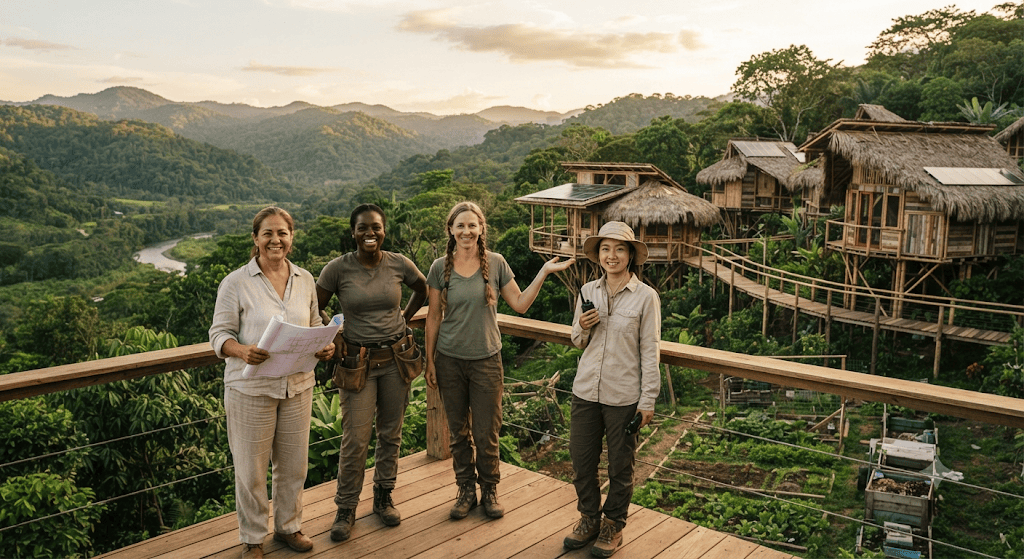
Women Who Built Their Own Eco-Resorts From Scratch

From Finance to Forest Stays

Aditi Balbir left a decade-long career in finance, including stints at firms like McKinsey, to found V Resorts, a company that partners with small, remote properties and helps them meet sustainable operational standards. Her model showed that even a modest 15-room resort could generate meaningful local jobs and income while limiting environmental impact — proof that ecotourism could be both a business and a community investment.

Verifying Sustainability, One Stay at a Time

Prerna Prasad built Ecoplore after leaving a career in news journalism, spending her first two years personally visiting and vetting eco-friendly hotels across India before listing a single one. Her platform requires strict criteria — meaningful tree cover, plastic-free operations, rainwater harvesting, and composting — and is run by an almost entirely female team, partly to make solo travel verification safer for women.

Turning Fisherfolk Into Tour Guides

Rashmi Sawant’s Culture Aangan took a different route entirely — instead of building resorts, she built experiential rural tourism around existing village livelihoods. In Maharashtra’s Sindhudurg district, women from local fishing communities now lead tourists on boat rides through mangrove creeks as an additional, dignified income stream alongside their traditional work.

The Common Thread

None of these ventures started with hospitality credentials. What they shared was a willingness to spend years on unglamorous groundwork — vetting properties, building trust with village communities, negotiating with vendors — before any of it looked like a “resort” in the traditional sense.

Bottom Line

The women reshaping India’s eco-tourism sector didn’t inherit a hospitality legacy — they built one, one relationship and one sustainability standard at a time.
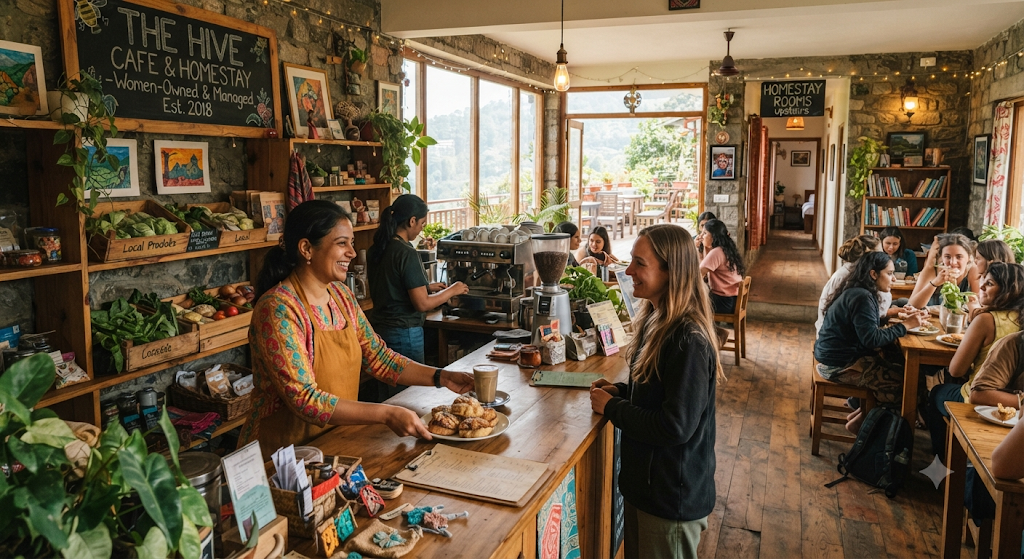
Women-Owned Cafes and Homestays Worth Supporting on Your Next Trip

Every trip involves dozens of small spending decisions — where to eat, where to stay, whose business gets your money. Most of these choices are made on convenience alone. But a growing number of travelers are starting to ask one more question: who actually owns this place? Seeking out women-owned cafes and homestays is a small shift that adds up to real support.

Why It Matters

Women entrepreneurs, especially in hospitality and food service, often face harder paths to funding, land ownership, and business credit than their male counterparts. A homestay or café run by a woman — particularly in smaller towns or rural areas — frequently represents not just a business, but a hard-won foothold in local economic life. Choosing to spend there is a direct, tangible way to back that effort.

What These Places Often Offer

Women-run homestays in particular tend to lean into hospitality that feels personal rather than transactional — home-cooked meals, local recipes passed down through family, and a level of care that larger commercial stays rarely replicate. Cafés run by women often double as community spaces, sometimes hiring other local women and reinvesting in the neighborhood around them.

How to Find Them While Traveling

  • Ask locally, not just online. Tourism boards and local women’s self-help groups often know of homestays that never make it onto big booking platforms.
  • Look for cooperative and self-help group listings. Many regions have women-run hospitality collectives, especially in rural and hill areas, that list multiple homestays together.
  • Check reviews for ownership mentions. Guests often note “run by [name] and her family” — a good sign of a woman-led stay.
  • Support cafés that hire visibly. A café that trains and employs local women, not just serves good coffee, extends the impact further.

Beyond the Trip

Supporting women-owned spaces while traveling isn’t just a nice gesture — it directly channels tourist spending into hands that often see the least of it. It’s a small, deliberate choice that turns an ordinary trip into something with a slightly wider impact.