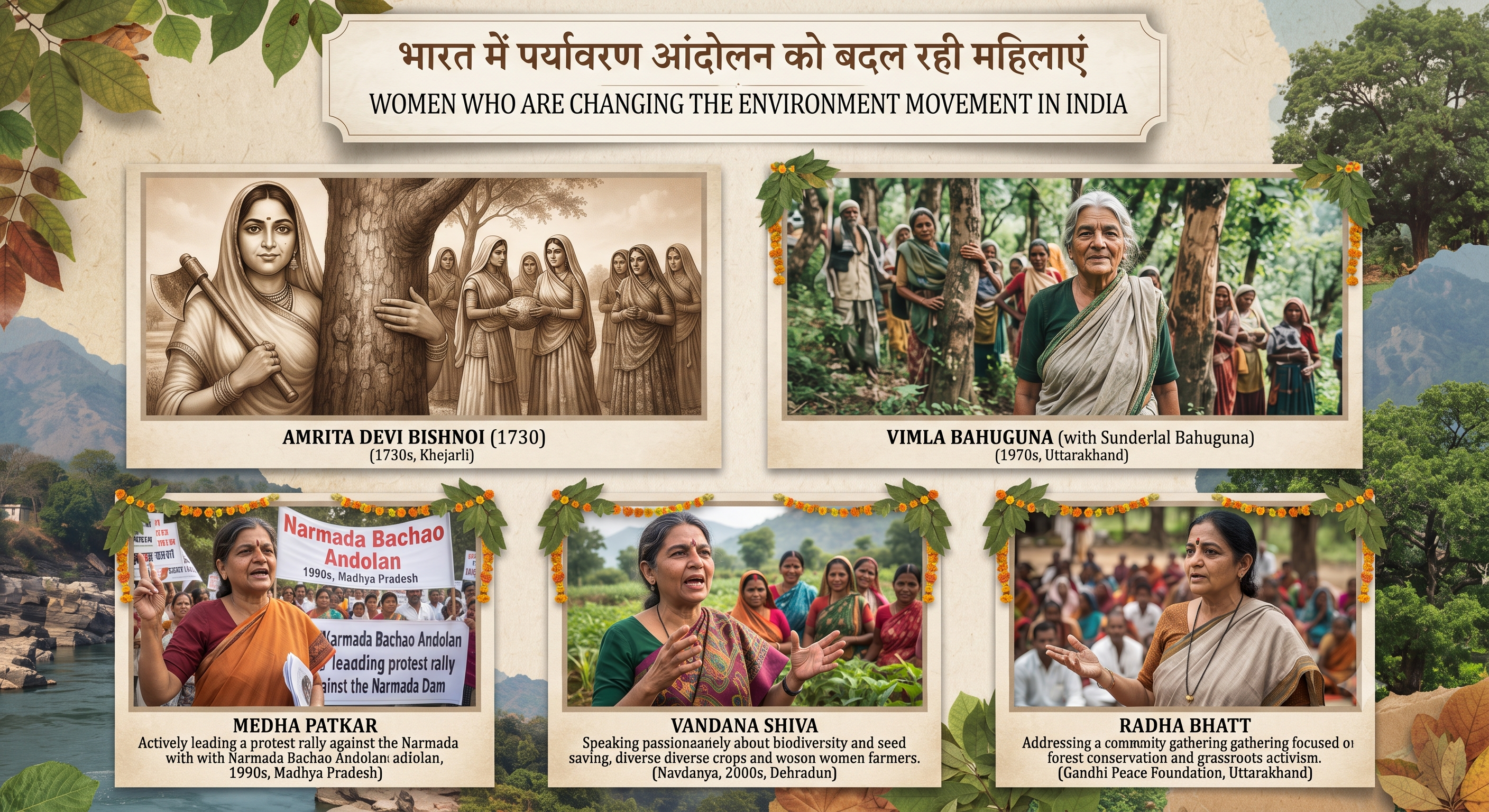
India’s environmental movement has been shaped by women at every stage — from centuries-old sacrifice to present-day grassroots leadership. Here are a few whose work deserves to be known better.
Amrita Devi Bishnoi (18th century)
Long before “environmentalism” was a word, Amrita Devi gave her life protecting Khejri trees in her Rajasthan village from being cut down for royal construction — her three daughters followed her example. Her sacrifice remains one of the earliest known acts of environmental resistance in India.
Vimla Bahuguna
A key organizer of the Chipko Movement in the 1970s, Vimla worked closely with rural women across the Himalayan region to mobilize the tree-hugging protests that stopped commercial logging — a movement that became a global symbol of grassroots environmental action.
Medha Patkar
Founder of the Narmada Bachao Andolan in 1989, Medha Patkar has spent decades opposing large dam projects that displaced hundreds of thousands of people, using hunger strikes and sustained public advocacy to bring the issue to national attention.
Vandana Shiva
A leading voice in the global ecofeminist movement, Vandana Shiva has long advocated for farming systems that center women’s roles in agriculture, challenging exclusionary practices in how land and resources are managed.
Radha Bhatt
A Gandhian social worker connected to the Chipko movement, Radha Bhatt has spent decades on environmental conservation and women’s empowerment work in Uttarakhand, and was honored with the Padma Shri in 2025 for her contributions.
These stories span centuries, but the thread connecting them is the same — women showing up, again and again, for causes that often didn’t credit them enough at the time. Worth remembering, and worth continuing.


