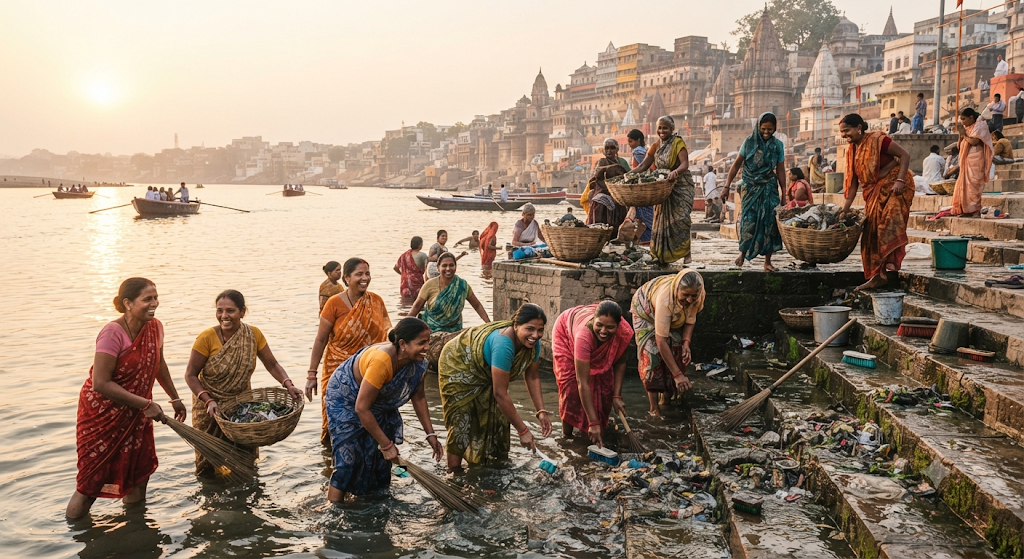
A Crisis Hiding Behind Postcard Photos
Research from India’s Central Pollution Control Board has identified over 350 polluted river stretches across the country — a scale of degradation that rarely shows up in the postcard shots of ghats at sunrise. Behind that gap between image and reality, a quiet restoration movement has been building, and women are disproportionately leading it.
When a Town Decides to Listen to Its River
In Churachandpur, Manipur, the Rural Women Upliftment Society and Highland Impact Foundation began organizing local restoration work by asking residents a simple question: how do you reclaim a river people had started treating as disposable? Their women-led approach treated the river’s health as inseparable from community resilience, health, and dignity — not a separate environmental issue to solve later.
The Numbers Behind the Movement
In river rejuvenation projects run under India’s rural employment guarantee scheme, women have made up the overwhelming majority of on-ground workers in several districts — in one Tamil Nadu project, close to 90 percent of workers were women. Programs like this have trained hundreds of local “water warriors” to lead grassroots restoration in their own villages.
Why Women End Up Leading This Work
Water collection and household water management has traditionally fallen to women in rural India, which means they’re often the first to feel a river’s decline and the first to organize around fixing it. That lived proximity to the problem translates into restoration work that’s rooted in daily necessity, not just environmental idealism.
Bottom Line
River restoration in India isn’t only happening through large government missions — it’s also happening step by step, ghat by ghat, led by women who were never going to wait for someone else to notice the river was dying.


