Women Who Restored Abandoned Stepwells Across India

Structures Built Around Women’s Lives

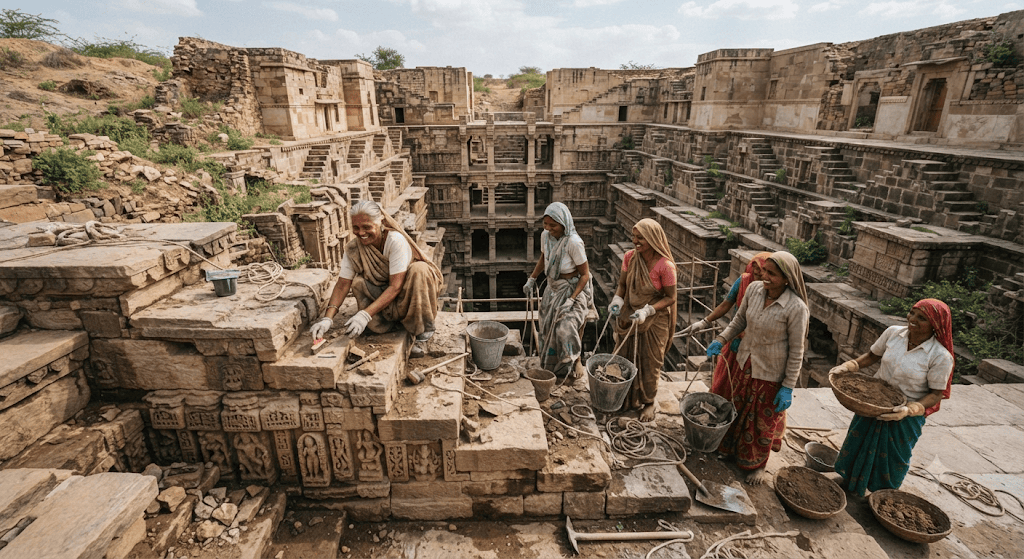
Stepwells, known as baolis or vavs, date back over a thousand years across western and northern India. Historically, they were integral to women’s daily routines — collecting water, doing laundry, meeting friends — away from the confines of home. Many were even funded by queens and women of means as acts of public philanthropy.

From Forgotten to Functional

Decades of neglect left thousands of stepwells filled with debris, sewage or simply forgotten beneath modern cities. In Secunderabad, architect Kalpana Ramesh led the revival of the centuries-old Bansilalpet stepwell — a project that took over 500 days and more than a thousand workers to bring a structure once “filled with sewage, bandicoots and rats” back into use. Ramesh’s broader restoration work has also mobilised hundreds of families to repair defunct borewells and boost groundwater levels across Hyderabad.

Community-Led Revivals

In Udhampur, Jammu and Kashmir, residents launched the Bowli Bachao Abhiyan (“Save the Stepwells Mission”) and revived 65 stepwells in just four months — largely volunteer-funded and community-driven. In Rajasthan, restoration partnerships have revived stepwells like Bhanpur Kala Ki Bawri, restoring clean water access to thousands of people and specifically easing the burden on women and children who previously walked kilometres daily to fetch water.

Why This Work Matters Beyond Heritage

Stepwells aren’t just architectural relics — they’re functioning groundwater recharge systems. A single restored stepwell in Delhi has been found to add tens of thousands of gallons of water to the local system daily; one project in Jodhpur contributes millions of gallons for irrigation and domestic use. In water-stressed regions, that’s not nostalgia — it’s infrastructure.

How to Support This Work

  1. Visit restored stepwells respectfully and support local guides
  2. Follow and donate to organisations running stepwell and water-body revivals
  3. Share these stories — most tourists have never heard of stepwells as living water systems, not just photo spots

Bottom Line

The women restoring India’s stepwells aren’t just preserving beautiful architecture — they’re reviving water systems that once centred women’s lives, and could again ease the water burden so many still carry.

The Women Reviving India’s Dying River Ghats

A Crisis Hiding Behind Postcard Photos

Research from India’s Central Pollution Control Board has identified over 350 polluted river stretches across the country — a scale of degradation that rarely shows up in the postcard shots of ghats at sunrise. Behind that gap between image and reality, a quiet restoration movement has been building, and women are disproportionately leading it.

When a Town Decides to Listen to Its River

In Churachandpur, Manipur, the Rural Women Upliftment Society and Highland Impact Foundation began organizing local restoration work by asking residents a simple question: how do you reclaim a river people had started treating as disposable? Their women-led approach treated the river’s health as inseparable from community resilience, health, and dignity — not a separate environmental issue to solve later.

The Numbers Behind the Movement

In river rejuvenation projects run under India’s rural employment guarantee scheme, women have made up the overwhelming majority of on-ground workers in several districts — in one Tamil Nadu project, close to 90 percent of workers were women. Programs like this have trained hundreds of local “water warriors” to lead grassroots restoration in their own villages.

Why Women End Up Leading This Work

Water collection and household water management has traditionally fallen to women in rural India, which means they’re often the first to feel a river’s decline and the first to organize around fixing it. That lived proximity to the problem translates into restoration work that’s rooted in daily necessity, not just environmental idealism.

Bottom Line

River restoration in India isn’t only happening through large government missions — it’s also happening step by step, ghat by ghat, led by women who were never going to wait for someone else to notice the river was dying.

Rainwater Harvesting at Home: A Simple Guide for Renters and Owners

Rainwater harvesting sounds like a major home renovation project reserved for house owners with a big budget. In reality, there are options across a wide range of scale and investment — including simple setups that work even for renters in apartments.


Why It’s Worth Doing


Beyond reducing dependence on municipal or groundwater supply, rainwater harvesting helps recharge local groundwater tables and reduces stormwater runoff that would otherwise overwhelm drainage systems, especially in cities where over-extraction has caused water tables to drop significantly over the years.


For Renters: Small-Scale Options


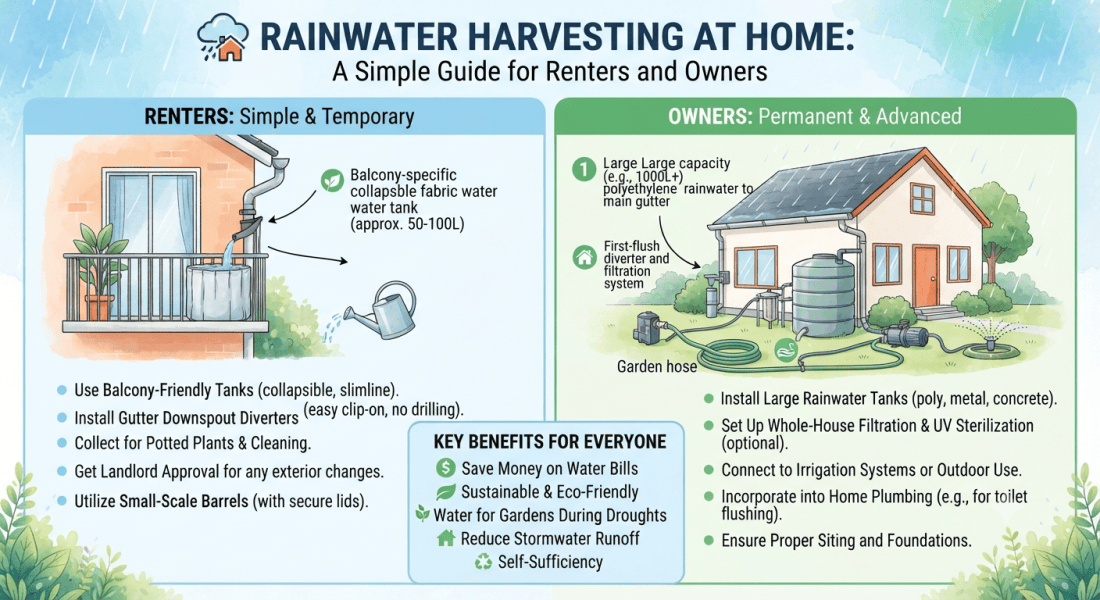
Balcony collection barrels — a simple barrel or large container positioned to catch runoff from a balcony roof or overhang can supply water for plants, cleaning, or non-drinking household use
Diverting downspout water temporarily into a container during heavy rain, where structurally possible without permanent modification
Using harvested water for gardening specifically, which avoids the more complex filtration needed for potable use


For Homeowners: A More Complete System


Rooftop catchment — channeling roof runoff through gutters into a storage tank, ideally with a first-flush diverter to remove initial dirty runoff before storage
A basic filtration setup — mesh filters to remove debris, followed by sand or charcoal filtration for water intended for non-drinking uses like gardening or cleaning
A recharge pit or well, if space allows, to direct excess collected water back into the ground rather than letting it run off into street drainage


What Rainwater Should (and Shouldn’t) Be Used For


Without proper purification, harvested rainwater is best used for gardening, washing, or topping up non-potable needs — not drinking water, unless a more thorough filtration and treatment system is specifically installed and maintained for that purpose.


Basic Maintenance Matters


Even a simple barrel setup needs periodic cleaning to prevent mosquito breeding and algae buildup, and any filtration components need regular checking — a rainwater system that’s neglected can create more problems than it solves.


Government Incentives Worth Checking


Several Indian cities have introduced rainwater harvesting mandates or incentives for new constructions, and some municipal bodies offer subsidies or guidance for retrofitting existing homes — worth checking local regulations, since incentives and requirements vary significantly by city.


Bottom Line


Rainwater harvesting isn’t an all-or-nothing project — a renter with one balcony barrel and a homeowner with a full rooftop catchment system are both meaningfully contributing to the same larger goal. Starting small is a legitimate entry point, not a lesser version of “doing it properly.”