The Rise of Women in India’s Adventure Sports Industry

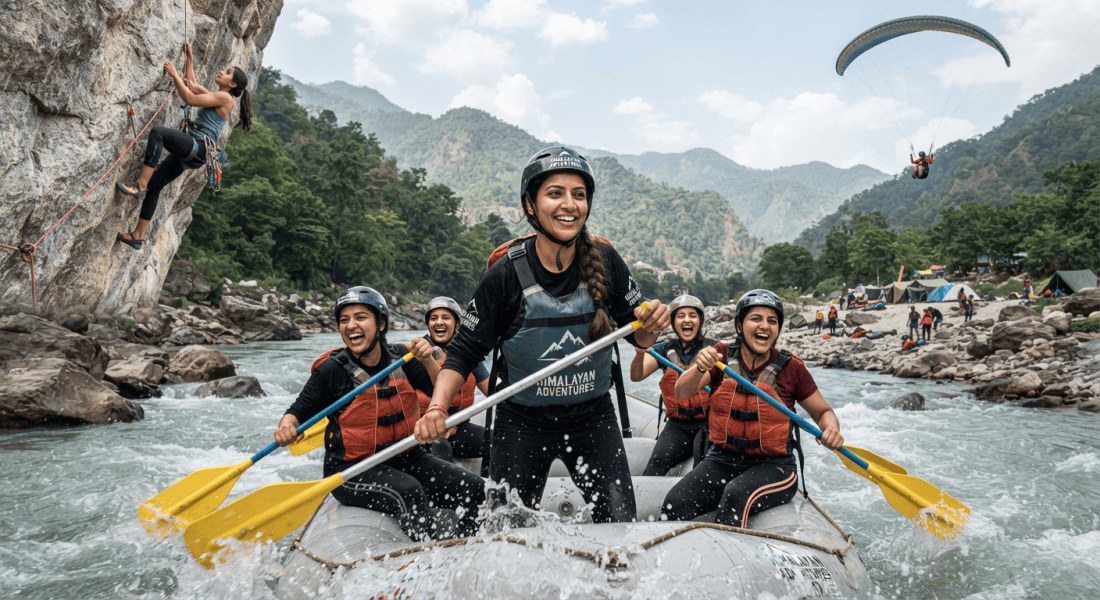
Adventure sports in India — rafting, paragliding, rock climbing, scuba diving — have long carried a male-dominated image, both among participants and among the guides and instructors running these operations. That image is steadily shifting, on both fronts.


More Women Entering as Athletes


Participation numbers in adventure sports among Indian women have grown noticeably over the past decade, driven partly by greater visibility of women athletes in the space, and partly by a broader cultural shift toward normalizing physically intense, traditionally “masculine” activities for women.


Women Building Careers as Instructors and Guides


Beyond participation, a growing number of women are becoming certified instructors and guides themselves — river rafting guides, climbing instructors, paragliding pilots — roles that were almost entirely male a generation ago, and that put women in positions of direct authority and expertise within these activities.


Running the Business Side, Too


Some adventure sports operations across trekking, rafting, and climbing circuits are now founded or co-founded by women, shifting representation not just among frontline athletes and guides but at the ownership and decision-making level of the industry itself.


What’s Driving the Shift


Increased visibility through social media has played a real role — seeing other women confidently participate in and lead adventure activities has measurably lowered the psychological barrier for newcomers considering trying it themselves. Dedicated women-focused adventure groups and training programs have also made entry points more accessible for beginners who might otherwise have hesitated.


The Barriers That Remain


Physical infrastructure — changing facilities, safety gear sized for a broader range of body types, instructor training that accounts for different needs — still lags in many operations built around a male-default assumption. Social attitudes in some regions also remain a real barrier, particularly for women pursuing adventure sports as a full-time career rather than an occasional activity.


Why Representation at Every Level Matters


A woman instructor or guide doesn’t just teach a skill — she visibly demonstrates that leadership and expertise in this space isn’t gender-restricted, which tends to have a ripple effect on how many other women consider trying, and eventually pursuing, adventure sports themselves.


Bottom Line


Adventure sports in India are becoming less of a male default and more genuinely open, both as an activity and as a career path for women. The shift isn’t complete, but it’s real, visible, and increasingly self-reinforcing as more women enter and lead in the space.
Women Mountaineers Who Made History Before It Was “Normal”

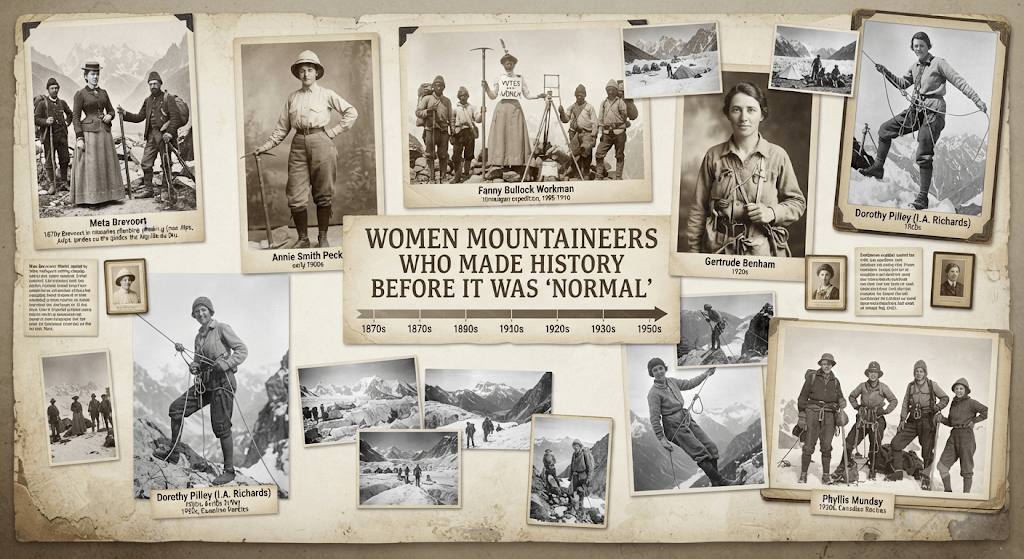
Adventure sports and mountaineering are increasingly common pursuits for Indian women today, but that normalcy was built by a small number of climbers who took on the world’s highest peaks when the field was overwhelmingly male, and the odds — logistical, social, and physical — were stacked against them.

Bachendri Pal: The First to Summit Everest

Bachendri Pal became the first Indian woman to reach the summit of Mount Everest in 1984. She began mountaineering at just 12 years old, scaling a peak over 13,000 feet high during a school picnic, and was the first girl in her village to become a graduate — before going on to a career that reshaped what was considered possible for women in Indian mountaineering. She later launched a fitness initiative for women over 50, aiming to prove that adventure has no age or gender limit.

Chandraprabha Aitwal: A Quiet Pioneer

Chandraprabha Aitwal, born in 1941 in Dharchula, Uttarakhand, is recognized as one of the pioneers of Indian women’s mountaineering, having climbed peaks including Nanda Devi, Kangchenjunga, and Trishuli. She received the Tenzing Norgay National Adventure Award for Lifetime Achievement in 2009 — recognition for decades of climbing at a time when few women in India were doing so at all.

Premlata Agrawal: Starting Late, Going Further

Premlata Agrawal became the first Indian woman to complete the Seven Summits — the highest peaks on each continent. What makes her story distinct is timing: she didn’t start mountaineering until age 36, after entering a hill-climbing competition in Jamshedpur, and went on to summit Everest in 2011 at age 48, becoming the oldest Indian woman to do so at the time.

Anshu Jamsenpa: Redefining Speed and Repetition

Anshu Jamsenpa holds the record for being the first woman to summit Everest twice in a single season, along with the fastest double ascents by a woman — an achievement that pushed the boundaries not just of whether women could summit, but how they could redefine what elite performance at altitude looked like.

Why These Stories Matter Beyond the Summit

Between 1965 and 2018, Indian women climbers made 81 attempts on Everest across 74 individual climbers — a number that grew steadily in large part because these early pioneers proved it was possible, then went on to train and mentor the generations that followed them.

Bottom Line

Every Indian woman climbing today is walking a trail — sometimes literally — first cleared by women who had no precedent to point to, no visible path showing it could be done. Their achievements weren’t just personal records; they were the foundation that made mountaineering a realistic pursuit for the women who came after them.

Monsoon Trekking: Is It Worth the Risk?

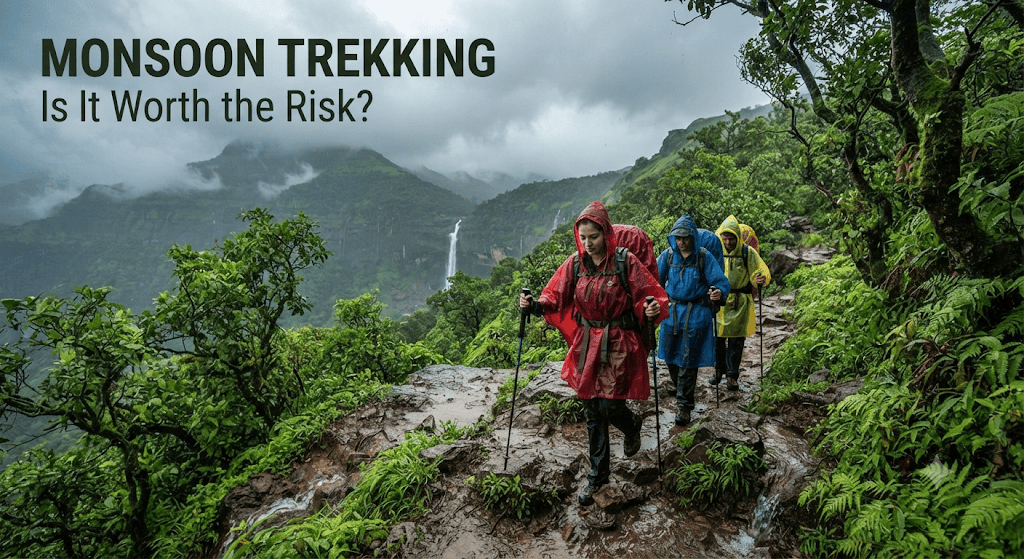
Monsoon turns familiar trails into something else entirely — waterfalls appear overnight, hillsides turn a deep green, and the whole landscape feels alive in a way summer treks rarely capture. It’s also, without question, riskier. Here’s an honest look at the trade-off.

Why Trekkers Are Drawn to Monsoon Treks

Monsoon transforms otherwise dry, dusty trails into lush, waterfall-lined landscapes that simply don’t exist the rest of the year. For trekkers chasing dramatic scenery and fewer crowds, this narrow seasonal window offers something genuinely unique.

The Real Risks Involved

  • Slippery, unstable terrain — mud and wet rock significantly increase the risk of slips and falls, especially on steep or rocky sections
  • Leeches and increased insect activity, particularly in forested, humid trail sections
  • Landslide and flash flood risk, especially in hill regions with loose soil or near river crossings
  • Reduced visibility from fog and heavy rain, making navigation harder on unmarked or less-trodden trails
  • Swollen rivers and streams that may be safely crossable in dry season but become dangerous during monsoon

Which Treks Handle Monsoon Better

Some regions — particularly in the Western Ghats and parts of the Sahyadri range — are specifically known and prepared for monsoon trekking, with well-established trails and local guides experienced in monsoon conditions. Higher Himalayan treks, by contrast, are generally far riskier and less advisable during peak monsoon months due to landslide-prone terrain.

How to Trek More Safely If You Choose To

  • Go with a local guide who knows current trail conditions, not just the route itself
  • Check recent weather and landslide advisories specific to the exact trail, not just the general region
  • Carry proper gear — grippy waterproof shoes, dry bags, and a raincoat rather than just an umbrella
  • Avoid river crossings during or right after heavy rainfall, even if the crossing seemed manageable before
  • Have a flexible itinerary that allows turning back if conditions worsen, rather than pushing through to stick to a fixed plan

Who Monsoon Trekking Isn’t Right For

First-time trekkers, anyone trekking solo without local knowledge, or routes without established monsoon-season precedent are generally better attempted in drier months. Monsoon trekking rewards experience and preparation far more than trekking in more forgiving seasons.

Bottom Line

Monsoon trekking can be genuinely spectacular, but it demands real respect for the added risk — proper gear, local knowledge, and a willingness to turn back. It’s not inherently reckless, but it’s also not something to attempt casually or without real preparation.