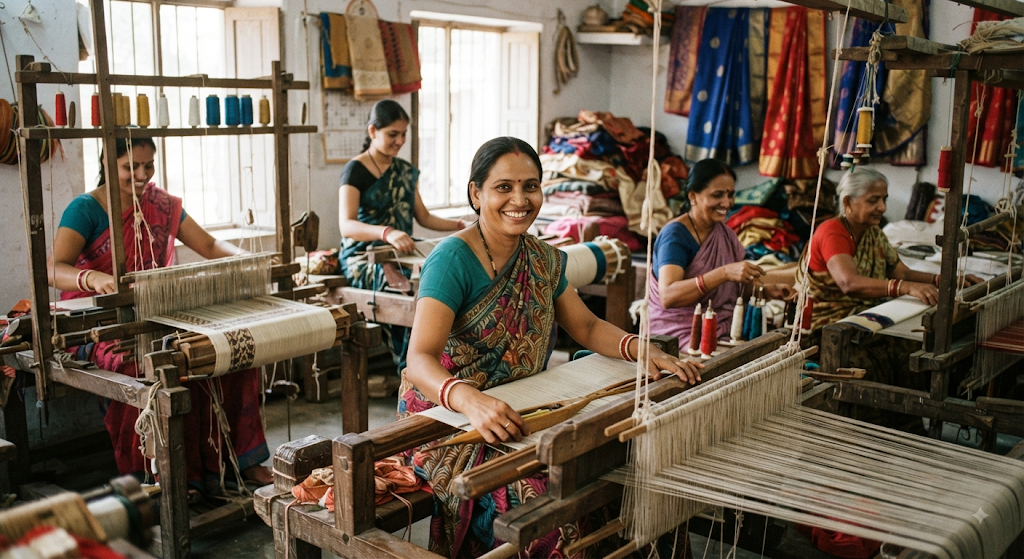
Handloom weaving is one of India’s oldest crafts, and today, much of its quiet revival is being carried forward by women — as weavers, cooperative leaders, and entrepreneurs bringing traditional textiles back into modern relevance.
A Craft Historically Carried by Women
In many weaving communities, spinning, dyeing, and finishing work has traditionally fallen to women, even when the loom itself was operated by men. Today, that role is expanding — more women are running looms directly, not just supporting the process around them.
Cooperatives Changing the Economics
Handloom work has long struggled with unfair pricing, as individual weavers often had little bargaining power against middlemen. Women-led cooperatives are changing that by pooling production, negotiating collectively, and connecting weavers directly to buyers — cutting out layers that used to eat into their earnings.
Reviving Techniques That Were Nearly Lost
Several regional weaving techniques had dwindled to a handful of practitioners, mostly older women holding onto skills with no one to pass them to. Deliberate revival efforts — training programs, design collaborations, documentation projects — are helping some of these near-extinct techniques find a new generation of weavers.
Bringing Handloom Into Contemporary Design
Rather than treating handloom as purely traditional, many women-led initiatives are pairing it with contemporary silhouettes and designs, making the fabric appealing to younger, urban buyers who might otherwise never consider a handwoven piece.
The Economic Stakes
For many rural women, handloom work isn’t a hobby or a cultural footnote — it’s a primary source of income, sometimes the only one available locally. A stronger handloom market directly translates into greater financial independence for the women producing it.
Bottom Line
India’s handloom revival isn’t just a design trend — it’s substantially a women’s economic movement, powered by skill passed down through generations and a growing market willing to pay for what that skill actually represents.


