The Unspoken Rules Women Still Follow While Traveling Alone

Solo travel is marketed as liberation — just you, a bag, and the open road. And it is freeing. But talk to almost any woman who’s traveled alone, and you’ll find a second, invisible itinerary running alongside the visible one: a set of quiet rules she follows without even fully realizing it.

Checking In Before It Feels Necessary

Many women share their live location with a friend or family member the moment they land somewhere new — not because something is wrong, but as a default habit. A quick “reached safely” text isn’t paranoia; it’s just part of how the trip is planned from the start.

Choosing Accommodation by Safety First, Aesthetics Second

That beautifully photographed homestay with no reviews? Often skipped — not because it isn’t tempting, but because women disproportionately factor in things like well-lit entrances, women-only hostels, or 24-hour reception before booking anything.

Timing the Day Around Daylight

Sightseeing schedules often quietly shift around when the sun sets. Plans to “wander and see where the evening takes me” get replaced with being back at the stay before dark, especially in unfamiliar cities.

Dressing for the Place, Not Just the Weather

Packing lists for solo women travelers often include an extra layer of thought: what will draw less attention here, what’s locally appropriate, what won’t invite unwanted comments — decisions made well before the trip even begins.

Having a Ready Exit Line

“I’m meeting my husband/friend/group in five minutes” is a sentence many women keep on standby, even when it’s not true, simply because it’s often the fastest way to end an uncomfortable conversation without confrontation.

Scanning the Room, Every Room

Walking into a café, train compartment, or hotel lobby and quickly noting the exits, the crowd, who’s watching — it’s such a fast, automatic habit that many women don’t even register they’re doing it anymore.

Why This Matters

None of this means women shouldn’t travel alone — millions do, and love it. But the extra layer of planning is real, and largely invisible to anyone who hasn’t had to carry it. Naming these unspoken rules doesn’t take away the joy of solo travel; it just makes visible the quiet work that goes into making that joy feel safe.
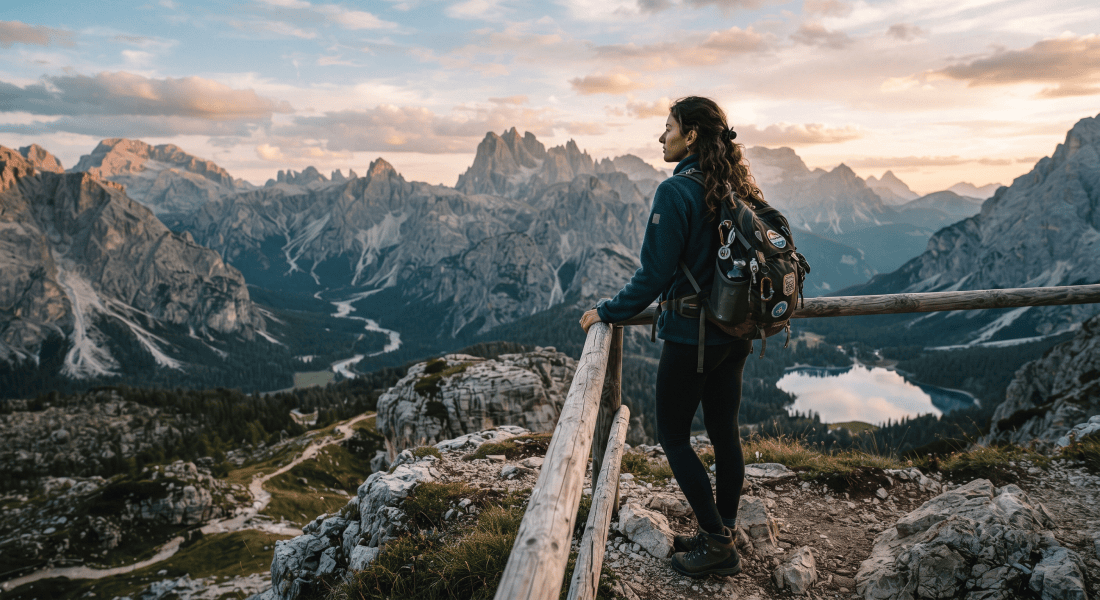
Why Traveling Alone Changed How I See the World

The first time I traveled alone, I spent the entire first day waiting for something to feel wrong. No one to check in with about where to eat, no one to ask “should we go left or right,” no one to notice if I got quiet for a while. I kept expecting the loneliness to hit. It never quite did — and that surprised me more than the trip itself.

What hit instead was something closer to clarity.

You stop performing the trip

When you travel with people, even the ones you love most, there’s a quiet, constant negotiation happening — where to go, what to skip, how long to stay somewhere, whose pace to follow. Most of it is so small you don’t even notice you’re doing it. Alone, all of that disappears. I sat in a café for two hours longer than any “reasonable” itinerary would allow, simply because I wasn’t done sitting there. No one needed convincing. No one was checking their phone for the next plan. It was just me, deciding, in real time, what I actually wanted — not what would keep the group happy.

I didn’t realize how rarely I did that until I noticed how unfamiliar it felt.

You start noticing things you’d normally talk over

Conversation is wonderful, but it also fills space that silence would otherwise use for noticing. Alone, I found myself actually looking at things — the way light moved across a wall in the afternoon, a conversation between two strangers at the next table, the specific sound a place makes when it’s mostly empty. None of it was dramatic. All of it stayed with me longer than most conversations from group trips ever have.

You become genuinely resourceful, not performatively brave

There’s a difference between being told you’re capable and actually finding out. Booking the wrong train and figuring out the fix yourself. Getting mildly lost and asking a stranger for directions in a language you don’t fully speak. None of these moments felt like adventure while they were happening — they felt inconvenient, honestly. But somewhere after the trip, I noticed I’d stopped assuming I’d need someone else to handle the hard parts. That confidence didn’t come from a pep talk. It came from evidence.

Safety planning becomes second nature, not paranoia

I won’t pretend solo travel, especially as a woman, doesn’t require extra thought — it does, and pretending otherwise helps no one. Sharing your live location with someone you trust, choosing accommodations with good lighting and reviews from other solo women travelers, trusting your gut the moment something feels off rather than talking yourself out of the feeling — these aren’t signs of fear. They’re just part of how you plan responsibly, the same way you’d check the weather before packing. Once they become habit, they stop feeling heavy.

You come back different in ways that are hard to explain

The strangest part of solo travel isn’t the trip — it’s the return. I came back and couldn’t quite explain what had changed, because nothing dramatic had happened. No grand epiphany, no life-altering encounter. Just dozens of small moments of choosing for myself, noticing more, and trusting my own judgment without a second opinion in the room. Somehow that adds up to something that feels a lot like knowing yourself a little better than before you left.

You don’t need a big, symbolic reason to travel alone. Sometimes the only reason you need is that no one else’s plan will show you what yours looks like.

Have you traveled solo before? I’d love to know what surprised you most about it.

Budget-Friendly Sustainable Travel Destinations Near Delhi/NCR

You don’t need a big budget or a long vacation to travel more sustainably. Some of the best eco-conscious getaways are just a few hours from Delhi — easy on the pocket, and easy on the planet too.

1. Sultanpur National Park (Gurugram)
Just an hour from Delhi, this bird sanctuary is perfect for a low-impact day trip. No fancy resorts needed — go early morning, carry a reusable water bottle, and enjoy one of the richest birdwatching spots near the city, almost entirely on foot.

2. Sariska Tiger Reserve (Rajasthan)
A few hours away, Sariska combines wildlife conservation with budget-friendly stays in nearby villages. Choose a local homestay over a big resort — it supports the community directly and usually costs a fraction of the price.

3. Bharatpur — Keoladeo National Park (Rajasthan)
A UNESCO World Heritage bird sanctuary, best explored by cycle-rickshaw or on foot rather than a vehicle. It’s one of the most sustainable ways to experience wildlife tourism near Delhi, and entry fees are modest.

4. Morni Hills (Haryana)
One of the least commercialized hill destinations near Delhi — quiet, green, and largely untouched by mass tourism. Local guesthouses over big chains keep both your budget and your footprint small.

5. Dhanaulti (Uttarakhand)
Less crowded than Mussoorie, Dhanaulti has an eco-park and forest trails ideal for slow, mindful travel. Public buses connect well from Delhi, cutting down on the need for a private vehicle.

A few sustainable travel habits worth carrying along, wherever you go:

  • Carry a reusable bottle and cloth bag (ties back nicely to our plastic-swap habits!)
  • Choose homestays or local guesthouses over big resorts when possible
  • Public transport or shared cabs over solo drives
  • Leave no trace — carry your trash back if bins aren’t available

Sustainable travel doesn’t have to mean expensive eco-resorts. Sometimes it’s just choosing the slower, simpler, more local option — which usually turns out lighter on the wallet too.