The Rise of Women-Led Pottery and Craft Cooperatives

From Family Trade to Cooperative Business

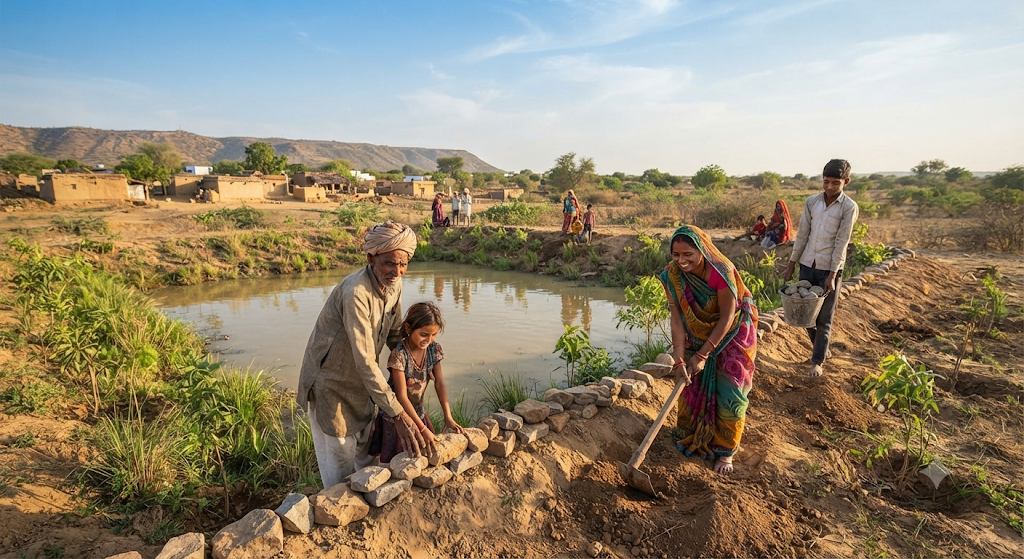
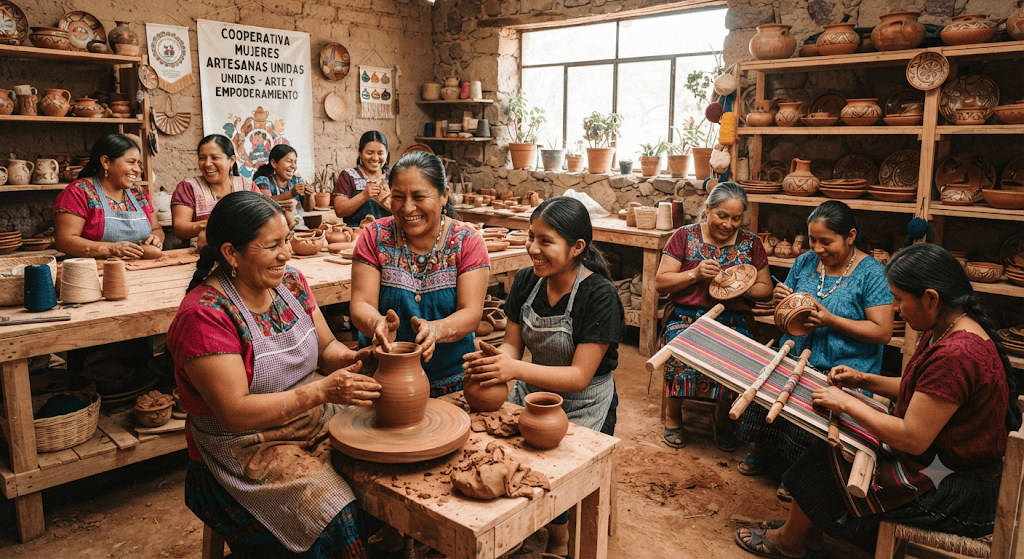
In Tamil Nadu’s Tirunelveli district, a potter earning a modest annual income from her family’s traditional pottery business started a self-help group to revive and modernise the craft. With support and small loans for raw material and labour, the group trained local women in pottery-making, eventually exporting their handcrafted pots to buyers as far as the United States.

Manipur’s Black Clay Potters

In the hills of Manipur, women artisans from the Thankhul Naga community hand-build black clay pottery entirely without a potter’s wheel — a technique passed down for generations. The craft is central to daily life in the region, but until recently, limited market access meant it generated little income. Partnerships connecting these artisans directly to international buyers have started changing that.

Why the Cooperative Model Works

Self-help groups let women artisans pool resources, share training and access markets that would be out of reach individually. Cooperatives negotiate better prices collectively, provide financial literacy and business training, and in some cases partner with fair trade organisations to ensure artisans are paid fairly for work that used to be badly undervalued.

Beyond Pottery

The same model is reviving other crafts across India — mat weaving in Tamil Nadu, Kantha embroidery in West Bengal, Chamba Rumal embroidery in Himachal Pradesh — each preserving a regional tradition while giving women a route to independent income and, often, digital tools like WhatsApp to run their businesses.

How to Support These Cooperatives

  1. Buy directly from cooperative-run stores or their verified online pages
  2. Look for craft council or SHG certification rather than mass-produced “ethnic style” copies
  3. Ask sellers where and by whom a piece was made
  4. Value the process — handmade pottery takes time that machine production doesn’t

Bottom Line

These cooperatives are doing more than keeping old crafts alive — they’re rebuilding local economies around them, with women holding the wheel, quite literally.

Women in Wildlife Photography: Patience, Risk, and the Perfect Frame

Wildlife photography has long carried an image of rugged, solitary men crouched in the bush for hours. That image is steadily being challenged by a growing number of women building genuine, respected careers in a field that demands patience, physical endurance, and a real tolerance for risk.

The Unglamorous Reality of the Work

Wildlife photography involves far more waiting than shooting — hours or even days positioned near a waterhole or den site, in extreme heat or cold, often with no guarantee that the anticipated shot will ever materialize. The romantic image of the “perfect frame” hides an enormous amount of unglamorous, physically demanding patience.

Facing Skepticism in the Field

Women wildlife photographers have often described being underestimated by local guides, forest staff, or even fellow photographers early in their careers — an assumption that physically demanding fieldwork wasn’t a natural fit for them, an attitude that’s shifted considerably but hasn’t disappeared entirely.

Building Technical Expertise From Scratch

Wildlife photography requires specific technical mastery — understanding animal behavior to predict movement, working with specialized long lenses, managing unpredictable lighting in the field — skills built over years of dedicated practice, same as any photographer regardless of gender, though often without as many visible mentors or role models to learn from directly.

The Physical and Safety Risks Involved

Working in proximity to wild animals, navigating remote terrain, and spending extended periods in isolated locations carries genuine physical risk — risk that doesn’t discriminate by gender, but that women in the field have sometimes had to actively push back against being told they shouldn’t take on.

Bringing a Different Perspective to the Work

Some women wildlife photographers have spoken about approaching their subjects with a particular sensitivity to behavior and storytelling — less focused purely on the dramatic “action shot,” and more interested in quieter, relationship-driven moments within animal groups, adding a distinct voice to a field often dominated by a narrower visual style.

Mentorship and Visibility Growing Slowly

As more women’s work gains recognition through awards, publications, and social media visibility, it’s gradually becoming easier for newer photographers to see a viable path into the field — role models that simply didn’t exist as visibly a generation ago.

Bottom Line

Wildlife photography rewards patience, technical skill, and a willingness to sit with real discomfort and risk for the sake of a single frame — qualities that have nothing to do with gender, but that women in the field have had to prove repeatedly regardless. Their growing presence is slowly reshaping who gets to be seen as an authority in this space.

The Women Documenting India’s Disappearing Traditions Through Photography

Many of India’s traditional crafts, rural rituals, and regional ways of life are fading faster than they’re being recorded — a generational shift that risks losing not just skills but the visual memory of how things were done. A growing number of women photographers are working specifically to document this before it disappears entirely.

Why This Documentation Matters

Oral traditions and hands-on crafts often exist only in the memory and practice of an aging generation, with little formal documentation. Photography captures not just the final product of a tradition — a woven textile, a ritual object — but the process, the hands, and the context that a museum piece alone can never fully convey.

Access Built on Trust, Not Just Skill

Photographing intimate community rituals, women-only ceremonies, or closed craft workshops often requires a level of trust that’s easier to build as a woman photographer, particularly in more conservative or gender-segregated community settings where a male photographer might simply never be given access.

Documenting Craft, Not Just Culture

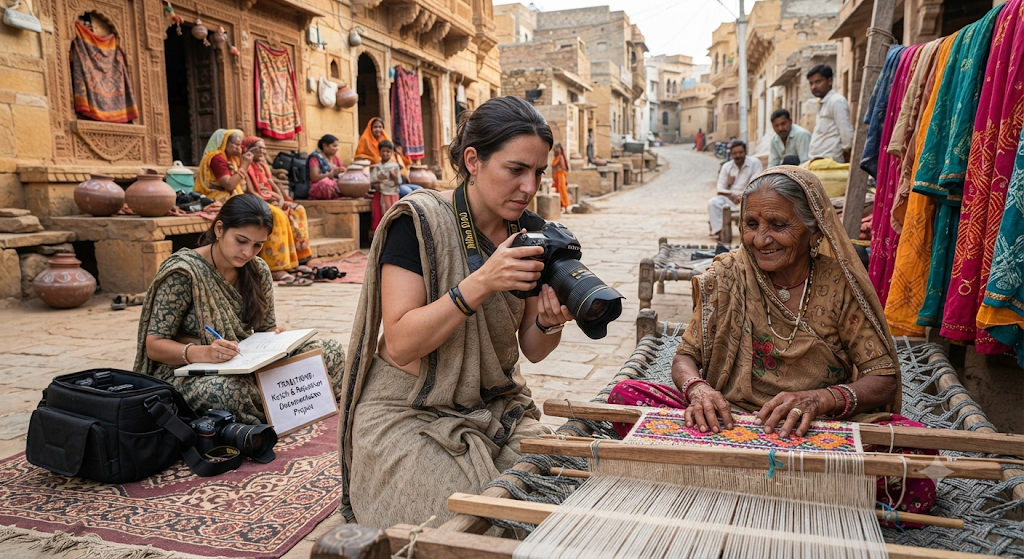
Beyond rituals and ceremonies, many women photographers focus specifically on documenting disappearing craft techniques — a particular embroidery style, a pottery method, a weaving technique — often working closely alongside the artisans themselves, sometimes over years, rather than a single visit.

The Race Against Time

Many of these traditions are held by artisans and practitioners now in their 70s and 80s, with no younger generation continuing the practice. Photographers working in this space often describe their work with real urgency — knowing that a specific technique or ritual may simply not exist to document again in a few years’ time.

Beyond Just Preservation

This work isn’t purely archival — much of it also aims to bring visibility and, ideally, economic support back to the communities and artisans being documented, connecting traditional practices to broader audiences who might otherwise never encounter them.

The Emotional Weight of the Work

Photographers doing this work often describe it as deeply personal, not purely professional — building real relationships with the people and communities they document over repeated visits, rather than treating subjects as simply visual material to be captured and left behind.

Bottom Line

As India modernizes rapidly, a quiet but important body of documentation work is being done by women photographers determined to make sure these disappearing traditions aren’t lost without a visual record. It’s patient, relationship-driven work — and increasingly urgent.

How Indian Villages Are Leading Grassroots Water Conservation

Large dams and canal projects tend to dominate the conversation around water security in India. But some of the most effective, lasting solutions are happening at a much smaller scale — in villages where residents themselves are rebuilding ponds, digging trenches, and reviving traditions that outdate any modern engineering project.

Sukhomajri, Haryana: Where It Started

In the 1970s, the village of Sukhomajri in Haryana faced a familiar crisis — torrential runoff stripping the soil, a silted-up lake, and dry wells. Villagers, working with scientists from the Indian Council of Agricultural Research and the Haryana Forest Department, fenced off slopes from grazing, dug contour trenches, and built small earthen dams to capture rainwater for gravity-fed irrigation. It became one of the earliest and most-cited models of community-led watershed management in the country.

Kothapally, Telangana: Measurable Results

In Kothapally, farmers combined simple methods like contour bunds with better seeds and intercropping. Within five years, groundwater levels rose by up to 45%, and maize yields quadrupled — numbers substantial enough that families began diversifying into chickpeas and vegetables once water and income were secured.

The Arvari Sansad, Rajasthan: A River Parliament

Along the Arvari River, 70 villages formed the Arvari Sansad, or River Parliament — a community governance body that manages water use, prevents over-extraction, and resolves disputes without waiting on government intervention. It’s a striking example of communities becoming the direct guardians of a shared water resource, rather than relying on external authorities.

Jakhni, Uttar Pradesh: A Model That Spread

In the drought-affected Bundelkhand region, Jakhni village became known for building bunds, desilting wells, and constructing new ponds. Its success was significant enough that district officials later used it as a template, redirecting available funds to replicate the same model across the wider region.

Tamil Nadu’s Kudimaramathu: Reviving Ancient Systems

Rather than build something new, the Kudimaramathu scheme in Tamil Nadu revived centuries-old irrigation tanks through public participation. Farmers, engineers, and local youth worked together to desilt tanks, repair sluices, and clear catchments — rejuvenating thousands of hectares of farmland across drought-hit districts.

Why Grassroots Models Work

These efforts share a common thread: they’re decentralized. Instead of concentrating water storage and distribution in a single large point, community-led catchment management spreads it across many small, locally-managed structures — ponds, bunds, and trenches that villagers themselves maintain and have a direct stake in protecting.

Bottom Line

Water conservation in India isn’t only a policy conversation happening in government offices. In villages across Haryana, Telangana, Rajasthan, Uttar Pradesh, and Tamil Nadu, it’s already being lived out — often led by the same communities who stand to lose the most if it fails.