Rural Women and the Fight Against Single-Use Plastic in Local Markets

Why Local Markets Are a Plastic Hotspot

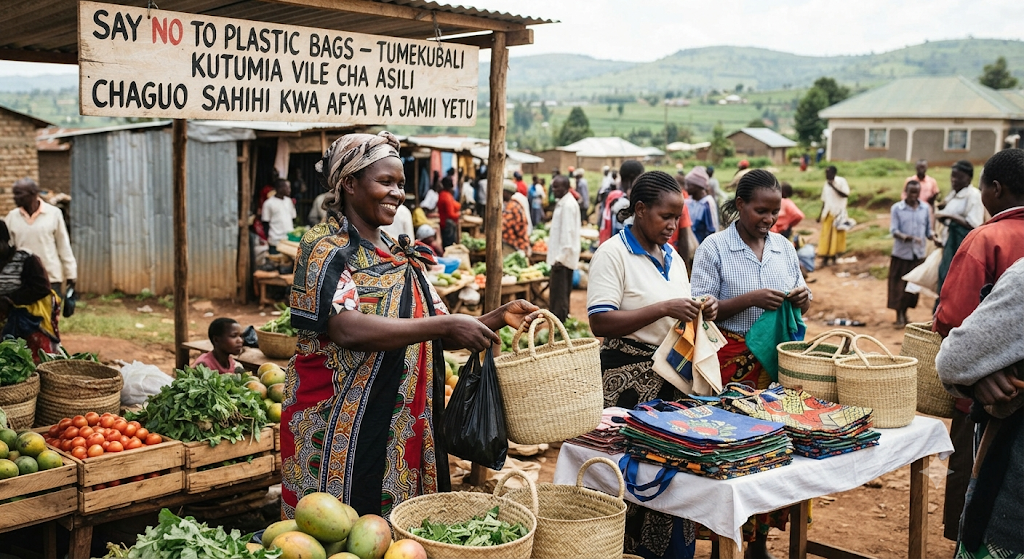
Weekly haats and local vegetable markets are where single-use plastic accumulates fastest — thin bags handed out per item, with no formal waste collection system to catch what’s left behind. In many villages, that plastic ends up burned, buried or washed into fields and water bodies.

Self-Help Groups Stepping In

Across several states, women’s self-help groups have taken on dual roles: producing cloth and jute bag alternatives for sale, and actively campaigning at local markets to get vendors and shoppers to switch away from plastic. The same groups that make biodegradable products for menstrual health or craft cooperatives are often behind these market-level plastic bans too — the skills and the SHG structure carry over.

What the Shift Actually Looks Like

  • Vendors stocking cloth or paper bags instead of plastic, often produced locally by SHG members
  • Leaf-plate and areca-leaf disposable ware replacing plastic plates at local food stalls
  • Market committees, sometimes nudged by SHGs, setting informal “no plastic bag” rules on market day
  • Awareness drives timed around local festivals and weekly market days, when plastic use spikes

The Economic Angle

This isn’t only environmental work — it’s income. Producing and selling cloth bags gives SHG members a product with steady local demand, since markets need bags every single week. That recurring demand is part of why these initiatives tend to stick, compared with one-off awareness campaigns.

What Still Gets in the Way

Cheap plastic remains easier and often slightly cheaper for vendors to access than cloth alternatives, and enforcement of any informal “ban” depends entirely on community buy-in rather than law.

Bottom Line

The fight against plastic in rural India isn’t happening through policy alone — it’s happening market day by market day, led by women’s groups who are both making the alternative and selling the idea.

The Rise of Farm Stays: Why City Women Are Booking Them

The Backlash to Perfectly Curated Trips

After a few years of hyper-Instagrammable resorts and infinity pools, a countertrend has emerged: farm stays that offer nothing more polished than fresh air, home-cooked meals, and actual physical work like harvesting vegetables or milking. For urban women whose daily life is screen-heavy and schedule-bound, the appeal is precisely the lack of curation.

What a Farm Stay Actually Looks Like

Most farm stays in India are run by families on working farms — coffee estates in Coorg, orchards in Himachal, paddy fields in Kerala — who host a small number of guests in simple rooms and include home-cooked meals as part of the experience. The draw isn’t luxury; it’s proximity to a slower, more physical rhythm of life that city routines don’t allow.

Why Women Specifically Are Driving the Trend

Many farm stays are also women-run, with host families where the woman of the house manages cooking, guest experience, and often the farm’s produce-based income stream. For urban women visiting, that creates a different kind of connection — less transactional tourist-host dynamic, more genuine exchange between women running very different lives.

A Break From Decision Fatigue

Part of the mental relief of a farm stay is the absence of choice paralysis — there’s no menu of forty activities to optimize, just the farm’s actual daily rhythm to join or not. For anyone whose regular life is full of constant micro-decisions, that structural simplicity is doing real psychological work, not just aesthetic work.

Bottom Line

Farm stays aren’t trying to compete with luxury resorts, and that’s exactly why they’re gaining ground — they’re offering something resorts structurally can’t: an actual break from being managed and catered to.

The Women Who Run India’s Self-Help Groups (And Why They Matter)

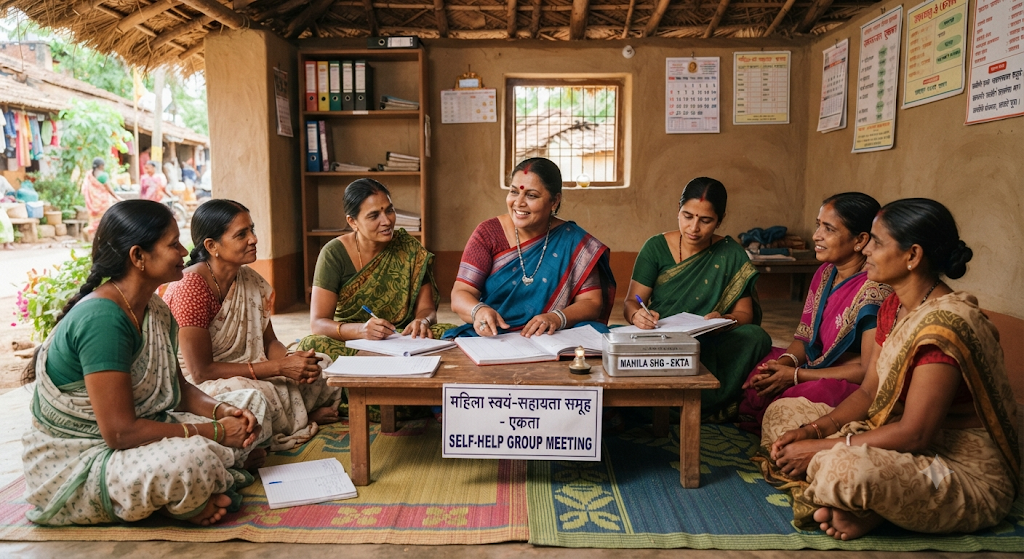
Long before “financial inclusion” became a policy buzzword, women across India were already building it themselves — through Self-Help Groups (SHGs), small collectives that pool savings, offer credit, and give members a level of financial independence many never had access to before.

What a Self-Help Group Actually Is

An SHG is typically a small group of 10-20 women who regularly pool small savings into a shared fund, from which members can borrow for personal or business needs — often without the collateral requirements or paperwork barriers that keep many women out of formal banking systems.

Why Banks Weren’t Working for These Women

Many women, especially in rural areas, historically had no independent credit history, no assets in their own name, and no formal employment record — all things traditional banks require. SHGs sidestepped this entirely by building trust and accountability within the group itself, rather than requiring external collateral.

Beyond Just Savings and Loans

Many SHGs have expanded well past simple savings circles into small collective businesses — food processing units, tailoring cooperatives, handicraft production — giving members not just credit access but an actual income stream, run and controlled by the group itself.

The Confidence Shift

For many women, especially those who had never handled money independently before, participating in an SHG’s financial decisions — voting on loans, managing shared funds, negotiating with buyers — builds a kind of confidence and decision-making experience that extends well beyond the group’s finances.

Government and Institutional Backing

Various national and state-level programs have worked to formalize and scale the SHG model, linking groups to bank credit at better terms and providing training — recognition that this grassroots model, largely built and run by women themselves, was already working better than many top-down alternatives.

The Ripple Effect on Families and Villages

Money earned or saved through SHGs often goes directly toward things like children’s school fees, healthcare, or home improvements — decisions frequently made by the women themselves, in households where financial decisions had previously been made almost entirely by men.

Bottom Line

Self-help groups are one of the clearest examples of a women-led model succeeding not because of external funding alone, but because of trust, accountability, and shared decision-making built entirely within the group. It’s a quiet but genuinely significant force behind rural women’s growing financial independence across India.

Period Poverty in India: What’s Actually Being Done About It

If you’ve ever had to ask a stranger for a pad, skip school because you didn’t have access to menstrual products, or use a rag, sand, ash, or newspaper during your period — you already know what period poverty feels like. For millions of women and girls across India, this isn’t a hypothetical. It’s a monthly reality.

Period poverty isn’t just about not being able to afford a pack of sanitary pads. It’s a tangle of three things: lack of access to safe menstrual products, lack of access to clean water and private toilets to manage periods hygienically, and — maybe the most stubborn of all — the silence and shame that stops girls from asking for help in the first place.

The Scale of the Problem

Government surveys have repeatedly shown that a large share of menstruating women in India still don’t use hygienic methods of protection, especially in rural areas. The gap isn’t uniform either — it varies sharply by state, by income, and by whether a girl is still in school. Many girls drop out of school entirely once they start menstruating, not because they want to, but because their school has no functioning toilet, no privacy, and no way to manage a leak with dignity.

This isn’t a “women’s issue” tucked away in a corner. It affects education outcomes, workforce participation, and public health — which is exactly why it deserves more attention than it gets.

What’s Actually Being Done

The good news is that period poverty in India isn’t being ignored anymore. Here’s where real movement is happening:

1. GST removal on sanitary products. In 2018, after sustained public pressure and activism, India removed the 12% GST that had been levied on sanitary napkins. It was a small line item that made a real difference in affordability at scale.

2. Government distribution schemes. Programs at both the central and state level have worked to supply subsidized or free sanitary pads through schools and primary health centres, particularly targeting rural and adolescent girls. Coverage is uneven, but the intent — and the infrastructure — now exists in places it didn’t before.

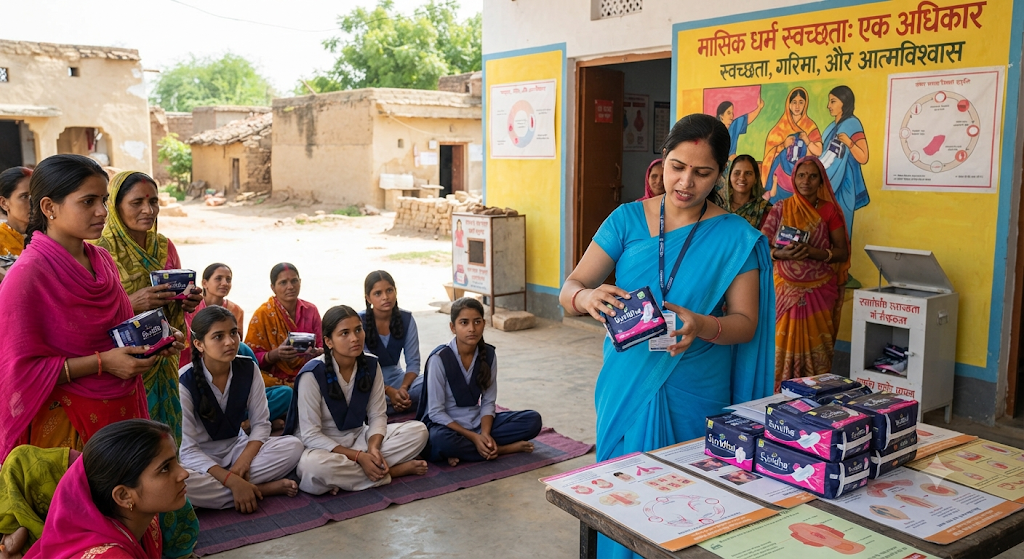
3. Menstrual health in the school curriculum. Several states have started integrating menstrual hygiene education into school health programs, training teachers and health workers to talk about periods without euphemism or embarrassment, and installing incinerators and sanitary vending machines in government schools.

4. NGOs closing the last-mile gap. Organizations working at the grassroots level — going village to village, training local women as menstrual health educators, manufacturing low-cost sanitary pads through community-run micro-enterprises — have often reached places that policy alone hasn’t. Some of the most effective models pair product distribution with education, because handing someone a pad without addressing the stigma around periods only solves half the problem.

5. Sustainable and reusable alternatives. Menstrual cups, cloth pads, and period underwear are getting more visibility, both as a cost-saving option for low-income households and as a lower-waste alternative to disposable pads, which are a genuinely enormous environmental burden — most contain plastic and take centuries to break down.

Where the Gaps Still Are

For all this progress, period poverty hasn’t been solved — not close. Distribution schemes don’t always reach the most remote areas. Products supplied by some programs are inconsistent in quality. And the biggest gap of all is cultural: even where products are available, shame and silence still keep many girls from using them confidently, or from talking to a parent, teacher, or doctor when something feels wrong.

Access without education is a half-measure. A girl who has a pad but has never been told what a period actually is, why it happens, or that it’s nothing to be ashamed of, is still navigating this mostly alone.

What You Can Actually Do

You don’t need to run an NGO to make a dent in this. A few starting points:

  • Support grassroots organizations directly working on menstrual health in your city or state — many are chronically under-resourced and rely on small, recurring donations more than one-time large ones.
  • Normalize the conversation at home. If you have younger sisters, cousins, or nieces, be the person who talks about periods like it’s just biology — because it is.
  • Donate products, not just money, during pad drives, especially before monsoon season and before the school year starts, when supply often runs low.
  • Choose sustainable products where you can, and talk about them openly — cups and reusable pads are still seen as niche in a lot of households, and visibility helps.

Period poverty sits at the intersection of everything this blog cares about — women’s dignity, environmental impact, and access to basic health infrastructure. It’s a solvable problem. It just needs more people treating it like the public health issue it actually is, instead of a private embarrassment to whisper about.

The Rise of Women-Led Farming Collectives in Rural India

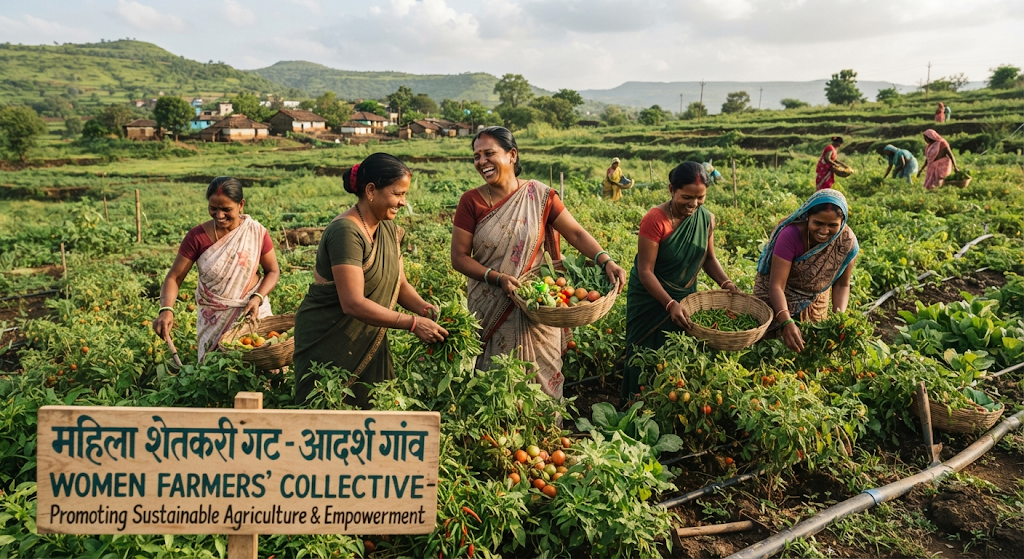
Women have always done a large share of farm labor in rural India — sowing, weeding, harvesting — without necessarily owning the land or having a say in how it’s managed. Women-led farming collectives are steadily changing that equation, giving women both economic control and collective bargaining power.

Why Collectives Formed in the First Place

Individual women farmers, especially those without land titles in their own name, historically had little access to credit, government schemes, or fair pricing for their produce. Pooling together into collectives gave them the scale and negotiating power that no single small farmer could achieve alone.

What These Collectives Actually Do

Beyond farming itself, many collectives handle shared resources — bulk seed purchasing, shared equipment, group access to credit — and collectively negotiate prices with buyers, cutting out the middlemen who traditionally captured most of the margin from individual small-scale farmers.

Shifting Who Owns the Decision

In many traditional setups, women did the labor while land and decision-making stayed with men in the household. Collectives built specifically around women members shift that dynamic — decisions about what to grow, how to sell, and how to reinvest profits are made by the women actually doing the work.

Government and NGO Support

Various state-level schemes and NGO partnerships have specifically targeted support toward women’s farming groups — training in sustainable practices, access to microfinance, and market linkage programs designed to help collectives sell directly rather than through multiple layers of traders.

The Ripple Effect Beyond Farming

Income earned through these collectives often goes directly toward things individual women prioritize — children’s education, household nutrition, healthcare — creating impact that extends well past the immediate farming income itself.

Challenges That Remain

Land ownership laws, deep-rooted social norms about who “should” make agricultural decisions, and uneven access to training or credit across regions mean collectives don’t fix the underlying structural issues everywhere equally — progress remains uneven and hard-won in many parts of the country.

Bottom Line

Women-led farming collectives aren’t a symbolic gesture — they represent a genuine shift in who controls agricultural income and decisions in rural India. Slow and regionally uneven as the progress is, it’s steadily reshaping what agricultural leadership looks like at the village level.

How Indian Villages Are Leading Grassroots Water Conservation

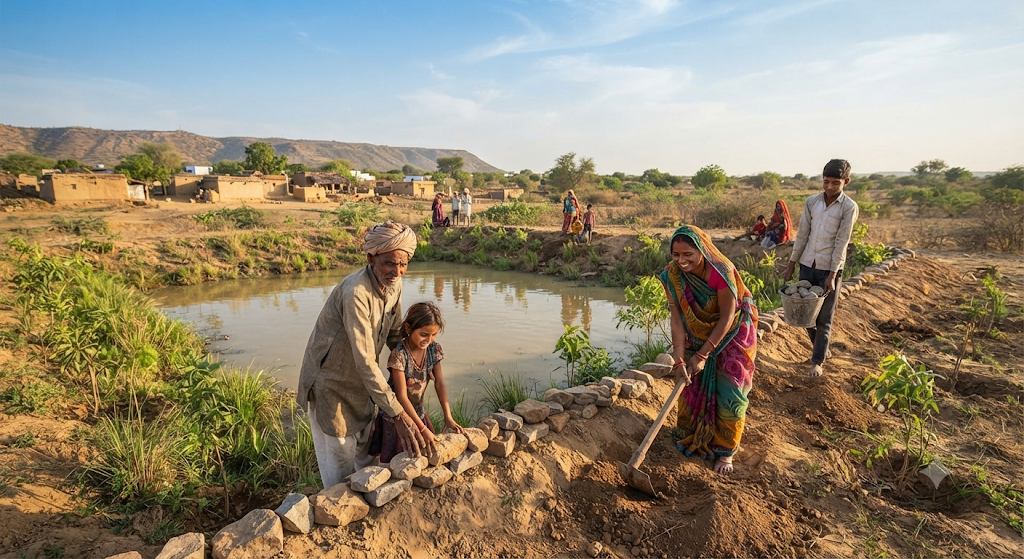
Large dams and canal projects tend to dominate the conversation around water security in India. But some of the most effective, lasting solutions are happening at a much smaller scale — in villages where residents themselves are rebuilding ponds, digging trenches, and reviving traditions that outdate any modern engineering project.

Sukhomajri, Haryana: Where It Started

In the 1970s, the village of Sukhomajri in Haryana faced a familiar crisis — torrential runoff stripping the soil, a silted-up lake, and dry wells. Villagers, working with scientists from the Indian Council of Agricultural Research and the Haryana Forest Department, fenced off slopes from grazing, dug contour trenches, and built small earthen dams to capture rainwater for gravity-fed irrigation. It became one of the earliest and most-cited models of community-led watershed management in the country.

Kothapally, Telangana: Measurable Results

In Kothapally, farmers combined simple methods like contour bunds with better seeds and intercropping. Within five years, groundwater levels rose by up to 45%, and maize yields quadrupled — numbers substantial enough that families began diversifying into chickpeas and vegetables once water and income were secured.

The Arvari Sansad, Rajasthan: A River Parliament

Along the Arvari River, 70 villages formed the Arvari Sansad, or River Parliament — a community governance body that manages water use, prevents over-extraction, and resolves disputes without waiting on government intervention. It’s a striking example of communities becoming the direct guardians of a shared water resource, rather than relying on external authorities.

Jakhni, Uttar Pradesh: A Model That Spread

In the drought-affected Bundelkhand region, Jakhni village became known for building bunds, desilting wells, and constructing new ponds. Its success was significant enough that district officials later used it as a template, redirecting available funds to replicate the same model across the wider region.

Tamil Nadu’s Kudimaramathu: Reviving Ancient Systems

Rather than build something new, the Kudimaramathu scheme in Tamil Nadu revived centuries-old irrigation tanks through public participation. Farmers, engineers, and local youth worked together to desilt tanks, repair sluices, and clear catchments — rejuvenating thousands of hectares of farmland across drought-hit districts.

Why Grassroots Models Work

These efforts share a common thread: they’re decentralized. Instead of concentrating water storage and distribution in a single large point, community-led catchment management spreads it across many small, locally-managed structures — ponds, bunds, and trenches that villagers themselves maintain and have a direct stake in protecting.

Bottom Line

Water conservation in India isn’t only a policy conversation happening in government offices. In villages across Haryana, Telangana, Rajasthan, Uttar Pradesh, and Tamil Nadu, it’s already being lived out — often led by the same communities who stand to lose the most if it fails.