Monsoon turns familiar trails into something else entirely — waterfalls appear overnight, hillsides turn a deep green, and the whole landscape feels alive in a way summer treks rarely capture. It’s also, without question, riskier. Here’s an honest look at the trade-off.
Why Trekkers Are Drawn to Monsoon Treks
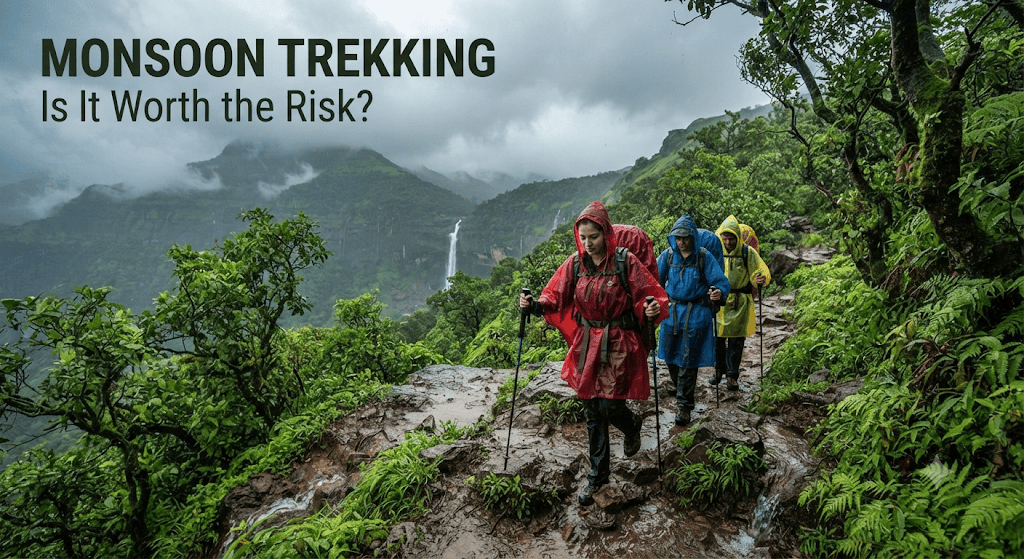
Monsoon transforms otherwise dry, dusty trails into lush, waterfall-lined landscapes that simply don’t exist the rest of the year. For trekkers chasing dramatic scenery and fewer crowds, this narrow seasonal window offers something genuinely unique.
The Real Risks Involved
- Slippery, unstable terrain — mud and wet rock significantly increase the risk of slips and falls, especially on steep or rocky sections
- Leeches and increased insect activity, particularly in forested, humid trail sections
- Landslide and flash flood risk, especially in hill regions with loose soil or near river crossings
- Reduced visibility from fog and heavy rain, making navigation harder on unmarked or less-trodden trails
- Swollen rivers and streams that may be safely crossable in dry season but become dangerous during monsoon
Which Treks Handle Monsoon Better
Some regions — particularly in the Western Ghats and parts of the Sahyadri range — are specifically known and prepared for monsoon trekking, with well-established trails and local guides experienced in monsoon conditions. Higher Himalayan treks, by contrast, are generally far riskier and less advisable during peak monsoon months due to landslide-prone terrain.
How to Trek More Safely If You Choose To
- Go with a local guide who knows current trail conditions, not just the route itself
- Check recent weather and landslide advisories specific to the exact trail, not just the general region
- Carry proper gear — grippy waterproof shoes, dry bags, and a raincoat rather than just an umbrella
- Avoid river crossings during or right after heavy rainfall, even if the crossing seemed manageable before
- Have a flexible itinerary that allows turning back if conditions worsen, rather than pushing through to stick to a fixed plan
Who Monsoon Trekking Isn’t Right For
First-time trekkers, anyone trekking solo without local knowledge, or routes without established monsoon-season precedent are generally better attempted in drier months. Monsoon trekking rewards experience and preparation far more than trekking in more forgiving seasons.
Bottom Line
Monsoon trekking can be genuinely spectacular, but it demands real respect for the added risk — proper gear, local knowledge, and a willingness to turn back. It’s not inherently reckless, but it’s also not something to attempt casually or without real preparation.