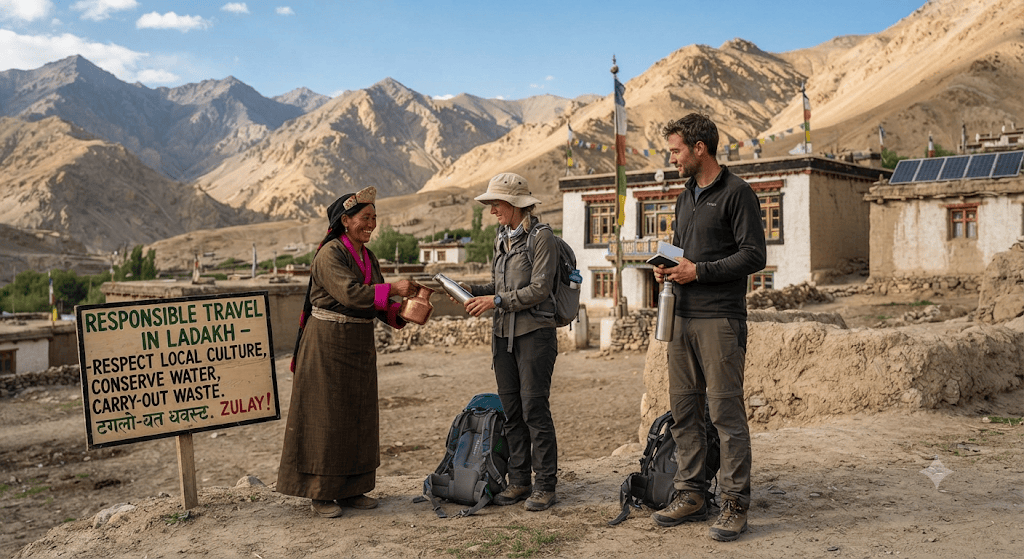
Responsible Travel in Ladakh: Water, Altitude and Local Culture

A Fragile Place With a Booming Visitor List

Ladakh sits in the Himalayan rain shadow and depends largely on glacier melt for water. Tourism has grown fast. One report notes that the 1980s saw only about two dozen hotels across Ladakh, while today there are several hundred, most of them in Leh. More bathrooms, more guesthouses and more visitors all draw on the same limited supply.

Water: The Biggest Issue

A study by the Ladakh Ecological Development Group found that an average Ladakhi uses about 21 litres of water a day, while a tourist may use as much as 75. Other estimates vary, but all point the same way: visitors use far more than residents.

What you can do:

  1. Take short, bucket-style baths instead of long showers
  2. Use local dry toilets where homestays offer them
  3. Carry a reusable bottle and refill it instead of buying plastic bottles
  4. Reuse leftover washing water for plants where you can

Altitude: Respect It

The Ladakh tourism department advises at least 48 hours of acclimatisation after arriving in Leh, plenty of fluids, light meals on day one, and avoiding sleeping pills or sedatives at altitude. Don’t rush to higher passes straight after landing, and descend if severe symptoms appear. If you plan to take altitude medication, speak to your doctor first.

Culture: You’re a Guest

Ladakh is home to a living Tibetan Buddhist culture. Ask before photographing people or monks, dress modestly at monasteries, walk clockwise around stupas and prayer wheels, and avoid touching religious objects.

Where You Stay Matters

Homestays keep money in local households and often use water more carefully than large hotels. They also give you home-cooked food and conversation that no hotel buffet can match.

Don’t Leave Plastic Behind

Plastic breaks down slowly at high altitude and can contaminate streams near popular spots. Carry your waste out with you.

Bottom Line

Ladakh doesn’t need fewer travellers so much as more thoughtful ones. Use less water, go slowly, stay local and leave the place as you found it.
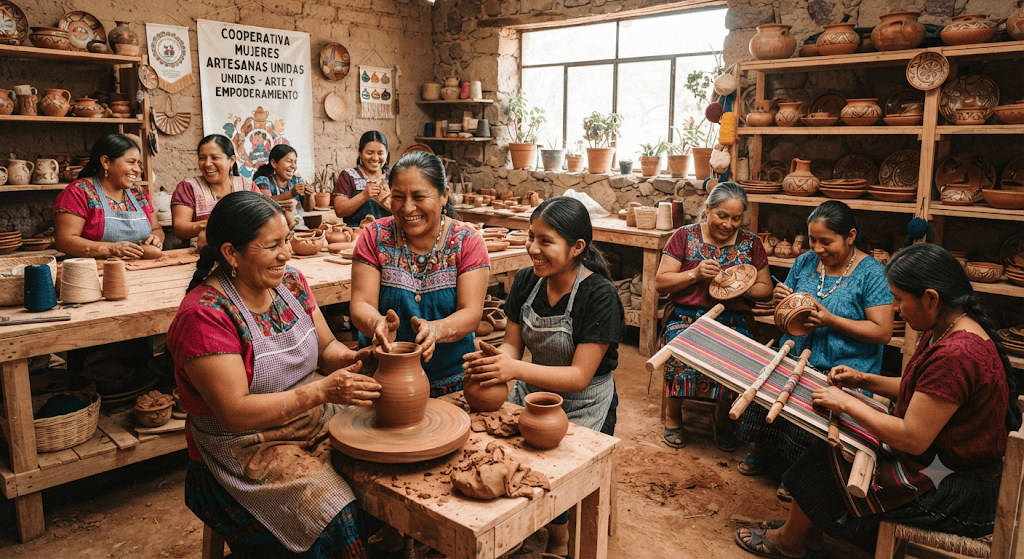
The Rise of Women-Led Pottery and Craft Cooperatives

From Family Trade to Cooperative Business

In Tamil Nadu’s Tirunelveli district, a potter earning a modest annual income from her family’s traditional pottery business started a self-help group to revive and modernise the craft. With support and small loans for raw material and labour, the group trained local women in pottery-making, eventually exporting their handcrafted pots to buyers as far as the United States.

Manipur’s Black Clay Potters

In the hills of Manipur, women artisans from the Thankhul Naga community hand-build black clay pottery entirely without a potter’s wheel — a technique passed down for generations. The craft is central to daily life in the region, but until recently, limited market access meant it generated little income. Partnerships connecting these artisans directly to international buyers have started changing that.

Why the Cooperative Model Works

Self-help groups let women artisans pool resources, share training and access markets that would be out of reach individually. Cooperatives negotiate better prices collectively, provide financial literacy and business training, and in some cases partner with fair trade organisations to ensure artisans are paid fairly for work that used to be badly undervalued.

Beyond Pottery

The same model is reviving other crafts across India — mat weaving in Tamil Nadu, Kantha embroidery in West Bengal, Chamba Rumal embroidery in Himachal Pradesh — each preserving a regional tradition while giving women a route to independent income and, often, digital tools like WhatsApp to run their businesses.

How to Support These Cooperatives

  1. Buy directly from cooperative-run stores or their verified online pages
  2. Look for craft council or SHG certification rather than mass-produced “ethnic style” copies
  3. Ask sellers where and by whom a piece was made
  4. Value the process — handmade pottery takes time that machine production doesn’t

Bottom Line

These cooperatives are doing more than keeping old crafts alive — they’re rebuilding local economies around them, with women holding the wheel, quite literally.

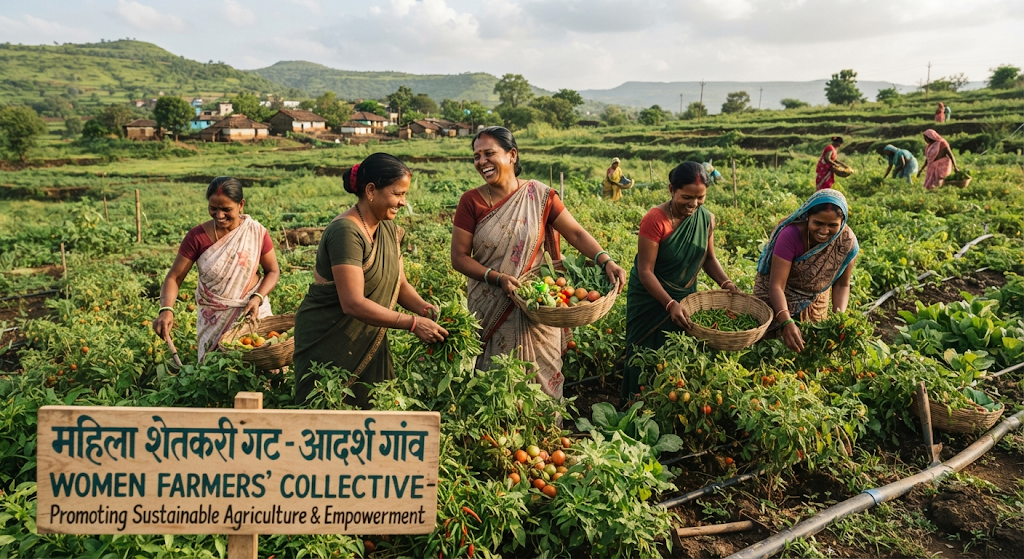
The Rise of Women-Led Farming Collectives in Rural India

Women have always done a large share of farm labor in rural India — sowing, weeding, harvesting — without necessarily owning the land or having a say in how it’s managed. Women-led farming collectives are steadily changing that equation, giving women both economic control and collective bargaining power.

Why Collectives Formed in the First Place

Individual women farmers, especially those without land titles in their own name, historically had little access to credit, government schemes, or fair pricing for their produce. Pooling together into collectives gave them the scale and negotiating power that no single small farmer could achieve alone.

What These Collectives Actually Do

Beyond farming itself, many collectives handle shared resources — bulk seed purchasing, shared equipment, group access to credit — and collectively negotiate prices with buyers, cutting out the middlemen who traditionally captured most of the margin from individual small-scale farmers.

Shifting Who Owns the Decision

In many traditional setups, women did the labor while land and decision-making stayed with men in the household. Collectives built specifically around women members shift that dynamic — decisions about what to grow, how to sell, and how to reinvest profits are made by the women actually doing the work.

Government and NGO Support

Various state-level schemes and NGO partnerships have specifically targeted support toward women’s farming groups — training in sustainable practices, access to microfinance, and market linkage programs designed to help collectives sell directly rather than through multiple layers of traders.

The Ripple Effect Beyond Farming

Income earned through these collectives often goes directly toward things individual women prioritize — children’s education, household nutrition, healthcare — creating impact that extends well past the immediate farming income itself.

Challenges That Remain

Land ownership laws, deep-rooted social norms about who “should” make agricultural decisions, and uneven access to training or credit across regions mean collectives don’t fix the underlying structural issues everywhere equally — progress remains uneven and hard-won in many parts of the country.

Bottom Line

Women-led farming collectives aren’t a symbolic gesture — they represent a genuine shift in who controls agricultural income and decisions in rural India. Slow and regionally uneven as the progress is, it’s steadily reshaping what agricultural leadership looks like at the village level.