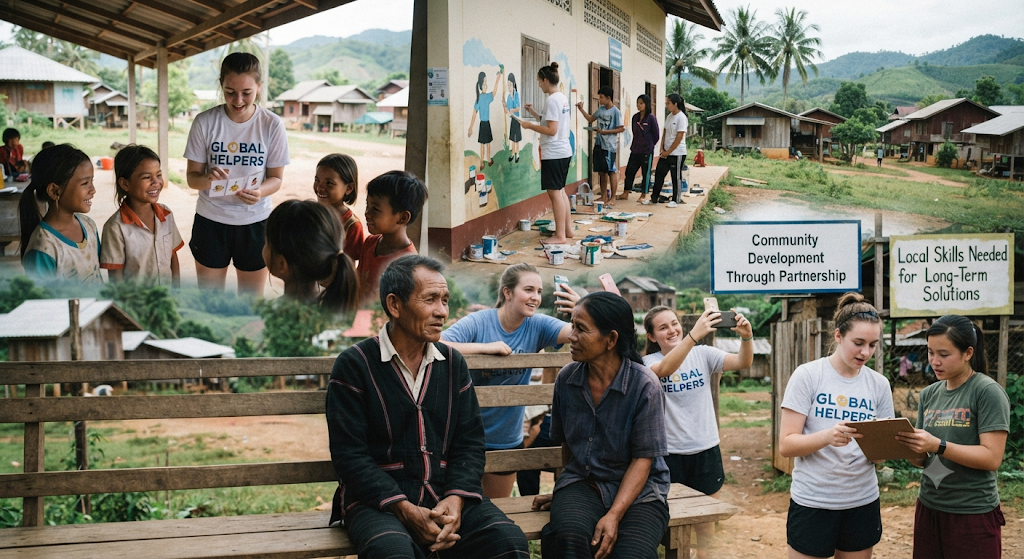
Is Volunteer Tourism Actually Helping? A Closer Look

The Appeal Is Obvious

Spend a few days or weeks helping build a school, teach English or support children, and go home having “given back.” It’s an attractive idea — travel with purpose instead of just a passport stamp.

Where the Cracks Show

Most short-term volunteers aren’t trained for the work they’re assigned. Reports of unskilled volunteers redoing construction work overnight — because local workers quietly fixed it after the volunteers left — have become a recurring theme in critiques of the industry. In some cases, unskilled volunteer labour has even displaced paid local jobs.

Orphanage Volunteering: The Sharpest Criticism

Orphanage tourism draws the most concern. Child welfare organisations, including UNICEF and Save the Children, have jointly studied the impact of short-term volunteering on children’s care and found enough harm — including emotional distress from repeated attachment and abandonment cycles with rotating volunteers — to recommend eliminating short-term orphanage volunteering altogether. Some investigations have even found children placed in orphanages specifically to attract volunteer donations, despite having living family.

It’s Not All Bad — But the Framing Matters

Longer-term, skills-matched volunteering — where a volunteer’s actual expertise (medical, technical, educational) is used to support a request the local community itself made — tends to have a very different impact profile than a week-long, feel-good placement. The difference usually comes down to who identified the need, and who’s actually being served by the good feeling.

Questions to Ask Before You Sign Up

  1. Did the local community ask for this specific kind of help?
  2. Am I qualified to actually do this work?
  3. Does the organisation share what happens to fees after volunteers leave?
  4. Could a paid local worker do this instead — and should they?
  5. Is there any facility housing children specifically to host volunteer visits?

Bottom Line

Good intentions don’t automatically translate into good outcomes. If a trip’s main product is a feeling for the traveller rather than a need actually filled for the community, it’s worth a harder look before booking.
Women Who Turned Their Hobby Into a Travel Business

It Usually Starts With One Trip

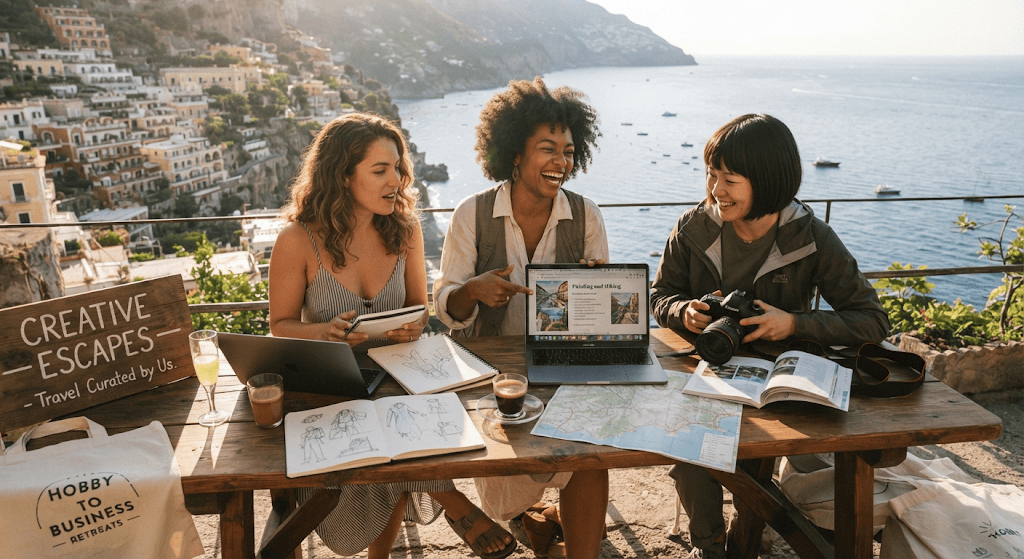
Almost every woman-led travel business in India traces back to the same origin story: a solo trip, a backpacking detour, or a family holiday that turned into an obsession. What began as a hobby — planning itineraries for friends, documenting hidden trails, or running a small travel Instagram page — slowly turned into paying work. The hobby-to-business pipeline is especially visible among Indian women travel creators and curators, several of whom have been publicly recognized for building travel brands out of what started as personal passion projects.

Why Travel Businesses Are a Natural Pivot

Unlike many entrepreneurial paths, travel businesses built from a hobby don’t require a sudden reinvention. The credibility is already there — years of trip planning, local contacts, packing hacks, and a following that trusts your recommendations. That trust converts directly into bookings, sponsored trips, and curated tour packages.

The Real Work Behind the Wanderlust

What doesn’t show up on the Instagram grid is the operational side — vendor negotiations, safety protocols for group trips, cancellation policies, and the unglamorous admin of running any small business. Many women in this space talk about the shift from “traveling for fun” to “traveling as logistics,” where the joy has to be actively protected once it becomes work.

Turning Passion Into a Sustainable Model

The women who make it last usually specialize — solo women’s trips, offbeat treks, slow-travel itineraries, or culturally immersive experiences — rather than trying to compete with big travel agencies on price. Niche builds loyalty, and loyalty is what keeps a hobby-turned-business alive past the first excited year.

Bottom Line

A hobby becomes a business the moment someone else is willing to pay for your judgment. For India’s women travel entrepreneurs, that judgment was built one trip at a time — long before it ever became a job.

Why More Indian Women Are Choosing to Travel After 40

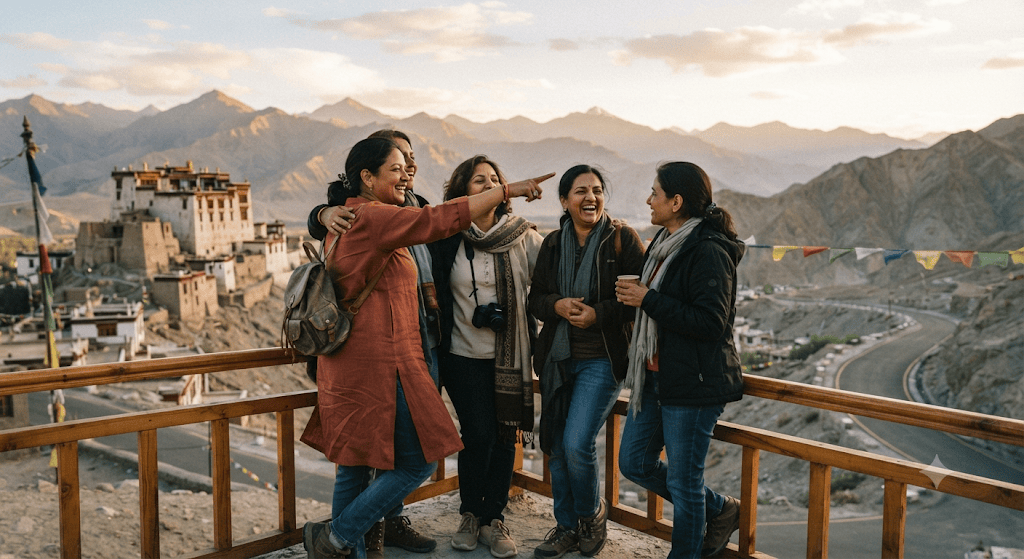
For a long time, the image of solo or adventurous travel skewed heavily toward the young — backpackers in their 20s, gap-year trips, pre-marriage freedom. A quieter but steadily growing trend tells a different story: more Indian women in their 40s, 50s, and beyond are booking trips, often independently, many for the first time in their lives.

Life Stage Finally Allows It

For many women, the years spent raising children or managing a household leave little room for personal travel plans. As children grow more independent, some women find themselves with both the time and the emotional space to prioritize a trip that was postponed for decades.

Financial Independence Plays a Real Role

A growing number of women in this age group have their own income, savings, or financial say in the household — a shift from earlier generations where travel decisions and budgets were more likely controlled by a spouse or family structure. This independence directly enables travel choices made on their own terms.

A Deliberate Reclaiming of Personal Time

Several women who start traveling later in life describe it less as a bucket-list activity and more as a deliberate reclaiming of a version of themselves that existed before marriage, children, and career responsibilities took over most of their time and identity.

Travel Communities Built for This Demographic

Recognizing this shift, several travel groups and tour operators have started designing itineraries and communities specifically for older women travelers — addressing both physical comfort needs and the specific social dynamics of a group where everyone is navigating similar life stages.

Confidence Built From Life Experience

Many women in this age group describe approaching travel with a level of confidence and calm decision-making that comes from decades of managing households, careers, or both — skills that translate surprisingly directly into handling the logistics and occasional unpredictability of travel.

Pushing Back Against Social Expectations

Choosing to travel — especially solo — later in life sometimes still meets resistance from extended family or social circles who view it as an unusual priority at that life stage. Many women navigating this describe it as a conscious, sometimes difficult decision to prioritize their own experience over external expectations.

Bottom Line

Travel after 40 isn’t a consolation prize for missed opportunities earlier in life — for many Indian women, it’s a genuinely deliberate, hard-won chapter that only became possible once time, finances, and confidence aligned. It’s reshaping what “who travels” actually looks like in India.

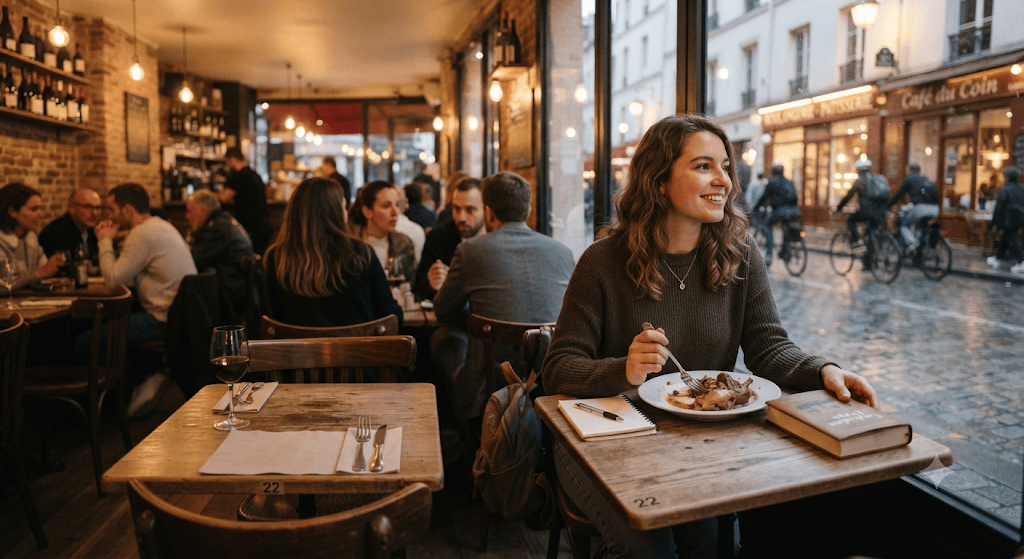
Solo Dining While Traveling: Getting Comfortable With Your Own Company

Solo travelers often say the same thing: navigating a new city alone feels fine, but sitting down alone at a restaurant table still triggers a wave of self-consciousness unlike almost anything else about traveling solo. Here’s how to work through that, and eventually enjoy it.

Why It Feels Different From Other Solo Moments

Walking around a city alone feels purposeful — you’re clearly doing something. Sitting at a table alone, with nothing to visibly “do,” can feel exposed in a way that triggers an irrational worry that everyone around you is noticing and judging. In reality, almost no one is paying attention at all.

Start With Lower-Pressure Settings

Cafés, casual street-food spots, or counter seating at a small eatery are far less intimidating first steps than a formal sit-down restaurant. Building comfort in lower-stakes settings first makes the transition to a proper solo restaurant meal feel much less daunting.

Bring Something, But Don’t Hide Behind It

A book, journal, or phone can ease the initial self-consciousness, but constantly staring at it defeats part of the purpose of solo dining — actually noticing the place you’re in. A middle ground works well: something to glance at occasionally, without using it as a permanent shield.

Choose Seating That Feels Comfortable

Many restaurants offer counter seating, window tables, or people-watching spots that feel more natural for solo diners than a large table clearly meant for groups. Requesting this specifically, rather than defaulting to wherever you’re seated, makes a real difference.

Order With Confidence, Not Apology

There’s no need to explain or apologize for dining alone — a confident, simple order communicates that this is a normal, deliberate choice, not something requiring justification to the staff or anyone else in the room.

Use the Time Intentionally

Solo meals are a rare, uninterrupted window to actually notice a place — the way people talk, the specific flavors, the atmosphere — attention that’s often lost in group settings where conversation dominates. Framing it as an experience rather than something to get through changes how it feels.

It Gets Easier Fast

Almost every solo traveler describes the same arc — intense self-consciousness the first time or two, followed by growing comfort, and eventually genuine enjoyment of solo meals as one of the more reflective parts of traveling alone.

Bottom Line

Solo dining feels like the hardest part of traveling alone mostly because it’s unfamiliar, not because anyone is actually watching. A few deliberate first attempts in lower-pressure settings usually turns this into one of the more rewarding parts of solo travel, not the most dreaded.

The Unspoken Rules Women Still Follow While Traveling Alone

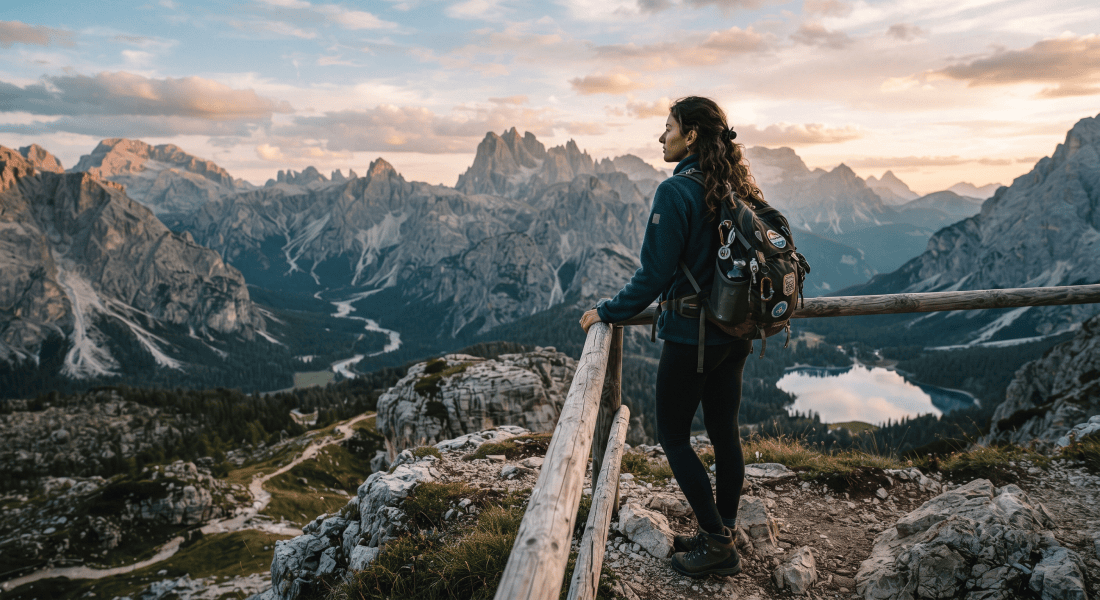
Solo travel is marketed as liberation — just you, a bag, and the open road. And it is freeing. But talk to almost any woman who’s traveled alone, and you’ll find a second, invisible itinerary running alongside the visible one: a set of quiet rules she follows without even fully realizing it.

Checking In Before It Feels Necessary

Many women share their live location with a friend or family member the moment they land somewhere new — not because something is wrong, but as a default habit. A quick “reached safely” text isn’t paranoia; it’s just part of how the trip is planned from the start.

Choosing Accommodation by Safety First, Aesthetics Second

That beautifully photographed homestay with no reviews? Often skipped — not because it isn’t tempting, but because women disproportionately factor in things like well-lit entrances, women-only hostels, or 24-hour reception before booking anything.

Timing the Day Around Daylight

Sightseeing schedules often quietly shift around when the sun sets. Plans to “wander and see where the evening takes me” get replaced with being back at the stay before dark, especially in unfamiliar cities.

Dressing for the Place, Not Just the Weather

Packing lists for solo women travelers often include an extra layer of thought: what will draw less attention here, what’s locally appropriate, what won’t invite unwanted comments — decisions made well before the trip even begins.

Having a Ready Exit Line

“I’m meeting my husband/friend/group in five minutes” is a sentence many women keep on standby, even when it’s not true, simply because it’s often the fastest way to end an uncomfortable conversation without confrontation.

Scanning the Room, Every Room

Walking into a café, train compartment, or hotel lobby and quickly noting the exits, the crowd, who’s watching — it’s such a fast, automatic habit that many women don’t even register they’re doing it anymore.

Why This Matters

None of this means women shouldn’t travel alone — millions do, and love it. But the extra layer of planning is real, and largely invisible to anyone who hasn’t had to carry it. Naming these unspoken rules doesn’t take away the joy of solo travel; it just makes visible the quiet work that goes into making that joy feel safe.

How to Make Your Periods More Eco-Friendly (Menstrual Cups, Cloth Pads & More)

Somewhere between the ages of thirteen and now, most of us have gone through hundreds, maybe thousands, of disposable pads or tampons without ever really pausing to think about where they end up. I didn’t either — until I actually sat down and did the math on how much plastic one period alone quietly generates, month after month, year after year.

That math is what nudged me toward switching things up. It wasn’t overnight, and it wasn’t perfect. But here’s what I’ve learned along the way.

Why this even matters

A single disposable pad can contain the plastic equivalent of about four plastic bags, and most take centuries to break down. Multiply that by a lifetime of periods, and the number gets uncomfortable fast. None of this is said to guilt anyone — most of us were just never given other options growing up. But once you know better options exist, it’s worth at least knowing what they are.

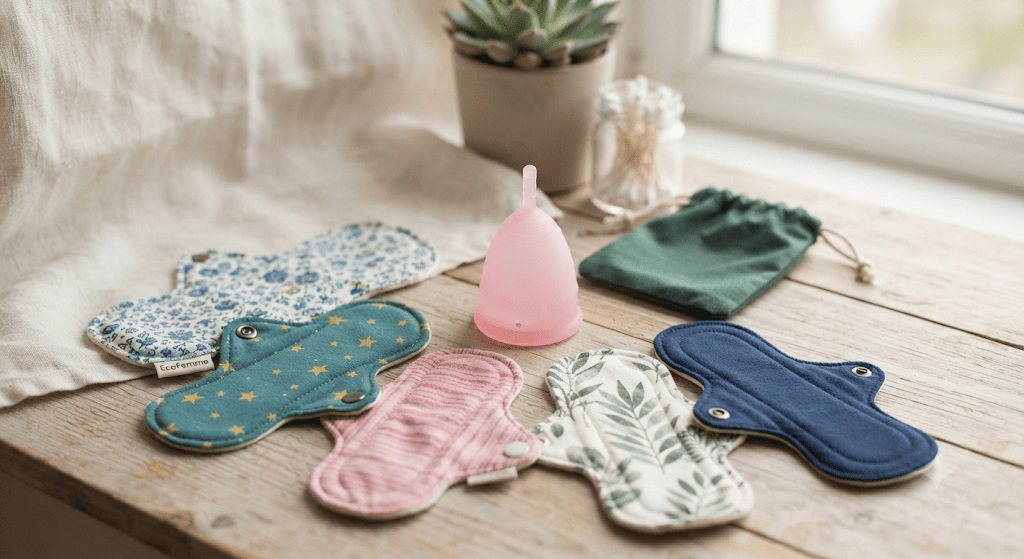
Menstrual Cups

This was the one I was most nervous about, and also the one that ended up changing the most for me. A menstrual cup is a small, flexible silicone cup that collects (rather than absorbs) flow, and can be worn for up to 8-12 hours depending on flow. One cup, with proper care, lasts several years — which means the “waste” from years of periods shrinks down to essentially one small object.

The learning curve is real for the first cycle or two — figuring out folding techniques, finding the right size, getting comfortable with insertion and removal. I won’t pretend that part was smooth. But by the second cycle, it stopped feeling unfamiliar, and by the third, I couldn’t imagine going back.

Reusable Cloth Pads

For days when a cup doesn’t feel right, or for anyone easing in more gradually, cloth pads are a solid middle step. They work exactly like disposable pads but are washable and reusable for years. A lot of brands now make ones with the same wings, absorbency levels, and comfort you’d expect from disposable versions — the only extra step is a quick rinse and wash after use.

Period Underwear

This one requires zero adjustment period (no pun intended). It looks and wears like regular underwear but has built-in absorbent layers. It’s especially useful for lighter days, overnight wear, or as backup alongside a cup. For anyone hesitant to jump straight into cups, this is often the gentlest starting point.

What I’d tell someone just starting out

Start with one switch, not all of them at once. Trying to overhaul your entire routine in one cycle is a fast way to feel overwhelmed and give up. Pick the option that feels least intimidating and let that be the only change for a cycle or two.

Give it more than one try. The first cycle with a cup or cloth pad is rarely the smoothest — that’s normal, not a sign it’s “not for you.” Most of the discomfort is about unfamiliarity, not the product itself.

It’s okay to mix and match. You don’t have to pick just one. Plenty of people use a cup for heavy days, period underwear for light days, and keep a couple of disposables around for emergencies. Sustainability doesn’t require perfection — it just asks for a direction.

The bigger picture

Switching how you manage your period isn’t going to single-handedly fix a global waste problem, and it doesn’t need to be framed that way to be worth doing. It’s a small, personal choice that adds up over a lifetime — less waste, less recurring cost, and for a lot of people, honestly, more comfort once the adjustment period (again, no pun intended) is over.

Have you tried any of these? I’d genuinely love to hear what worked or didn’t for you.

Why Traveling Alone Changed How I See the World

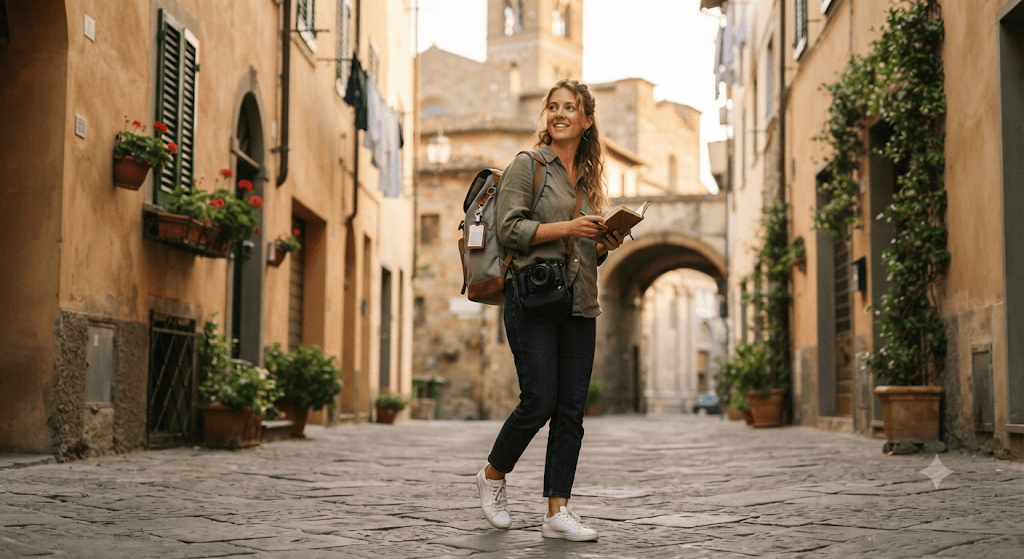
The first time I traveled alone, I spent the entire first day waiting for something to feel wrong. No one to check in with about where to eat, no one to ask “should we go left or right,” no one to notice if I got quiet for a while. I kept expecting the loneliness to hit. It never quite did — and that surprised me more than the trip itself.

What hit instead was something closer to clarity.

You stop performing the trip

When you travel with people, even the ones you love most, there’s a quiet, constant negotiation happening — where to go, what to skip, how long to stay somewhere, whose pace to follow. Most of it is so small you don’t even notice you’re doing it. Alone, all of that disappears. I sat in a café for two hours longer than any “reasonable” itinerary would allow, simply because I wasn’t done sitting there. No one needed convincing. No one was checking their phone for the next plan. It was just me, deciding, in real time, what I actually wanted — not what would keep the group happy.

I didn’t realize how rarely I did that until I noticed how unfamiliar it felt.

You start noticing things you’d normally talk over

Conversation is wonderful, but it also fills space that silence would otherwise use for noticing. Alone, I found myself actually looking at things — the way light moved across a wall in the afternoon, a conversation between two strangers at the next table, the specific sound a place makes when it’s mostly empty. None of it was dramatic. All of it stayed with me longer than most conversations from group trips ever have.

You become genuinely resourceful, not performatively brave

There’s a difference between being told you’re capable and actually finding out. Booking the wrong train and figuring out the fix yourself. Getting mildly lost and asking a stranger for directions in a language you don’t fully speak. None of these moments felt like adventure while they were happening — they felt inconvenient, honestly. But somewhere after the trip, I noticed I’d stopped assuming I’d need someone else to handle the hard parts. That confidence didn’t come from a pep talk. It came from evidence.

Safety planning becomes second nature, not paranoia

I won’t pretend solo travel, especially as a woman, doesn’t require extra thought — it does, and pretending otherwise helps no one. Sharing your live location with someone you trust, choosing accommodations with good lighting and reviews from other solo women travelers, trusting your gut the moment something feels off rather than talking yourself out of the feeling — these aren’t signs of fear. They’re just part of how you plan responsibly, the same way you’d check the weather before packing. Once they become habit, they stop feeling heavy.

You come back different in ways that are hard to explain

The strangest part of solo travel isn’t the trip — it’s the return. I came back and couldn’t quite explain what had changed, because nothing dramatic had happened. No grand epiphany, no life-altering encounter. Just dozens of small moments of choosing for myself, noticing more, and trusting my own judgment without a second opinion in the room. Somehow that adds up to something that feels a lot like knowing yourself a little better than before you left.

You don’t need a big, symbolic reason to travel alone. Sometimes the only reason you need is that no one else’s plan will show you what yours looks like.

Have you traveled solo before? I’d love to know what surprised you most about it.