Somewhere between the ages of thirteen and now, most of us have gone through hundreds, maybe thousands, of disposable pads or tampons without ever really pausing to think about where they end up. I didn’t either — until I actually sat down and did the math on how much plastic one period alone quietly generates, month after month, year after year.
That math is what nudged me toward switching things up. It wasn’t overnight, and it wasn’t perfect. But here’s what I’ve learned along the way.
Why this even matters
A single disposable pad can contain the plastic equivalent of about four plastic bags, and most take centuries to break down. Multiply that by a lifetime of periods, and the number gets uncomfortable fast. None of this is said to guilt anyone — most of us were just never given other options growing up. But once you know better options exist, it’s worth at least knowing what they are.
Menstrual Cups
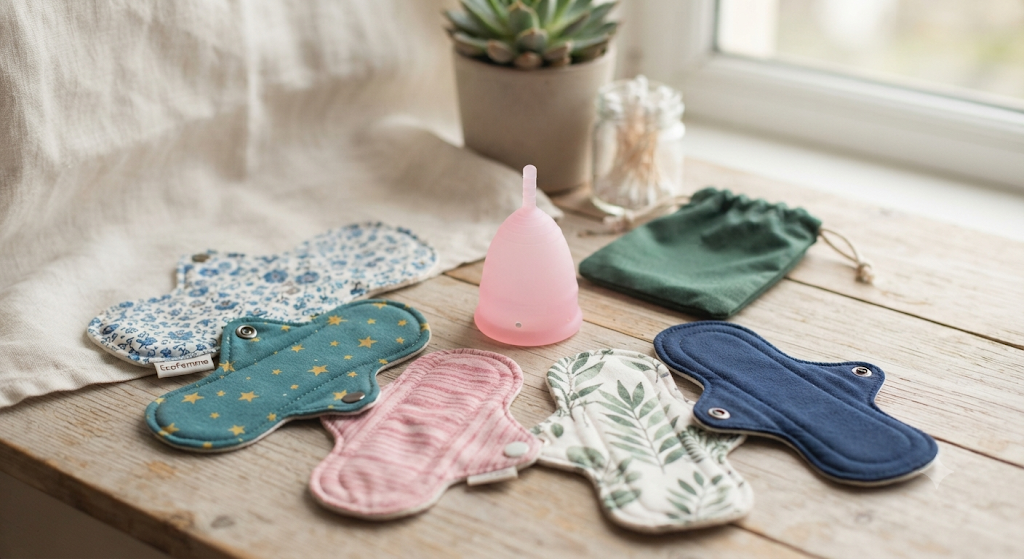
This was the one I was most nervous about, and also the one that ended up changing the most for me. A menstrual cup is a small, flexible silicone cup that collects (rather than absorbs) flow, and can be worn for up to 8-12 hours depending on flow. One cup, with proper care, lasts several years — which means the “waste” from years of periods shrinks down to essentially one small object.
The learning curve is real for the first cycle or two — figuring out folding techniques, finding the right size, getting comfortable with insertion and removal. I won’t pretend that part was smooth. But by the second cycle, it stopped feeling unfamiliar, and by the third, I couldn’t imagine going back.
Reusable Cloth Pads
For days when a cup doesn’t feel right, or for anyone easing in more gradually, cloth pads are a solid middle step. They work exactly like disposable pads but are washable and reusable for years. A lot of brands now make ones with the same wings, absorbency levels, and comfort you’d expect from disposable versions — the only extra step is a quick rinse and wash after use.
Period Underwear
This one requires zero adjustment period (no pun intended). It looks and wears like regular underwear but has built-in absorbent layers. It’s especially useful for lighter days, overnight wear, or as backup alongside a cup. For anyone hesitant to jump straight into cups, this is often the gentlest starting point.
What I’d tell someone just starting out
Start with one switch, not all of them at once. Trying to overhaul your entire routine in one cycle is a fast way to feel overwhelmed and give up. Pick the option that feels least intimidating and let that be the only change for a cycle or two.
Give it more than one try. The first cycle with a cup or cloth pad is rarely the smoothest — that’s normal, not a sign it’s “not for you.” Most of the discomfort is about unfamiliarity, not the product itself.
It’s okay to mix and match. You don’t have to pick just one. Plenty of people use a cup for heavy days, period underwear for light days, and keep a couple of disposables around for emergencies. Sustainability doesn’t require perfection — it just asks for a direction.
The bigger picture
Switching how you manage your period isn’t going to single-handedly fix a global waste problem, and it doesn’t need to be framed that way to be worth doing. It’s a small, personal choice that adds up over a lifetime — less waste, less recurring cost, and for a lot of people, honestly, more comfort once the adjustment period (again, no pun intended) is over.
Have you tried any of these? I’d genuinely love to hear what worked or didn’t for you.


