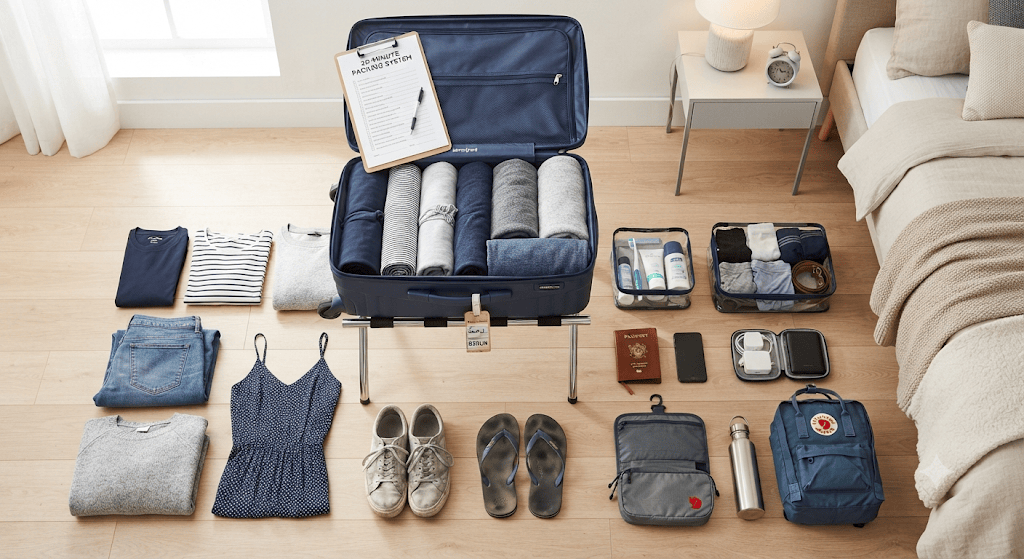
Packing for a Trip in Under 30 Minutes: A Practical System

Packing has a way of expanding to fill however much time you give it — an hour of deliberation over outfit combinations, second-guessing what to bring, refolding things that were already fine. With a repeatable system, most trips can be packed in well under 30 minutes.

Keep a Standing “Base Kit” Ready

Toiletries, chargers, adapters, and basic first-aid items are needed on nearly every trip, yet get re-packed from scratch each time. Keeping a dedicated, always-ready pouch with these essentials means one major packing category is already done before you even start.

Use the “3-Day Rule” for Clothing

Rather than packing a different outfit for every single day, plan around a small set of mix-and-matchable pieces that can be worn in different combinations across roughly three days, then repeated with minor variation — this alone cuts packing decisions dramatically for longer trips.

Pick a Color Scheme Before Choosing Items

Selecting clothes from within one or two coordinating color families means almost anything you grab can be paired with anything else, removing the need to individually plan each outfit combination in advance.

Lay Everything Out Before Packing the Bag

A quick flat layout of everything you’re bringing — clothes, essentials, extras — lets you spot immediately what’s missing or excessive, which is far faster than packing and repacking directly into the bag while second-guessing choices.

Roll, Don’t Fold

Rolling clothing instead of folding saves both space and time, and tends to reduce wrinkling as a side benefit — a small technique that speeds up the actual packing motion once everything is laid out and ready.

Use a Fixed Packing Order

Packing in the same sequence every time — bottom-heavy items first, then clothing, then anything fragile or frequently accessed on top — removes the decision fatigue of figuring out bag organization from scratch on every trip.

Keep a Reusable Packing Checklist

A saved checklist (digital or printed) covering your standard trip essentials means packing becomes a quick scan-and-confirm process rather than trying to mentally reconstruct everything you might need each time.

Accept That Minor Forgetting Is Fine

Most forgotten items are replaceable at the destination without much hassle. Letting go of the need to pack “perfectly” removes a significant chunk of the deliberation time that slows packing down in the first place.

Bottom Line

Fast packing isn’t about rushing — it’s about removing repeated decisions through a standing system: a ready base kit, a simple color scheme, and a fixed process. Once the system is set up once, most trips genuinely can be packed in well under half an hour.
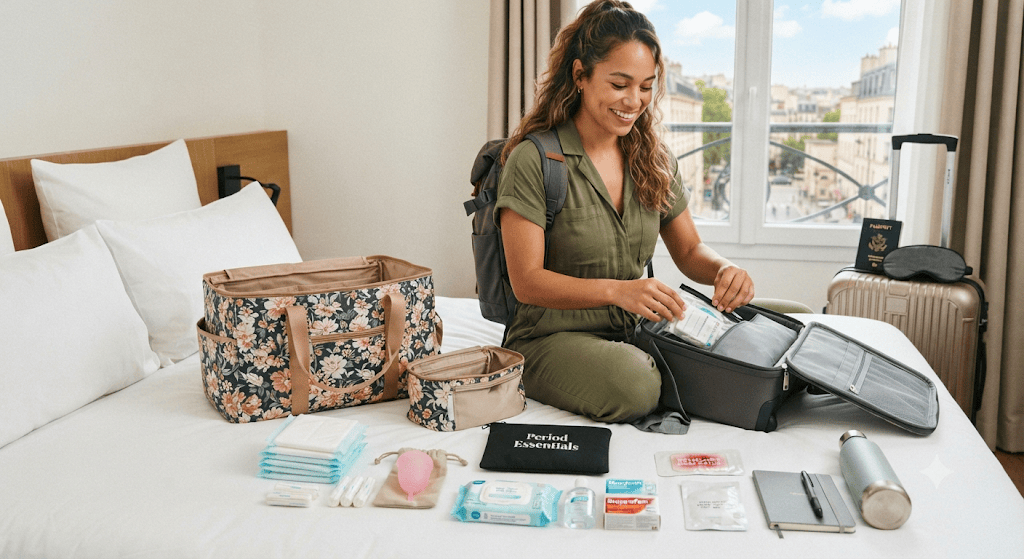
Traveling on Your Period: Products, Prep, and Peace of Mind

A trip landing right on your period can feel like an added complication on top of everything else travel already requires. With a bit of preparation, though, it’s entirely manageable — and doesn’t need to change how much you enjoy the trip.

Choosing the Right Product for the Trip

  • Menstrual cups work well for longer trips with limited access to frequent changing facilities, since they can be worn for extended periods safely
  • Period underwear is a low-effort backup or standalone option, especially useful on travel days involving long transit
  • Tampons or pads remain simplest for shorter trips or destinations where familiarity and convenience matter more than sustainability

Trying any new product well before the trip — not for the first time while traveling — avoids unnecessary stress from an unfamiliar routine.

Packing Smart

Carrying more supplies than you think you’ll need, plus a few extra just in case of delays or unexpectedly heavy flow days, avoids the stress of hunting for specific products in an unfamiliar place, especially abroad where preferred brands may not be available.

Managing Cramps While in Transit

Packing pain relief medication in your carry-on (not checked luggage), along with a small heating patch for long flights or train journeys, helps manage discomfort without needing to search for a pharmacy immediately upon arrival.

Hygiene During Long Travel Days

Wet wipes, a small pouch for used products, and hand sanitizer make managing hygiene easier during long flights, train rides, or bus journeys where clean facilities may not always be readily available.

Planning Activities Around Your Cycle, If Helpful

For trips with flexible itineraries, scheduling more intense activities (like a long trek or a full day of sightseeing) around lighter flow days, where possible, can make the overall trip feel more comfortable — though it’s entirely optional, not a requirement.

A Quick Pre-Trip Checklist

  • Pack more supplies than the trip length suggests you’ll need
  • Carry pain relief in your immediate hand luggage
  • Research pharmacy or product availability at your destination in advance
  • Pack a small, discreet hygiene pouch for transit days

Bottom Line

A period during travel isn’t a reason to alter plans or feel anxious about the trip — a little product preparation and a small hygiene kit handle most of what actually comes up. It’s a manageable, ordinary part of travel, not a genuine obstacle to it.

Zero-Waste Travel: Packing Light Without the Plastic

Travel has a strange relationship with plastic — the more we try to pack light and stay convenient, the more disposable items tend to sneak in. A zero-waste approach doesn’t mean packing more; it usually means packing smarter.

Rethink Toiletries First

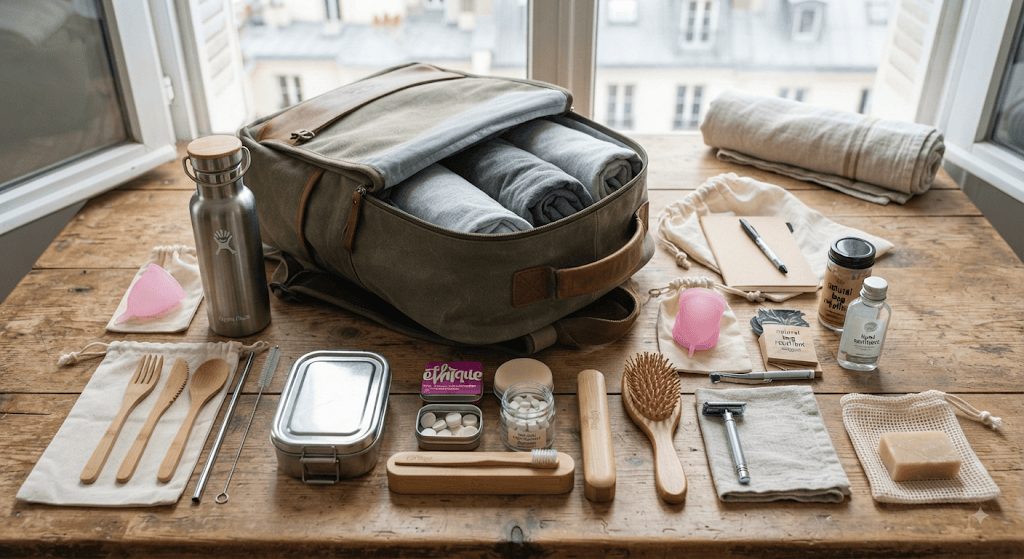
Mini plastic bottles are the biggest repeat offender in most travel bags. Solid shampoo and soap bars, refillable silicone bottles, and a reusable toothbrush cut out an entire category of single-use plastic without adding any real bulk.

Carry Your Own Water Solution

A reusable bottle paired with a portable purification option (like a filter bottle or purifying tablets) removes the need to keep buying plastic water bottles at every stop — one of the most common sources of travel waste, especially on longer trips.

Pack Reusable Bags, Plural

One tote isn’t enough. A small stash of reusable bags — for laundry, shoes, snacks, or shopping — replaces the plastic bags that hotels, markets, and transport hubs hand out by default.

Bring Your Own Cutlery and Container

A compact cutlery set and a foldable container handle both street food and leftovers without relying on plastic forks or takeaway boxes. It sounds minor, but over a multi-day trip, it adds up to a noticeable reduction in throwaway plastic.

Choose Snacks Without the Wrapping

Buying local, unpackaged snacks — fruit, roasted nuts, bakery items — instead of individually wrapped packets cuts waste and often means fresher, more interesting food along the way.

Say No Before You’re Offered

Many single-use items — extra bags, straws, disposable amenities — are handed out by default, not because they’re needed. A simple “no, thank you” at the point of offering prevents most of this waste before it even starts.

Bottom Line

Zero-waste travel isn’t about carrying more stuff — it’s about carrying a few reusable essentials that quietly replace a dozen disposable habits. The bag ends up lighter, not heavier, and the trip leaves a little less behind.