Responsible Travel in Ladakh: Water, Altitude and Local Culture

A Fragile Place With a Booming Visitor List

Ladakh sits in the Himalayan rain shadow and depends largely on glacier melt for water. Tourism has grown fast. One report notes that the 1980s saw only about two dozen hotels across Ladakh, while today there are several hundred, most of them in Leh. More bathrooms, more guesthouses and more visitors all draw on the same limited supply.

Water: The Biggest Issue

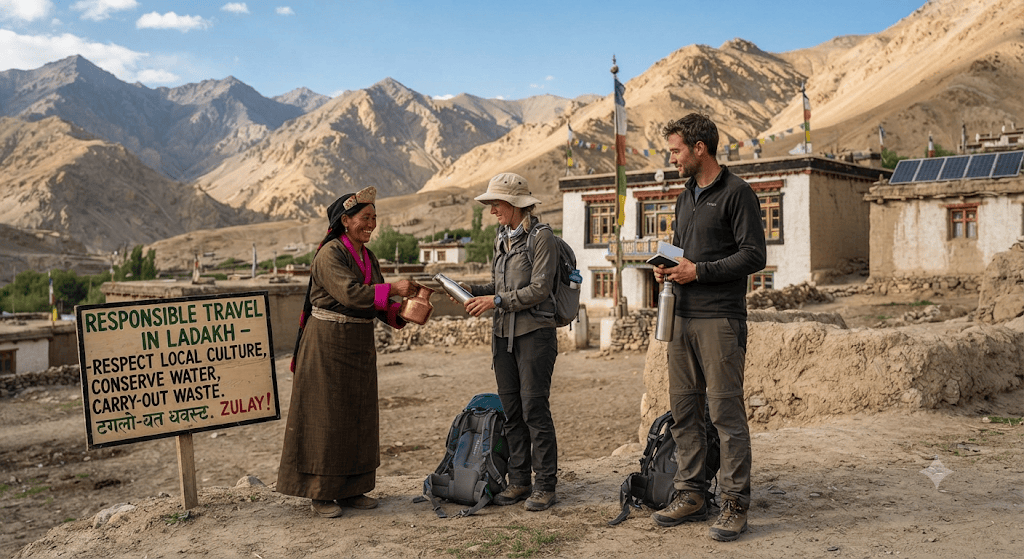
A study by the Ladakh Ecological Development Group found that an average Ladakhi uses about 21 litres of water a day, while a tourist may use as much as 75. Other estimates vary, but all point the same way: visitors use far more than residents.

What you can do:

  1. Take short, bucket-style baths instead of long showers
  2. Use local dry toilets where homestays offer them
  3. Carry a reusable bottle and refill it instead of buying plastic bottles
  4. Reuse leftover washing water for plants where you can

Altitude: Respect It

The Ladakh tourism department advises at least 48 hours of acclimatisation after arriving in Leh, plenty of fluids, light meals on day one, and avoiding sleeping pills or sedatives at altitude. Don’t rush to higher passes straight after landing, and descend if severe symptoms appear. If you plan to take altitude medication, speak to your doctor first.

Culture: You’re a Guest

Ladakh is home to a living Tibetan Buddhist culture. Ask before photographing people or monks, dress modestly at monasteries, walk clockwise around stupas and prayer wheels, and avoid touching religious objects.

Where You Stay Matters

Homestays keep money in local households and often use water more carefully than large hotels. They also give you home-cooked food and conversation that no hotel buffet can match.

Don’t Leave Plastic Behind

Plastic breaks down slowly at high altitude and can contaminate streams near popular spots. Carry your waste out with you.

Bottom Line

Ladakh doesn’t need fewer travellers so much as more thoughtful ones. Use less water, go slowly, stay local and leave the place as you found it.

Women Who Built Their Own Eco-Resorts From Scratch

From Finance to Forest Stays

Aditi Balbir left a decade-long career in finance, including stints at firms like McKinsey, to found V Resorts, a company that partners with small, remote properties and helps them meet sustainable operational standards. Her model showed that even a modest 15-room resort could generate meaningful local jobs and income while limiting environmental impact — proof that ecotourism could be both a business and a community investment.

Verifying Sustainability, One Stay at a Time

Prerna Prasad built Ecoplore after leaving a career in news journalism, spending her first two years personally visiting and vetting eco-friendly hotels across India before listing a single one. Her platform requires strict criteria — meaningful tree cover, plastic-free operations, rainwater harvesting, and composting — and is run by an almost entirely female team, partly to make solo travel verification safer for women.

Turning Fisherfolk Into Tour Guides

Rashmi Sawant’s Culture Aangan took a different route entirely — instead of building resorts, she built experiential rural tourism around existing village livelihoods. In Maharashtra’s Sindhudurg district, women from local fishing communities now lead tourists on boat rides through mangrove creeks as an additional, dignified income stream alongside their traditional work.

The Common Thread

None of these ventures started with hospitality credentials. What they shared was a willingness to spend years on unglamorous groundwork — vetting properties, building trust with village communities, negotiating with vendors — before any of it looked like a “resort” in the traditional sense.

Bottom Line

The women reshaping India’s eco-tourism sector didn’t inherit a hospitality legacy — they built one, one relationship and one sustainability standard at a time.

How to Choose Eco-Friendly Homestays While Booking Online

Booking platforms are full of listings tagged “eco-friendly” or “sustainable” — but the label alone doesn’t mean much without digging a little deeper. Here’s how to actually evaluate a homestay before booking, instead of taking the tag at face value.

Look Past the Tag, Into the Description

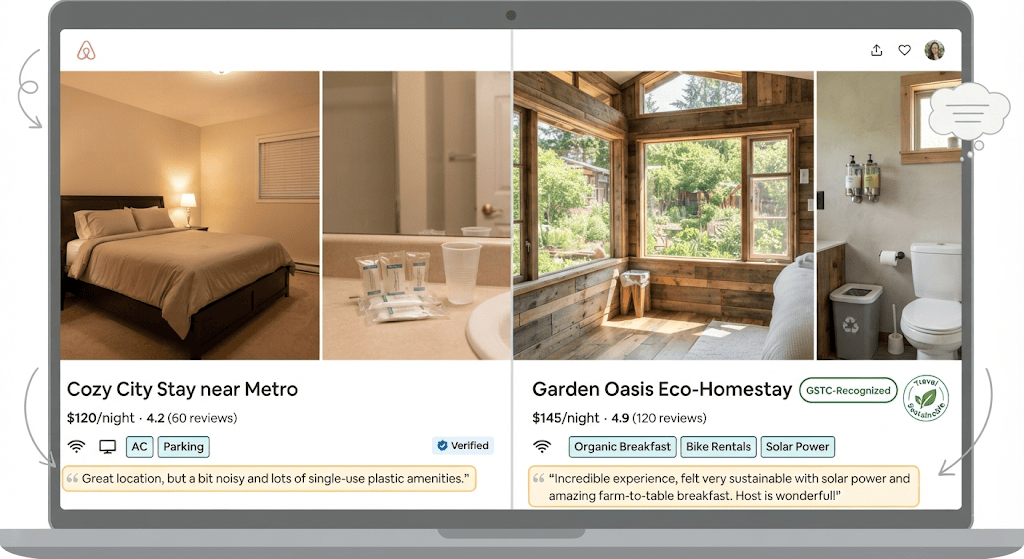
A genuinely sustainable homestay usually describes specific practices — solar power, rainwater harvesting, composting, local sourcing — rather than just the word “eco-friendly” sitting alone in the listing title. Vague labeling with no specifics is often a sign the tag is more marketing than practice.

Check for Local Ownership and Employment

Homestays run by local families, employing local staff, tend to have a smaller footprint and a more direct positive impact than larger properties built and staffed from outside the region. Listings that mention this directly are usually more transparent about their model.

Read Reviews for Specifics, Not Just Ratings

A high star rating alone doesn’t confirm sustainability. Reviews that mention things like “loved the solar-heated water” or “they compost all kitchen waste” are far more reliable indicators than a generic five-star rating with no detail.

Ask Before You Book

Most hosts are happy to answer direct questions about water sourcing, waste management, or energy use if asked. A quick message before booking — “how do you manage waste and water here?” — often reveals more than the listing itself.

Watch for Over-Construction

A homestay advertised as eco-friendly but built with heavy concrete construction, large manicured lawns, or excessive amenities is often working against the very label it’s using. Simpler, more traditional construction methods usually align better with genuine sustainability.

Prioritize Small Over Large

Smaller, family-run homestays generally have a lighter environmental footprint than larger resort-style “eco” properties, simply due to scale — fewer rooms, less infrastructure, less resource consumption per guest.

Bottom Line

“Eco-friendly” is an easy word to add to a listing and a harder one to actually practice. A little extra reading — and a direct question or two before booking — goes a long way toward finding a stay that’s genuinely living up to the label, not just wearing it.

Zero-Waste Travel: Packing Light Without the Plastic

Travel has a strange relationship with plastic — the more we try to pack light and stay convenient, the more disposable items tend to sneak in. A zero-waste approach doesn’t mean packing more; it usually means packing smarter.

Rethink Toiletries First

Mini plastic bottles are the biggest repeat offender in most travel bags. Solid shampoo and soap bars, refillable silicone bottles, and a reusable toothbrush cut out an entire category of single-use plastic without adding any real bulk.

Carry Your Own Water Solution

A reusable bottle paired with a portable purification option (like a filter bottle or purifying tablets) removes the need to keep buying plastic water bottles at every stop — one of the most common sources of travel waste, especially on longer trips.

Pack Reusable Bags, Plural

One tote isn’t enough. A small stash of reusable bags — for laundry, shoes, snacks, or shopping — replaces the plastic bags that hotels, markets, and transport hubs hand out by default.

Bring Your Own Cutlery and Container

A compact cutlery set and a foldable container handle both street food and leftovers without relying on plastic forks or takeaway boxes. It sounds minor, but over a multi-day trip, it adds up to a noticeable reduction in throwaway plastic.

Choose Snacks Without the Wrapping

Buying local, unpackaged snacks — fruit, roasted nuts, bakery items — instead of individually wrapped packets cuts waste and often means fresher, more interesting food along the way.

Say No Before You’re Offered

Many single-use items — extra bags, straws, disposable amenities — are handed out by default, not because they’re needed. A simple “no, thank you” at the point of offering prevents most of this waste before it even starts.

Bottom Line

Zero-waste travel isn’t about carrying more stuff — it’s about carrying a few reusable essentials that quietly replace a dozen disposable habits. The bag ends up lighter, not heavier, and the trip leaves a little less behind.

Women-Owned Cafes and Homestays Worth Supporting on Your Next Trip

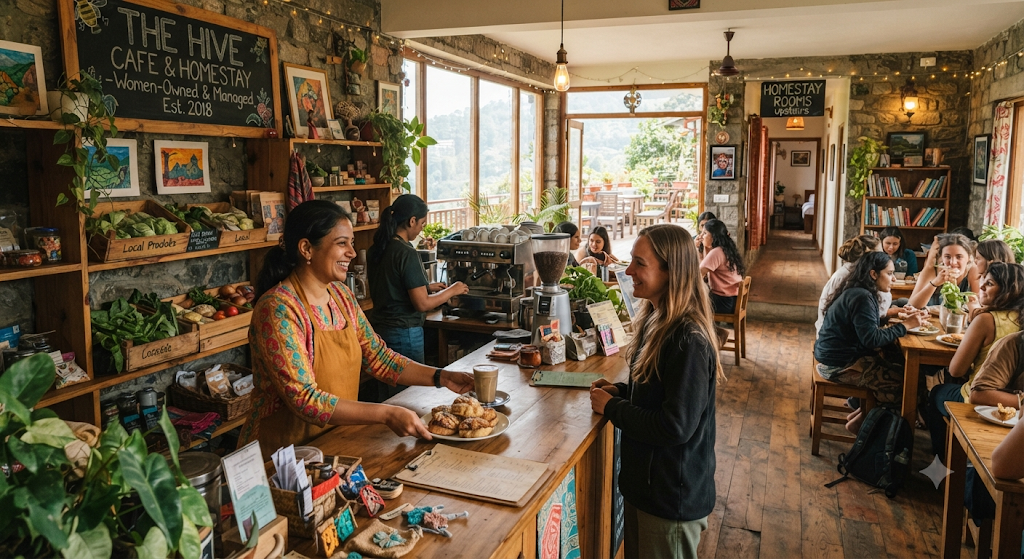
Every trip involves dozens of small spending decisions — where to eat, where to stay, whose business gets your money. Most of these choices are made on convenience alone. But a growing number of travelers are starting to ask one more question: who actually owns this place? Seeking out women-owned cafes and homestays is a small shift that adds up to real support.

Why It Matters

Women entrepreneurs, especially in hospitality and food service, often face harder paths to funding, land ownership, and business credit than their male counterparts. A homestay or café run by a woman — particularly in smaller towns or rural areas — frequently represents not just a business, but a hard-won foothold in local economic life. Choosing to spend there is a direct, tangible way to back that effort.

What These Places Often Offer

Women-run homestays in particular tend to lean into hospitality that feels personal rather than transactional — home-cooked meals, local recipes passed down through family, and a level of care that larger commercial stays rarely replicate. Cafés run by women often double as community spaces, sometimes hiring other local women and reinvesting in the neighborhood around them.

How to Find Them While Traveling

  • Ask locally, not just online. Tourism boards and local women’s self-help groups often know of homestays that never make it onto big booking platforms.
  • Look for cooperative and self-help group listings. Many regions have women-run hospitality collectives, especially in rural and hill areas, that list multiple homestays together.
  • Check reviews for ownership mentions. Guests often note “run by [name] and her family” — a good sign of a woman-led stay.
  • Support cafés that hire visibly. A café that trains and employs local women, not just serves good coffee, extends the impact further.

Beyond the Trip

Supporting women-owned spaces while traveling isn’t just a nice gesture — it directly channels tourist spending into hands that often see the least of it. It’s a small, deliberate choice that turns an ordinary trip into something with a slightly wider impact.

How to Pack Sustainably for Your Next Trip

Eco-friendly travel essentials including reusable water bottle, cutlery set, toothpaste tablets, natural sunscreen, shampoo bar, soap, collapsible cup, notebook, sunglasses, and passport wallet around a packed backpack

Packing sustainably doesn’t mean carrying less — it means carrying smarter. A few thoughtful swaps in your travel bag can significantly cut down on waste, without adding extra effort to your trip.

1. Reusable toiletry bottles
Instead of buying travel-size plastic bottles every trip, refill small silicone or steel containers with your own shampoo, conditioner, and lotion. They last for years of travel.

2. A solid toiletry kit
Shampoo bars, solid perfume, and bar soap skip liquid restrictions at airport security entirely, and cut out plastic packaging completely — a genuinely practical swap, not just an eco one.

3. Packing cubes over plastic bags
Fabric packing cubes replace the pile of disposable plastic bags most people use to organize a suitcase — and they keep things far more organized trip after trip.

4. A foldable tote or day bag
A lightweight cloth tote folds into almost nothing but is invaluable for markets, day trips, or avoiding a plastic bag when shopping on the go.

5. Reusable cutlery and a collapsible cup
Small, but useful for flights, street food, or long train journeys — skips single-use plastic cutlery and cups without adding real weight to your bag.

6. A power bank instead of disposable batteries
Rechargeable over disposable, for any gadgets you’re carrying — small change, but it adds up across every trip.

None of these require buying a whole new travel wardrobe — just swapping the disposable version for a reusable one, one item at a time, as your old ones wear out.

Budget-Friendly Sustainable Travel Destinations Near Delhi/NCR

You don’t need a big budget or a long vacation to travel more sustainably. Some of the best eco-conscious getaways are just a few hours from Delhi — easy on the pocket, and easy on the planet too.

1. Sultanpur National Park (Gurugram)
Just an hour from Delhi, this bird sanctuary is perfect for a low-impact day trip. No fancy resorts needed — go early morning, carry a reusable water bottle, and enjoy one of the richest birdwatching spots near the city, almost entirely on foot.

2. Sariska Tiger Reserve (Rajasthan)
A few hours away, Sariska combines wildlife conservation with budget-friendly stays in nearby villages. Choose a local homestay over a big resort — it supports the community directly and usually costs a fraction of the price.

3. Bharatpur — Keoladeo National Park (Rajasthan)
A UNESCO World Heritage bird sanctuary, best explored by cycle-rickshaw or on foot rather than a vehicle. It’s one of the most sustainable ways to experience wildlife tourism near Delhi, and entry fees are modest.

4. Morni Hills (Haryana)
One of the least commercialized hill destinations near Delhi — quiet, green, and largely untouched by mass tourism. Local guesthouses over big chains keep both your budget and your footprint small.

5. Dhanaulti (Uttarakhand)
Less crowded than Mussoorie, Dhanaulti has an eco-park and forest trails ideal for slow, mindful travel. Public buses connect well from Delhi, cutting down on the need for a private vehicle.

A few sustainable travel habits worth carrying along, wherever you go:

  • Carry a reusable bottle and cloth bag (ties back nicely to our plastic-swap habits!)
  • Choose homestays or local guesthouses over big resorts when possible
  • Public transport or shared cabs over solo drives
  • Leave no trace — carry your trash back if bins aren’t available

Sustainable travel doesn’t have to mean expensive eco-resorts. Sometimes it’s just choosing the slower, simpler, more local option — which usually turns out lighter on the wallet too.