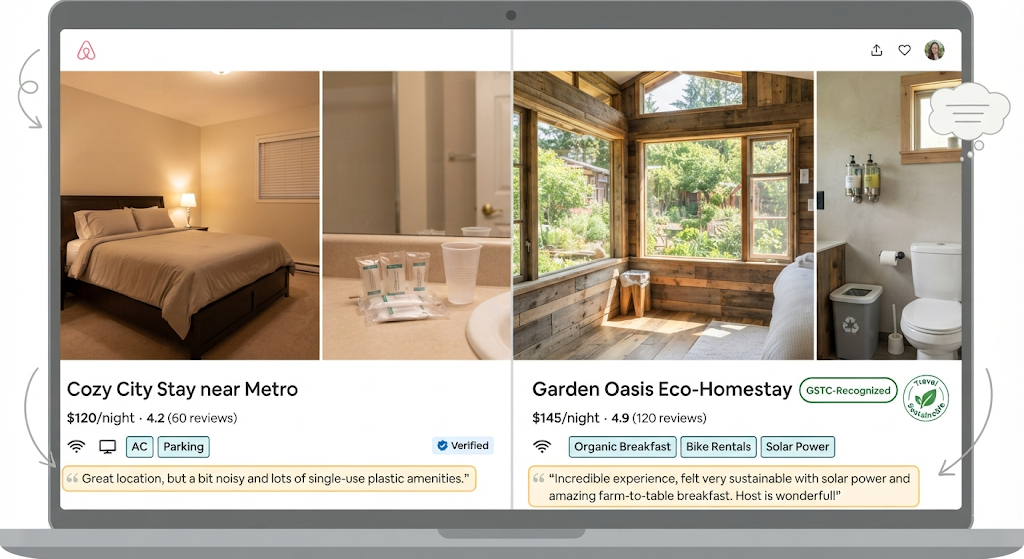
Booking platforms are full of listings tagged “eco-friendly” or “sustainable” — but the label alone doesn’t mean much without digging a little deeper. Here’s how to actually evaluate a homestay before booking, instead of taking the tag at face value.
Look Past the Tag, Into the Description
A genuinely sustainable homestay usually describes specific practices — solar power, rainwater harvesting, composting, local sourcing — rather than just the word “eco-friendly” sitting alone in the listing title. Vague labeling with no specifics is often a sign the tag is more marketing than practice.
Check for Local Ownership and Employment
Homestays run by local families, employing local staff, tend to have a smaller footprint and a more direct positive impact than larger properties built and staffed from outside the region. Listings that mention this directly are usually more transparent about their model.
Read Reviews for Specifics, Not Just Ratings
A high star rating alone doesn’t confirm sustainability. Reviews that mention things like “loved the solar-heated water” or “they compost all kitchen waste” are far more reliable indicators than a generic five-star rating with no detail.
Ask Before You Book
Most hosts are happy to answer direct questions about water sourcing, waste management, or energy use if asked. A quick message before booking — “how do you manage waste and water here?” — often reveals more than the listing itself.
Watch for Over-Construction
A homestay advertised as eco-friendly but built with heavy concrete construction, large manicured lawns, or excessive amenities is often working against the very label it’s using. Simpler, more traditional construction methods usually align better with genuine sustainability.
Prioritize Small Over Large
Smaller, family-run homestays generally have a lighter environmental footprint than larger resort-style “eco” properties, simply due to scale — fewer rooms, less infrastructure, less resource consumption per guest.
Bottom Line
“Eco-friendly” is an easy word to add to a listing and a harder one to actually practice. A little extra reading — and a direct question or two before booking — goes a long way toward finding a stay that’s genuinely living up to the label, not just wearing it.


