How Fast Fashion Returns Policies Quietly Hurt the Environment

The Hidden Cost of “Just Return It”

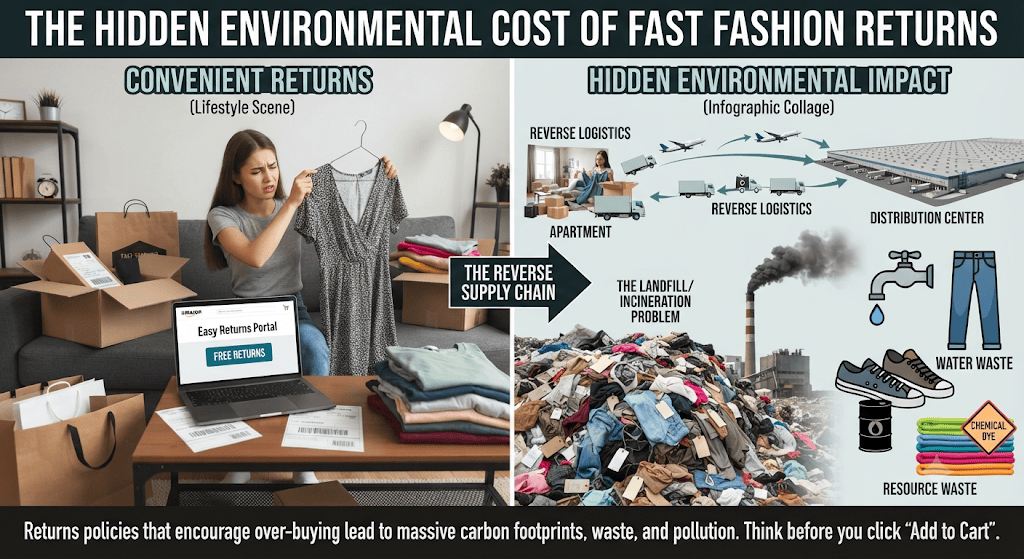
Easy return policies encourage overbuying — ordering multiple sizes or styles with the plan to send back what doesn’t work. It feels low-risk for the shopper, but each return triggers a second delivery journey, doubling transportation emissions on top of the original purchase.

Fashion Has the Worst Returns Problem

The fashion industry records the highest online return rates of any retail category, with customers sending back up to 40% of garments ordered — far above the roughly 30% average return rate across online shopping generally. In the US alone, fashion returns have been estimated to generate carbon emissions equivalent to about three million cars on the road for a year.

Where Returned Clothes Actually Go

Because reprocessing, restocking and reselling a returned item often costs more than the item is worth — especially for cheaply made fast fashion — a significant share of returns are sent straight to landfill instead of resale. Due to the synthetic fibres common in fast fashion, items that do end up there can take up to 100 years to decompose, releasing greenhouse gases and leaching chemicals into soil as they break down.

It’s Not Just About Landfill

Return logistics add packaging waste too — much of it in plastic wraps and mixed materials that are difficult to recycle. And the carbon cost of the return leg alone can add significantly on top of the emissions from the original delivery.

What Shoppers Can Actually Do

  1. Check size charts and read reviews carefully before ordering, instead of over-ordering “to be safe”
  2. Buy fewer, better-made pieces that fit the first time
  3. Choose brands and retailers transparent about what happens to returns
  4. Resist “bracketing” — ordering several sizes/colours intending to return most

Bottom Line

A free return isn’t actually free — it’s a second trip with its own emissions, and often, a one-way ticket to landfill. The most sustainable return is the one you never have to make.
E-Waste at Home: What Happens to Your Old Phones and Chargers

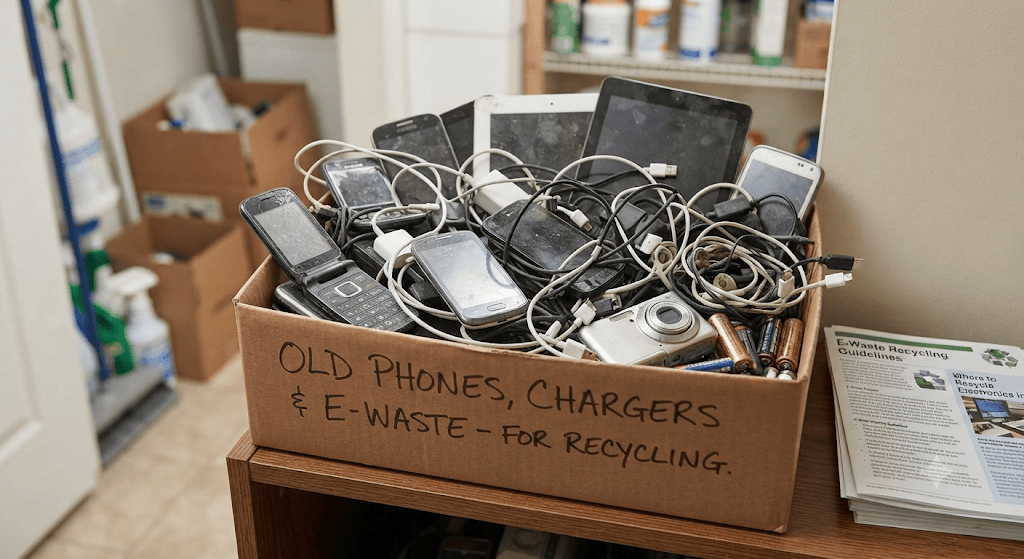
Almost every home has one — a drawer full of old phones, tangled chargers, and cables that no longer match any current device. It feels harmless sitting there, but e-waste is one of the fastest-growing and most under-addressed categories of household waste.

What Happens If It’s Thrown Away Normally

Electronics tossed into regular household trash typically end up in landfills, where components like batteries can leak heavy metals and toxic materials into soil and groundwater over time — a slow but genuinely damaging process that unfolds over years, largely unseen.

Why E-Waste Is Different From Other Trash

Unlike organic or paper waste, electronics don’t break down naturally, and many contain materials — lead, mercury, cadmium — that are hazardous when improperly disposed of, but also genuinely valuable and recoverable when processed correctly, including gold, copper, and other metals used in circuit boards.

The “Drawer Problem”

A huge share of e-waste never even reaches a landfill or a recycler — it just sits unused in homes indefinitely, which isn’t actively harmful, but also means genuinely reusable materials remain locked away instead of being responsibly recycled or the device being reused by someone else.

What Proper E-Waste Recycling Actually Does

Certified e-waste recyclers dismantle devices to separate hazardous components (which are safely processed) from valuable, reusable materials (which are extracted and reintroduced into manufacturing) — a genuinely more resource-efficient process than mining new raw materials from scratch.

Where to Actually Take It

  • Manufacturer take-back programs, which several phone and electronics brands now offer for old devices
  • Certified e-waste collection centers, increasingly available in most Indian cities
  • Retailer exchange or recycling programs, sometimes bundled with a discount on a new purchase
  • Local municipal e-waste drives, held periodically in many urban areas

Before You Recycle: Data Safety

Old phones and laptops often still contain personal data. A factory reset, and ideally removing SIM and memory cards, protects your information before handing a device off for recycling or resale.

Consider Reuse Before Recycling

A working but outdated phone, laptop, or charger may still have real value to someone else — donating functional electronics, or reselling them through a resale platform, extends their usable life before recycling becomes the more appropriate final step.

Bottom Line

That drawer of old electronics isn’t neutral — it’s either a missed recycling opportunity or, if eventually thrown out carelessly, a genuine environmental hazard. A single trip to a proper e-waste collection point turns years of accumulated clutter into responsibly processed material instead.