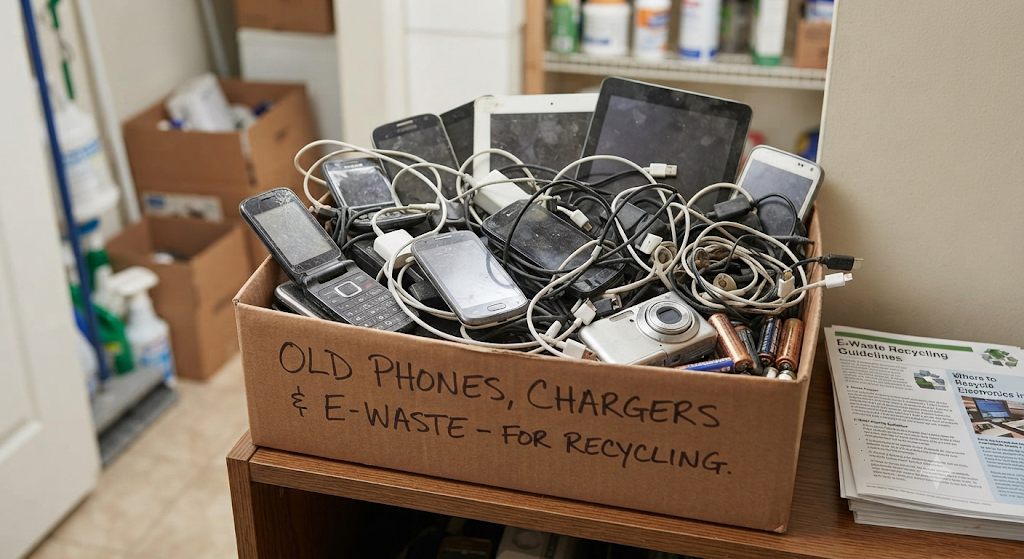
Almost every home has one — a drawer full of old phones, tangled chargers, and cables that no longer match any current device. It feels harmless sitting there, but e-waste is one of the fastest-growing and most under-addressed categories of household waste.
What Happens If It’s Thrown Away Normally
Electronics tossed into regular household trash typically end up in landfills, where components like batteries can leak heavy metals and toxic materials into soil and groundwater over time — a slow but genuinely damaging process that unfolds over years, largely unseen.
Why E-Waste Is Different From Other Trash
Unlike organic or paper waste, electronics don’t break down naturally, and many contain materials — lead, mercury, cadmium — that are hazardous when improperly disposed of, but also genuinely valuable and recoverable when processed correctly, including gold, copper, and other metals used in circuit boards.
The “Drawer Problem”
A huge share of e-waste never even reaches a landfill or a recycler — it just sits unused in homes indefinitely, which isn’t actively harmful, but also means genuinely reusable materials remain locked away instead of being responsibly recycled or the device being reused by someone else.
What Proper E-Waste Recycling Actually Does
Certified e-waste recyclers dismantle devices to separate hazardous components (which are safely processed) from valuable, reusable materials (which are extracted and reintroduced into manufacturing) — a genuinely more resource-efficient process than mining new raw materials from scratch.
Where to Actually Take It
- Manufacturer take-back programs, which several phone and electronics brands now offer for old devices
- Certified e-waste collection centers, increasingly available in most Indian cities
- Retailer exchange or recycling programs, sometimes bundled with a discount on a new purchase
- Local municipal e-waste drives, held periodically in many urban areas
Before You Recycle: Data Safety
Old phones and laptops often still contain personal data. A factory reset, and ideally removing SIM and memory cards, protects your information before handing a device off for recycling or resale.
Consider Reuse Before Recycling
A working but outdated phone, laptop, or charger may still have real value to someone else — donating functional electronics, or reselling them through a resale platform, extends their usable life before recycling becomes the more appropriate final step.
Bottom Line
That drawer of old electronics isn’t neutral — it’s either a missed recycling opportunity or, if eventually thrown out carelessly, a genuine environmental hazard. A single trip to a proper e-waste collection point turns years of accumulated clutter into responsibly processed material instead.


