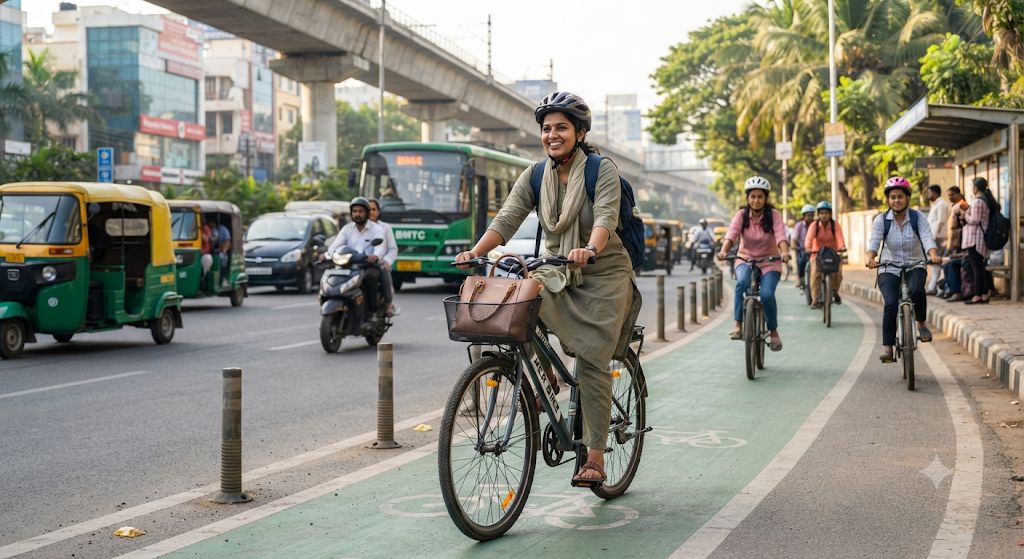
The Gap Is Real, and It’s Been Huge
As of the 2011 census, roughly 20 percent of Indian men commuted by bicycle compared to under 5 percent of women — a gender gap researchers have called among the highest in the world for cycling specifically. That number is the backdrop against which any “rise in women’s cycling” story has to be told honestly.
Where the Real Movement Is Happening
The most measurable shift so far isn’t in cities — it’s among rural schoolgirls. A peer-reviewed study tracking national survey data found cycling among rural girls more than doubled between 2007 and 2017, a change researchers linked to free bicycle distribution schemes originally designed to keep girls in school by cutting down long, exhausting walks. Researchers have described it as a quiet but genuine revolution in female mobility.
Urban Women Are Starting to Follow
In cities, the shift is slower but visible — driven partly by rising health consciousness and partly by advocacy groups documenting women reclaiming road space that’s historically felt unsafe or unwelcoming to them. Manufacturers have also started designing bicycles with women’s comfort specifically in mind, rather than treating cycling gear as a one-size-fits-all category.
Why This Isn’t Just a Fitness Trend
Cycling addresses something bicycles have historically done for women everywhere — independence of movement that doesn’t depend on being driven, escorted, or waiting for shared transport. In a country where women’s mobility outside the home is still measurably constrained, a bicycle is a small but concrete tool for autonomy.
Bottom Line
Indian women aren’t cycling at parity with men yet, not close. But the direction of change — especially among the next generation of girls — suggests this gap is finally starting to narrow, one commute at a time.

