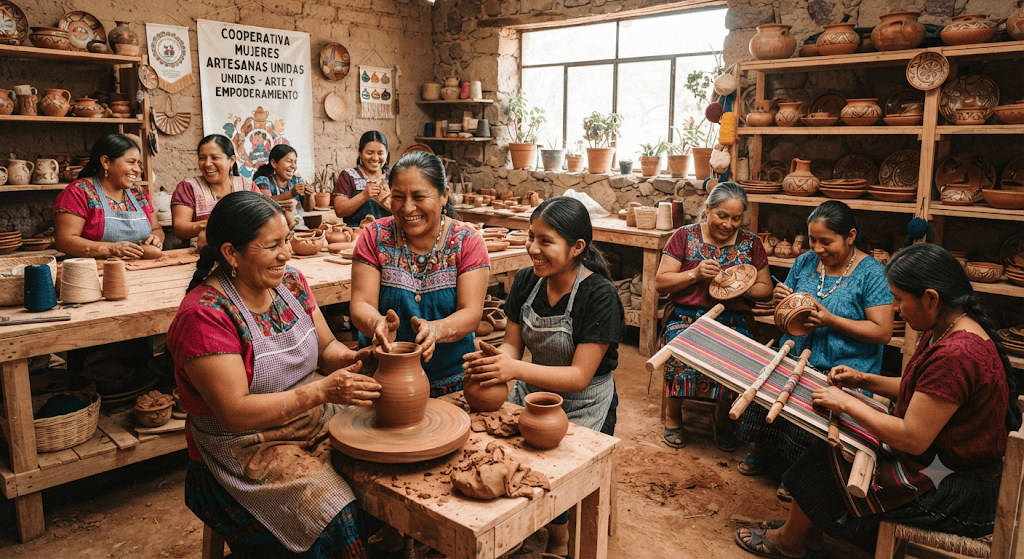
The Rise of Women-Led Pottery and Craft Cooperatives

From Family Trade to Cooperative Business

In Tamil Nadu’s Tirunelveli district, a potter earning a modest annual income from her family’s traditional pottery business started a self-help group to revive and modernise the craft. With support and small loans for raw material and labour, the group trained local women in pottery-making, eventually exporting their handcrafted pots to buyers as far as the United States.

Manipur’s Black Clay Potters

In the hills of Manipur, women artisans from the Thankhul Naga community hand-build black clay pottery entirely without a potter’s wheel — a technique passed down for generations. The craft is central to daily life in the region, but until recently, limited market access meant it generated little income. Partnerships connecting these artisans directly to international buyers have started changing that.

Why the Cooperative Model Works

Self-help groups let women artisans pool resources, share training and access markets that would be out of reach individually. Cooperatives negotiate better prices collectively, provide financial literacy and business training, and in some cases partner with fair trade organisations to ensure artisans are paid fairly for work that used to be badly undervalued.

Beyond Pottery

The same model is reviving other crafts across India — mat weaving in Tamil Nadu, Kantha embroidery in West Bengal, Chamba Rumal embroidery in Himachal Pradesh — each preserving a regional tradition while giving women a route to independent income and, often, digital tools like WhatsApp to run their businesses.

How to Support These Cooperatives

  1. Buy directly from cooperative-run stores or their verified online pages
  2. Look for craft council or SHG certification rather than mass-produced “ethnic style” copies
  3. Ask sellers where and by whom a piece was made
  4. Value the process — handmade pottery takes time that machine production doesn’t

Bottom Line

These cooperatives are doing more than keeping old crafts alive — they’re rebuilding local economies around them, with women holding the wheel, quite literally.
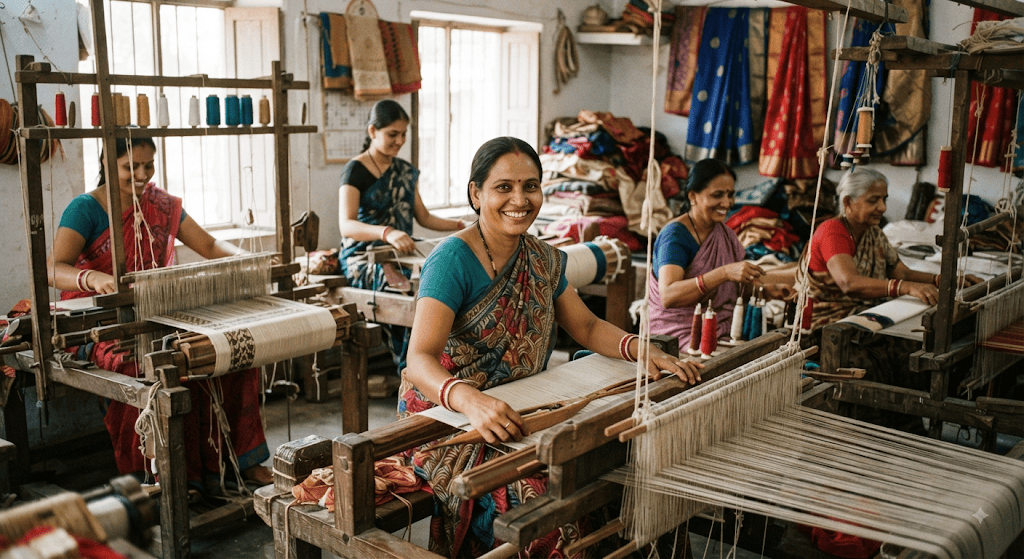
The Women Behind India’s Handloom Revival

Handloom weaving is one of India’s oldest crafts, and today, much of its quiet revival is being carried forward by women — as weavers, cooperative leaders, and entrepreneurs bringing traditional textiles back into modern relevance.

A Craft Historically Carried by Women

In many weaving communities, spinning, dyeing, and finishing work has traditionally fallen to women, even when the loom itself was operated by men. Today, that role is expanding — more women are running looms directly, not just supporting the process around them.

Cooperatives Changing the Economics

Handloom work has long struggled with unfair pricing, as individual weavers often had little bargaining power against middlemen. Women-led cooperatives are changing that by pooling production, negotiating collectively, and connecting weavers directly to buyers — cutting out layers that used to eat into their earnings.

Reviving Techniques That Were Nearly Lost

Several regional weaving techniques had dwindled to a handful of practitioners, mostly older women holding onto skills with no one to pass them to. Deliberate revival efforts — training programs, design collaborations, documentation projects — are helping some of these near-extinct techniques find a new generation of weavers.

Bringing Handloom Into Contemporary Design

Rather than treating handloom as purely traditional, many women-led initiatives are pairing it with contemporary silhouettes and designs, making the fabric appealing to younger, urban buyers who might otherwise never consider a handwoven piece.

The Economic Stakes

For many rural women, handloom work isn’t a hobby or a cultural footnote — it’s a primary source of income, sometimes the only one available locally. A stronger handloom market directly translates into greater financial independence for the women producing it.

Bottom Line

India’s handloom revival isn’t just a design trend — it’s substantially a women’s economic movement, powered by skill passed down through generations and a growing market willing to pay for what that skill actually represents.