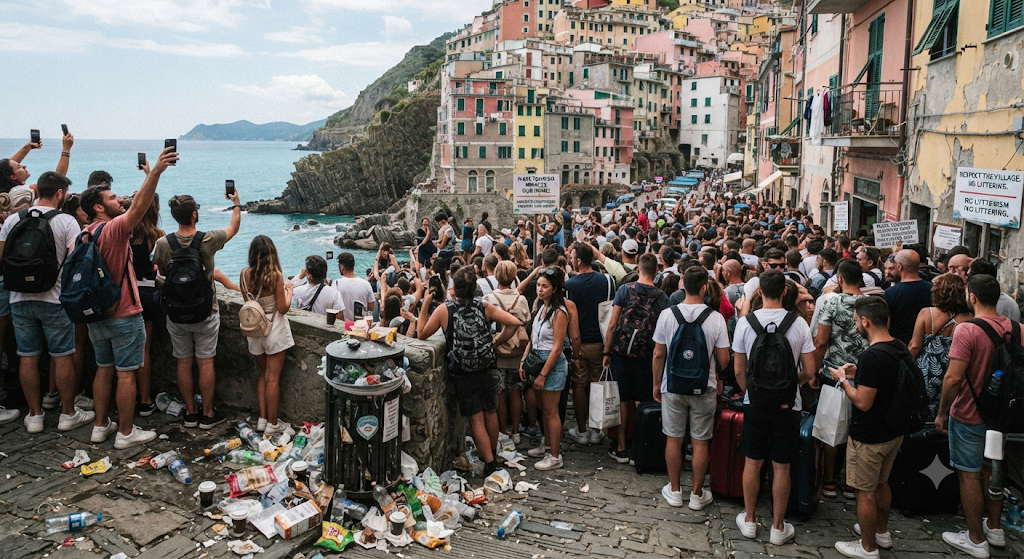
A Feed Full of the Same Ten Places
Social media has a habit of funneling tourists toward the same narrow set of viewpoints, cafes, and trails — the ones that photograph well. What looks like organic discovery is often just an algorithm repeating the same dozen locations until they’re overwhelmed by visitors chasing an identical shot.
What Overcrowding Actually Does on the Ground
Popular hill stations and viewpoints across India have reported visible degradation tied directly to tourist volume — trail erosion from foot traffic that was never designed for that scale, litter accumulation, water stress in towns whose infrastructure serves a fraction of the population that shows up in peak season, and disruption to wildlife that once had those spaces to itself.
The Local Cost Nobody Photographs
Beyond the environment, overcrowding changes the character of a place for the people who live there year-round — rising costs, traffic in towns not built for it, and a shift toward businesses that cater purely to quick photo-stop tourism rather than to residents. The “hidden gem” era of a location is often also its most sustainable one.
How to Actually Travel Differently
Choosing a lesser-known viewpoint over the famous one, visiting in the off-season, and following local guidance about which trails or areas are under ecological stress does more good than any single “sustainable travel” hashtag. Sometimes the most responsible photo is the one you decide not to chase.
Bottom Line
A photogenic destination isn’t automatically a healthy one to visit at scale. The most Instagrammable spot in India might also be the one that most needs tourists to look elsewhere for a while.


