The Rise of Farm Stays: Why City Women Are Booking Them

The Backlash to Perfectly Curated Trips

After a few years of hyper-Instagrammable resorts and infinity pools, a countertrend has emerged: farm stays that offer nothing more polished than fresh air, home-cooked meals, and actual physical work like harvesting vegetables or milking. For urban women whose daily life is screen-heavy and schedule-bound, the appeal is precisely the lack of curation.

What a Farm Stay Actually Looks Like

Most farm stays in India are run by families on working farms — coffee estates in Coorg, orchards in Himachal, paddy fields in Kerala — who host a small number of guests in simple rooms and include home-cooked meals as part of the experience. The draw isn’t luxury; it’s proximity to a slower, more physical rhythm of life that city routines don’t allow.

Why Women Specifically Are Driving the Trend

Many farm stays are also women-run, with host families where the woman of the house manages cooking, guest experience, and often the farm’s produce-based income stream. For urban women visiting, that creates a different kind of connection — less transactional tourist-host dynamic, more genuine exchange between women running very different lives.

A Break From Decision Fatigue

Part of the mental relief of a farm stay is the absence of choice paralysis — there’s no menu of forty activities to optimize, just the farm’s actual daily rhythm to join or not. For anyone whose regular life is full of constant micro-decisions, that structural simplicity is doing real psychological work, not just aesthetic work.

Bottom Line

Farm stays aren’t trying to compete with luxury resorts, and that’s exactly why they’re gaining ground — they’re offering something resorts structurally can’t: an actual break from being managed and catered to.
The Hidden Cost of “Instagrammable” Tourist Spots

A Feed Full of the Same Ten Places

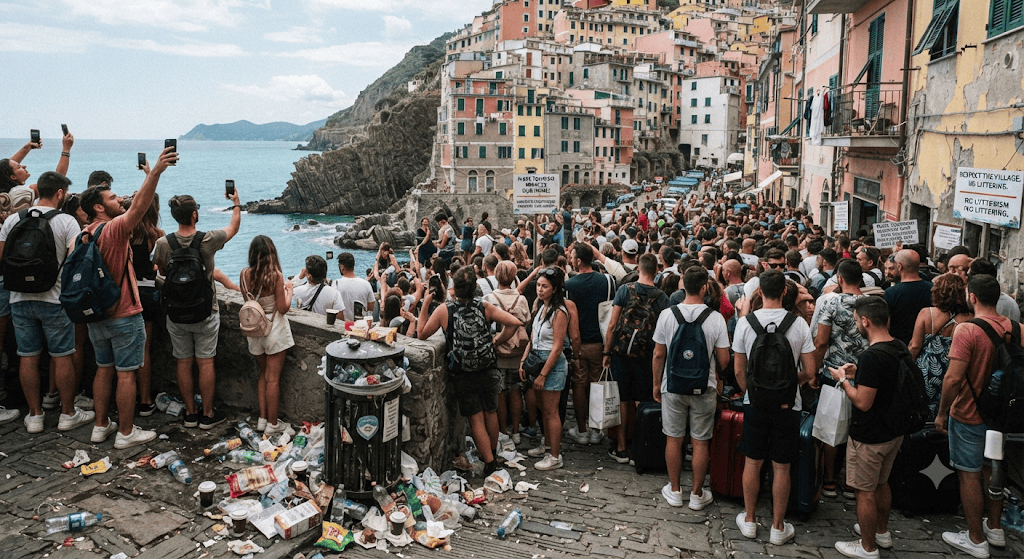
Social media has a habit of funneling tourists toward the same narrow set of viewpoints, cafes, and trails — the ones that photograph well. What looks like organic discovery is often just an algorithm repeating the same dozen locations until they’re overwhelmed by visitors chasing an identical shot.

What Overcrowding Actually Does on the Ground

Popular hill stations and viewpoints across India have reported visible degradation tied directly to tourist volume — trail erosion from foot traffic that was never designed for that scale, litter accumulation, water stress in towns whose infrastructure serves a fraction of the population that shows up in peak season, and disruption to wildlife that once had those spaces to itself.

The Local Cost Nobody Photographs

Beyond the environment, overcrowding changes the character of a place for the people who live there year-round — rising costs, traffic in towns not built for it, and a shift toward businesses that cater purely to quick photo-stop tourism rather than to residents. The “hidden gem” era of a location is often also its most sustainable one.

How to Actually Travel Differently

Choosing a lesser-known viewpoint over the famous one, visiting in the off-season, and following local guidance about which trails or areas are under ecological stress does more good than any single “sustainable travel” hashtag. Sometimes the most responsible photo is the one you decide not to chase.

Bottom Line

A photogenic destination isn’t automatically a healthy one to visit at scale. The most Instagrammable spot in India might also be the one that most needs tourists to look elsewhere for a while.

Women Who Built Their Own Eco-Resorts From Scratch

From Finance to Forest Stays

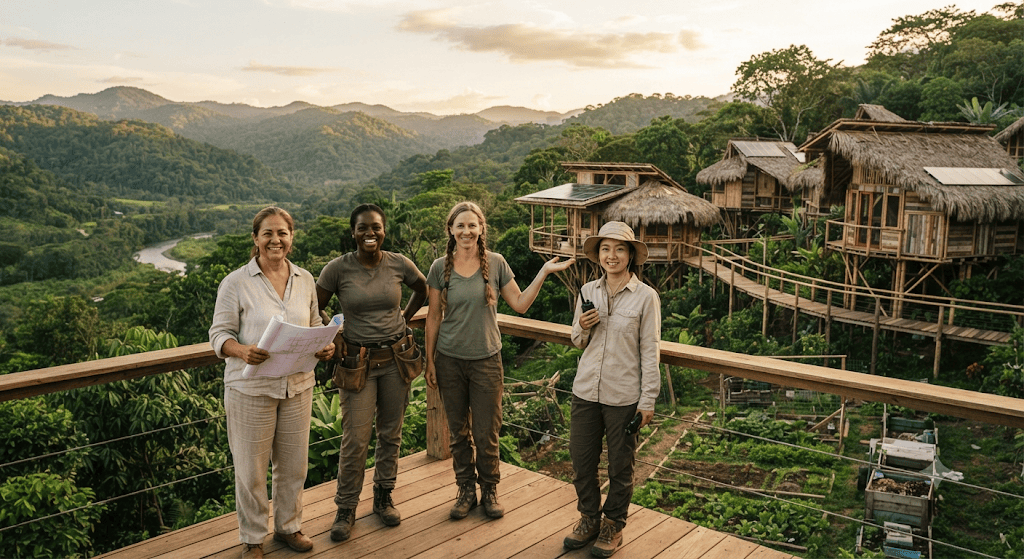
Aditi Balbir left a decade-long career in finance, including stints at firms like McKinsey, to found V Resorts, a company that partners with small, remote properties and helps them meet sustainable operational standards. Her model showed that even a modest 15-room resort could generate meaningful local jobs and income while limiting environmental impact — proof that ecotourism could be both a business and a community investment.

Verifying Sustainability, One Stay at a Time

Prerna Prasad built Ecoplore after leaving a career in news journalism, spending her first two years personally visiting and vetting eco-friendly hotels across India before listing a single one. Her platform requires strict criteria — meaningful tree cover, plastic-free operations, rainwater harvesting, and composting — and is run by an almost entirely female team, partly to make solo travel verification safer for women.

Turning Fisherfolk Into Tour Guides

Rashmi Sawant’s Culture Aangan took a different route entirely — instead of building resorts, she built experiential rural tourism around existing village livelihoods. In Maharashtra’s Sindhudurg district, women from local fishing communities now lead tourists on boat rides through mangrove creeks as an additional, dignified income stream alongside their traditional work.

The Common Thread

None of these ventures started with hospitality credentials. What they shared was a willingness to spend years on unglamorous groundwork — vetting properties, building trust with village communities, negotiating with vendors — before any of it looked like a “resort” in the traditional sense.

Bottom Line

The women reshaping India’s eco-tourism sector didn’t inherit a hospitality legacy — they built one, one relationship and one sustainability standard at a time.

How Climate Change Is Reshaping Himalayan Trekking Routes

The Glaciers Are Moving Faster Than the Maps

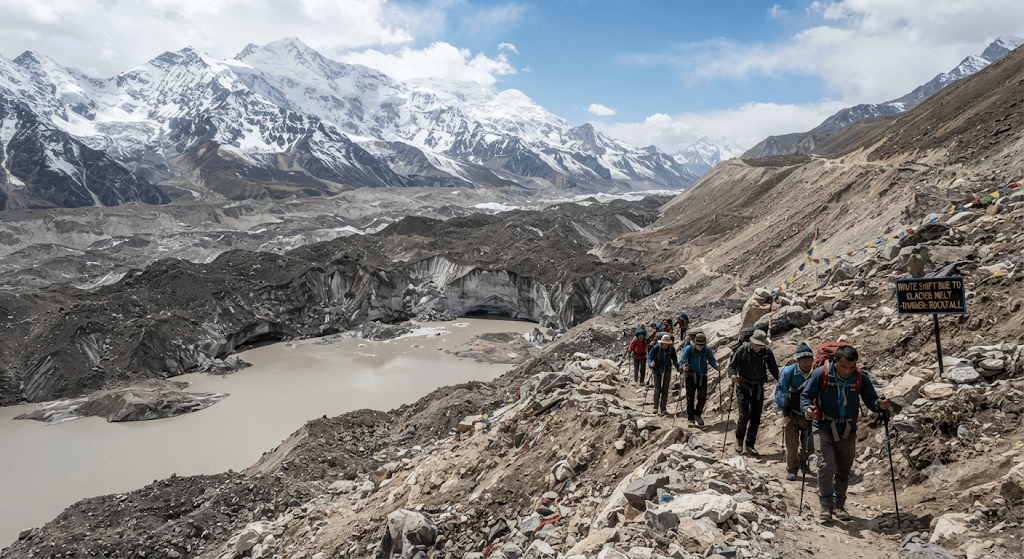
The Gangotri Glacier, source of the Ganga, has retreated more than 1.5 kilometers over the past century, with the pace accelerating in recent decades. Trekkers returning to routes they walked five years ago are describing landscapes that no longer match their memory — snowfields replaced by exposed rock and loose scree.

Sikkim’s Wake-Up Call

In October 2023, a section of frozen moraine above South Lhonak Lake in North Sikkim collapsed, triggering a glacial lake outburst flood. The lake had grown roughly eightfold since 1976 as it filled with meltwater — a slow build that scientists had been monitoring for years before the break. Since then, the permitted trekking endpoint for the popular Goechala trek has been moved back from the original pass to an earlier viewpoint as a safety measure.

Water Sources You Can No Longer Rely On

Streams and springs that trekkers once used as reliable refill points along established trails are now either running dry earlier in the season or flooding unpredictably during the monsoon. Guides across the region report having to rebuild their mental maps of where water actually is, season by season.

What This Means If You’re Planning a Trek

Routes considered fixed for decades are now being reassessed every single season by local operators. High-altitude camps are being relocated, permitted endpoints are shifting, and “the trail I did last year” is no longer a safe assumption. Booking with operators who actively track these changes — rather than running the same fixed itinerary every year — matters more now than it used to.

Bottom Line

Himalayan trekking isn’t disappearing, but the version of it built on fixed, unchanging trails is. The mountains are rewriting their own maps, and trekkers need to travel with that reality in mind.

Solo Travel Safety Tips for Women in India

Solo travel is one of the most empowering experiences a woman can have — but it also comes with real safety considerations, especially in India. Here’s what actually helps, based on practical experience rather than just fear-driven caution.

1. Research your destination thoroughly before you go
Know which areas are considered safe, what the local culture expects in terms of dress and behavior, and how to reach your accommodation from the station or airport — ideally in daylight hours.

2. Share your live location with someone you trust
Apps like Google Maps let you share real-time location with a family member or friend. It costs nothing and gives both you and them peace of mind.

3. Choose accommodations with good reviews from women travelers
Look specifically for reviews mentioning safety, well-lit entrances, and staff behavior — not just cleanliness or amenities.

4. Trust your instincts over politeness
If a situation or person feels off, you don’t owe anyone an explanation for walking away. This is the single most repeated advice from experienced solo travelers, for good reason.

5. Keep a local emergency contact saved
Save the number of your hotel, a local trusted contact if you have one, and India’s women’s helpline (181) in your phone before you even land.

6. Avoid isolated areas after dark
This applies everywhere, not just India — stick to well-populated, well-lit areas once the sun goes down, especially in unfamiliar cities.

Solo travel changes how you see yourself, not just the places you visit. A little preparation goes a long way in making sure that experience stays a positive one.