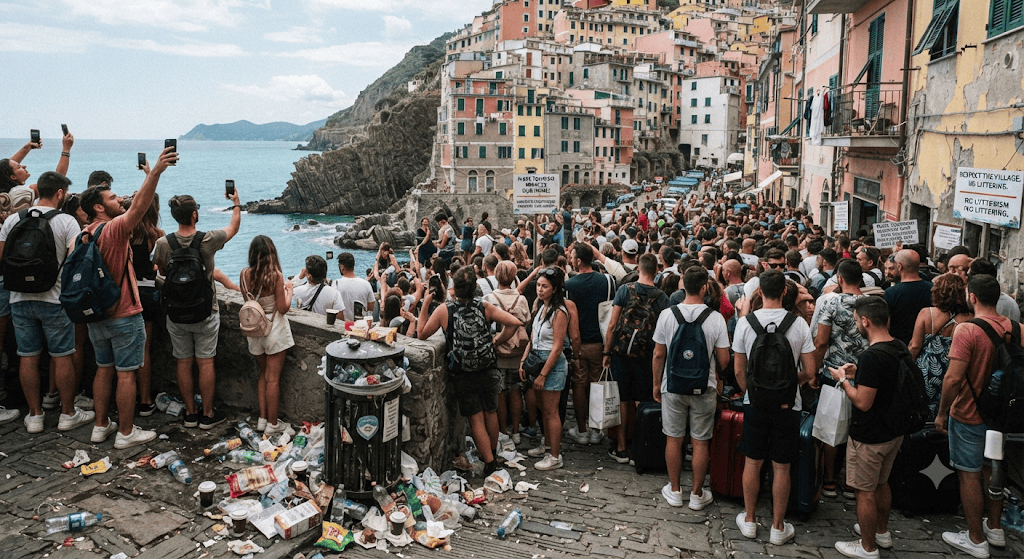
The Hidden Cost of “Instagrammable” Tourist Spots

A Feed Full of the Same Ten Places

Social media has a habit of funneling tourists toward the same narrow set of viewpoints, cafes, and trails — the ones that photograph well. What looks like organic discovery is often just an algorithm repeating the same dozen locations until they’re overwhelmed by visitors chasing an identical shot.

What Overcrowding Actually Does on the Ground

Popular hill stations and viewpoints across India have reported visible degradation tied directly to tourist volume — trail erosion from foot traffic that was never designed for that scale, litter accumulation, water stress in towns whose infrastructure serves a fraction of the population that shows up in peak season, and disruption to wildlife that once had those spaces to itself.

The Local Cost Nobody Photographs

Beyond the environment, overcrowding changes the character of a place for the people who live there year-round — rising costs, traffic in towns not built for it, and a shift toward businesses that cater purely to quick photo-stop tourism rather than to residents. The “hidden gem” era of a location is often also its most sustainable one.

How to Actually Travel Differently

Choosing a lesser-known viewpoint over the famous one, visiting in the off-season, and following local guidance about which trails or areas are under ecological stress does more good than any single “sustainable travel” hashtag. Sometimes the most responsible photo is the one you decide not to chase.

Bottom Line

A photogenic destination isn’t automatically a healthy one to visit at scale. The most Instagrammable spot in India might also be the one that most needs tourists to look elsewhere for a while.
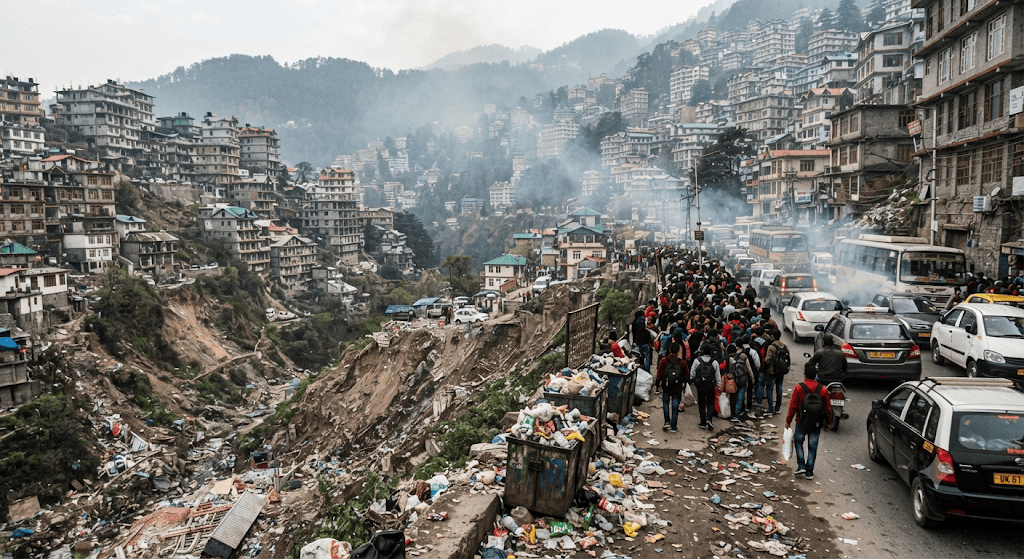
The Environmental Impact of Tourist Overcrowding in Hill Stations

Every summer and long weekend, India’s popular hill stations see traffic jams stretching for kilometers, hotels overbooked well past reasonable capacity, and a strain on infrastructure never built for these numbers. The scenery that draws people there is quietly paying the price.

Water Systems Under Pressure

Many hill towns rely on limited natural water sources — springs, small reservoirs — that were never designed to support the seasonal population spikes tourism now brings. Water shortages during peak season have become a recurring issue in several well-known hill destinations, ironically driven by the very visitors drawn to their natural beauty.

Waste Management Falling Behind

Hill towns typically lack the large-scale waste processing infrastructure of bigger cities, and tourist season generates waste volumes far beyond what local systems can handle. This often results in visible littering, overflowing landfills at town edges, and waste finding its way into streams and forest areas.

Traffic and Air Quality

Long queues of idling vehicles on narrow hill roads, combined with unregulated parking on slopes never meant for heavy vehicle traffic, contribute to localized air pollution and slope stability concerns — a particularly serious issue in landslide-prone regions.

Construction Racing to Keep Up

Rising tourist demand has driven rapid, sometimes poorly regulated construction of new hotels and guesthouses, often on unstable slopes or encroaching on forest land — development that increases both environmental strain and genuine safety risk in these areas.

Impact on Local Wildlife and Vegetation

Increased foot traffic, off-trail wandering, and noise from a high volume of visitors disturbs local wildlife patterns and puts pressure on native vegetation, particularly in areas without clearly marked and enforced trail boundaries.

What More Sustainable Hill Station Travel Looks Like

  • Visit during shoulder seasons rather than peak weekends, spreading demand more evenly
  • Choose smaller, less-visited hill towns as alternatives to the most crowded, well-known destinations
  • Carry out your own waste, especially in areas without visible processing infrastructure
  • Support locally-run accommodations over large new constructions that add strain without local benefit
  • Stick to marked trails rather than off-path exploration that damages fragile vegetation

Bottom Line

The hill stations most affected by overcrowding are often loved precisely for qualities that overcrowding itself is steadily eroding. A more spread-out, mindful approach to visiting these places isn’t about avoiding them — it’s about making sure they’re still worth visiting years from now.

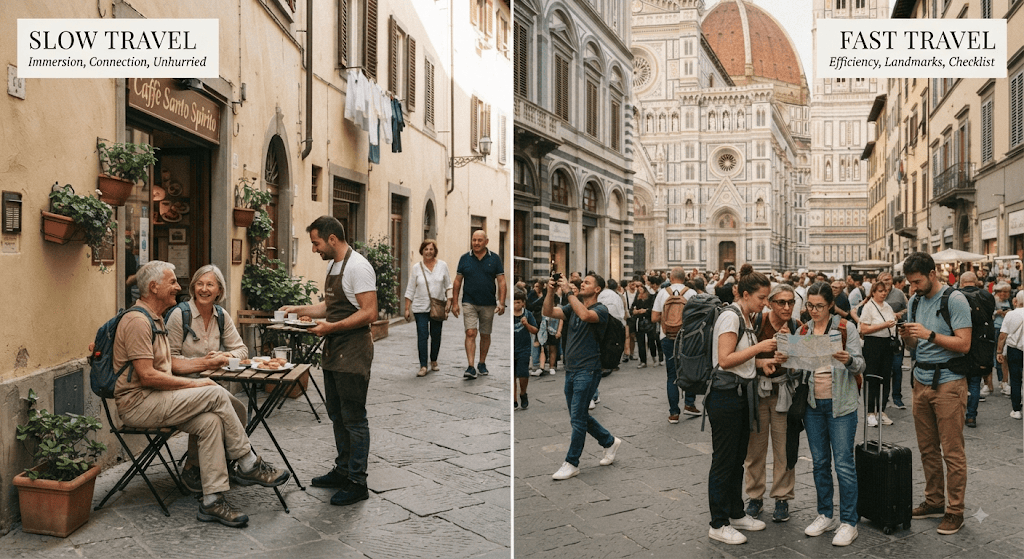
Slow Travel vs Fast Travel: Why Fewer Places Might Mean More

Somewhere along the way, travel started being measured by how many places you can visit, not how well you actually experienced any of them. Slow travel pushes back against that — fewer destinations, more time in each, and a very different kind of trip.

What Fast Travel Actually Gives You

Fast travel — five countries in ten days, a new city every 48 hours — delivers photos, checkmarks, and a broad surface-level sense of many places. It works well for people who genuinely want a highlight-reel overview, or who may not get the chance to return.

What Fast Travel Costs You

The tradeoff is depth. A city seen for one rushed day rarely allows for the kind of unplanned moments — a conversation with a shopkeeper, getting comfortably lost, revisiting a spot that mattered — that tend to be what people actually remember months later.

What Slow Travel Looks Like in Practice

Slow travel means picking fewer destinations and staying longer in each — days or weeks instead of hours. It allows time to settle into a place: understanding the rhythm of daily life there, not just its landmarks.

The Case for Repetition

Returning to the same café, market, or neighborhood multiple times over a longer stay builds a kind of familiarity that a first visit never can. Slow travel often means less novelty per day, but more genuine connection to the place by the end.

It’s Often Kinder to Your Budget and Body Too

Constant movement — new hotels, new transport, new logistics every day or two — is exhausting and expensive. Staying longer in fewer places usually means better accommodation deals, less transit cost, and considerably less travel fatigue.

Choosing What’s Right for the Trip

Fast travel isn’t wrong — sometimes a short window genuinely calls for covering more ground. But when time allows, slow travel tends to leave a much stronger, more personal impression of a place than a checklist of destinations ever does.

Bottom Line

A trip isn’t measured by how many pins you can drop on a map. Spending real time in fewer places, letting a destination unfold slowly instead of rushing through it, often leaves you with something a fast itinerary simply can’t — an actual sense of having been somewhere, not just passed through it.