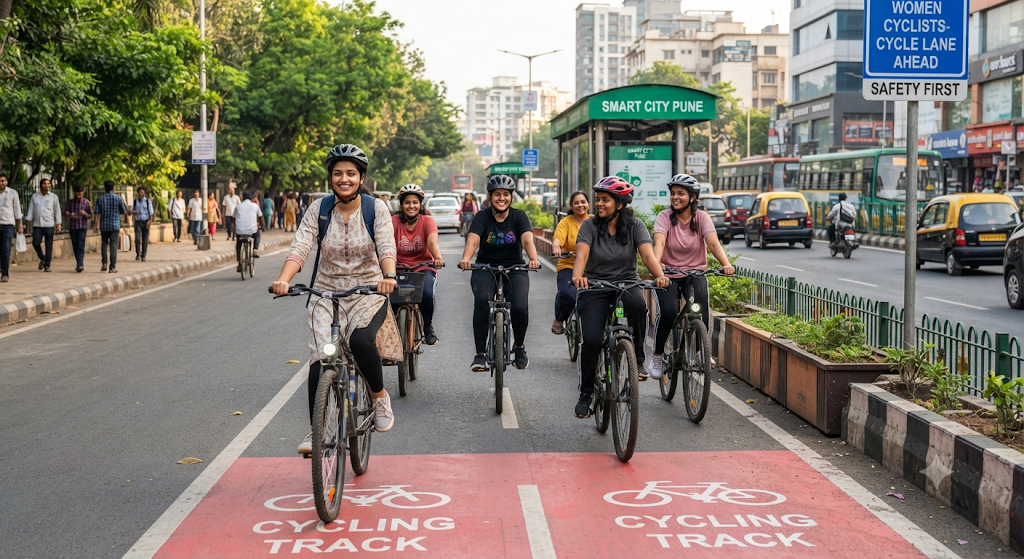
The Gender Gap Is Real
Studies on cycling in Indian cities have flagged a clear pattern: women cyclists face unwarranted gestures and hostile behaviour from male motorists, which pushes many to avoid cycling altogether or change their routes to stick to busier, better-lit streets. Urban infrastructure, researchers note, has largely been designed around able-bodied, middle-class men — not around the women and girls who might benefit most from cheap, independent transport.
What’s Slowly Changing
Under the Smart Cities Mission, the India Cycles4Change Challenge pushed dozens of Indian cities to pilot cycling infrastructure, with gender-inclusive design increasingly part of the brief. A 2020 roundtable convened by Bengaluru’s transport authority with WRI India specifically flagged issues that matter to women cyclists: better street lighting for evening riders, safe cycle parking and a connected network of cycle tracks. Some cities have also piloted cycle-repair clinics so women aren’t stranded by a flat tyre with no one to help.
Cycling Hasn’t Disappeared — It’s Been Pushed to the Margins
Recent research across Maharashtra cities found that cycling volumes remain high at peak hours even where infrastructure is incomplete — cyclists haven’t gone away, they’ve simply become less visible on streets not designed with them in mind. A broader 2026 multi-city study covering Delhi and Chennai found that policy, implementation and gender gaps continue to hold back safer cycling for women specifically.
What Actually Helps
- Protected, well-lit cycling lanes rather than painted lines on traffic-heavy roads
- Cycle parking near markets, schools and transit stations
- Enforcement against harassment, not just infrastructure
- Involving women cyclists directly in planning, not just consulting them after the fact
Bottom Line
Cities that want more women cycling need to design for them from the start — lighting, safety and respect, not just paint on the road. Until then, the gender gap on India’s streets will keep outpacing the gains in infrastructure.