Women Who Are Changing the Environment Movement in India

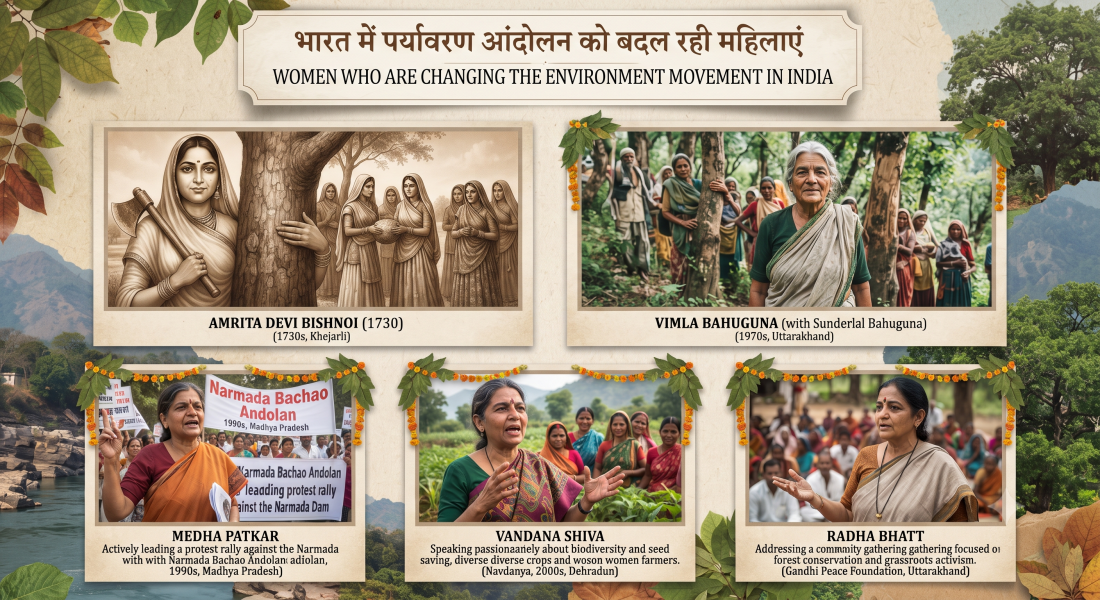
India’s environmental movement has been shaped by women at every stage — from centuries-old sacrifice to present-day grassroots leadership. Here are a few whose work deserves to be known better.

Amrita Devi Bishnoi (18th century)
Long before “environmentalism” was a word, Amrita Devi gave her life protecting Khejri trees in her Rajasthan village from being cut down for royal construction — her three daughters followed her example. Her sacrifice remains one of the earliest known acts of environmental resistance in India.

Vimla Bahuguna
A key organizer of the Chipko Movement in the 1970s, Vimla worked closely with rural women across the Himalayan region to mobilize the tree-hugging protests that stopped commercial logging — a movement that became a global symbol of grassroots environmental action.

Medha Patkar
Founder of the Narmada Bachao Andolan in 1989, Medha Patkar has spent decades opposing large dam projects that displaced hundreds of thousands of people, using hunger strikes and sustained public advocacy to bring the issue to national attention.

Vandana Shiva
A leading voice in the global ecofeminist movement, Vandana Shiva has long advocated for farming systems that center women’s roles in agriculture, challenging exclusionary practices in how land and resources are managed.

Radha Bhatt
A Gandhian social worker connected to the Chipko movement, Radha Bhatt has spent decades on environmental conservation and women’s empowerment work in Uttarakhand, and was honored with the Padma Shri in 2025 for her contributions.

These stories span centuries, but the thread connecting them is the same — women showing up, again and again, for causes that often didn’t credit them enough at the time. Worth remembering, and worth continuing.

What Being a Woman Taught Me About Resilience

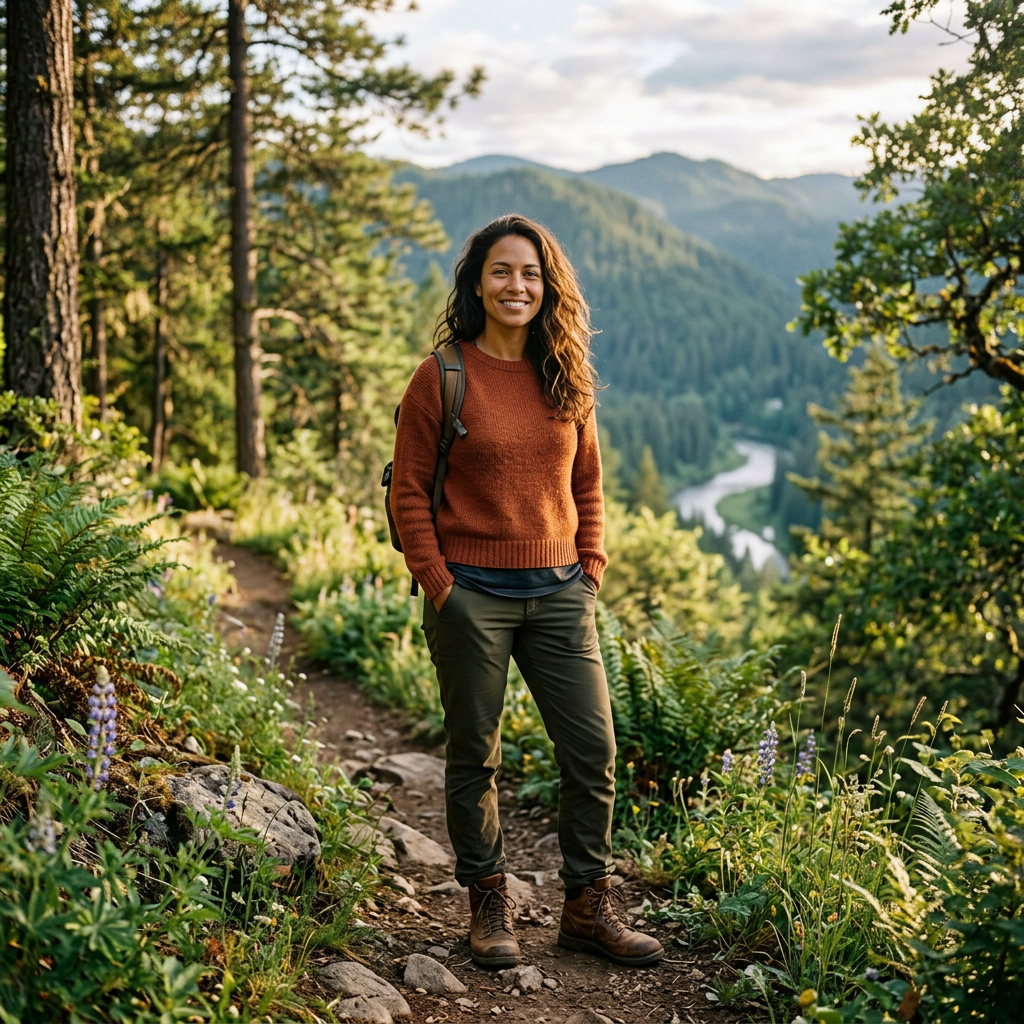
Woman standing on forest trail with backpack smiling

Resilience isn’t something that arrives all at once. For me, it’s been built quietly, through moments that didn’t feel significant at the time but added up to something stronger.

Starting over, more than once
Whether it was picking up an old blog after seven years, or starting a freelance career from scratch — starting over never gets less intimidating. What changes is your relationship with the fear. You learn to act despite it, not after it disappears.

Carrying responsibilities quietly
Being a woman often means holding things together — for family, for work, for yourself — without always being asked to, and without much recognition. Over time, that quiet weight teaches you a kind of strength that doesn’t need an audience to be real.

Learning that asking for help isn’t weakness
Resilience isn’t about doing everything alone. Some of the most resilient moments of my life have come from admitting I didn’t have it figured out, and reaching out anyway — to a friend, a stranger, or even just trying a new tool or platform for the first time.

Trusting the process, even without proof it’ll work
Publishing a blog with no audience. Sending a proposal with no guarantee. Starting a business with no safety net. Resilience often looks less like confidence, and more like doing the thing anyway.

If there’s one thing I’ve learned, it’s this: resilience isn’t the absence of doubt. It’s moving forward with the doubt still there, one small step at a time.

Solo Travel Safety Tips for Women in India

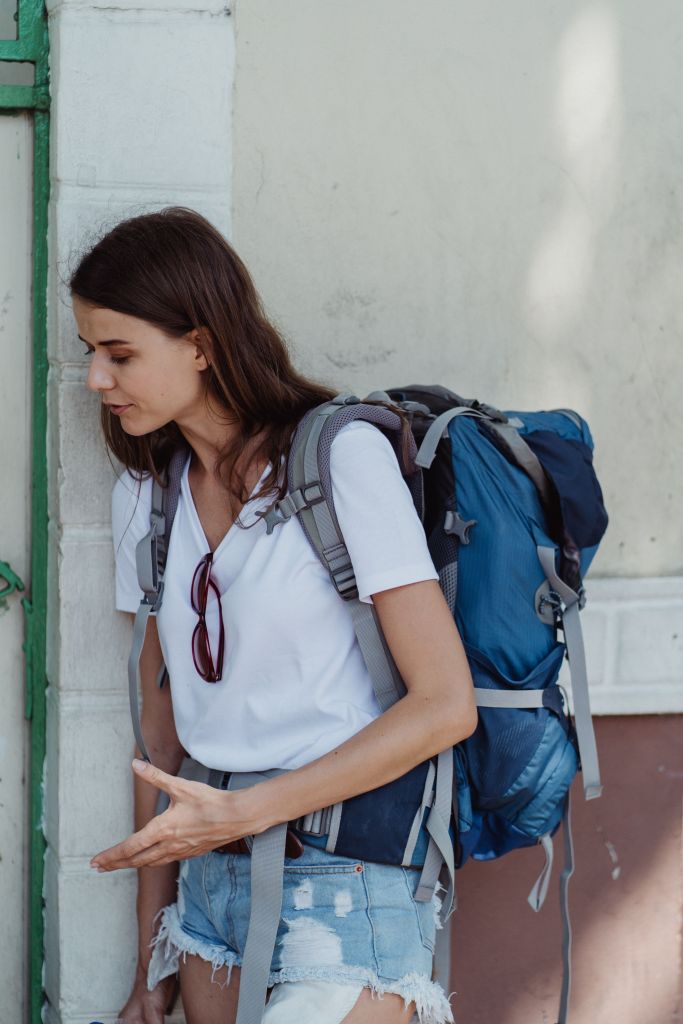
Solo travel is one of the most empowering experiences a woman can have — but it also comes with real safety considerations, especially in India. Here’s what actually helps, based on practical experience rather than just fear-driven caution.

1. Research your destination thoroughly before you go
Know which areas are considered safe, what the local culture expects in terms of dress and behavior, and how to reach your accommodation from the station or airport — ideally in daylight hours.

2. Share your live location with someone you trust
Apps like Google Maps let you share real-time location with a family member or friend. It costs nothing and gives both you and them peace of mind.

3. Choose accommodations with good reviews from women travelers
Look specifically for reviews mentioning safety, well-lit entrances, and staff behavior — not just cleanliness or amenities.

4. Trust your instincts over politeness
If a situation or person feels off, you don’t owe anyone an explanation for walking away. This is the single most repeated advice from experienced solo travelers, for good reason.

5. Keep a local emergency contact saved
Save the number of your hotel, a local trusted contact if you have one, and India’s women’s helpline (181) in your phone before you even land.

6. Avoid isolated areas after dark
This applies everywhere, not just India — stick to well-populated, well-lit areas once the sun goes down, especially in unfamiliar cities.

Solo travel changes how you see yourself, not just the places you visit. A little preparation goes a long way in making sure that experience stays a positive one.

What Being a Woman Means to Me

Woman what is a Woman ? Everybody has a different views about Woman either it would be man or woman itself. For me Being a woman means far too many things to put into words, but in my attempt to do it justice here is what being classified as one means to me. Being a woman means confidence. Being a woman means working hard. Being a woman means wearing your heart on your sleeve. Being a woman means being the bigger person.

Being a woman means carrying more than people realize, quietly. Being a woman means starting over, even when the world says you’re too late. Being a woman means being everyone’s strength and still finding your own. Being a woman means choosing kindness even when it isn’t returned. Being a woman means believing in yourself when no one else does.

And after all these years, I’m still learning what it means — and maybe that’s the most honest definition there is.

The current image has no alternative text. The file name is: pexels-ntate-mohlala-sir-2160208879-37321320.jpg