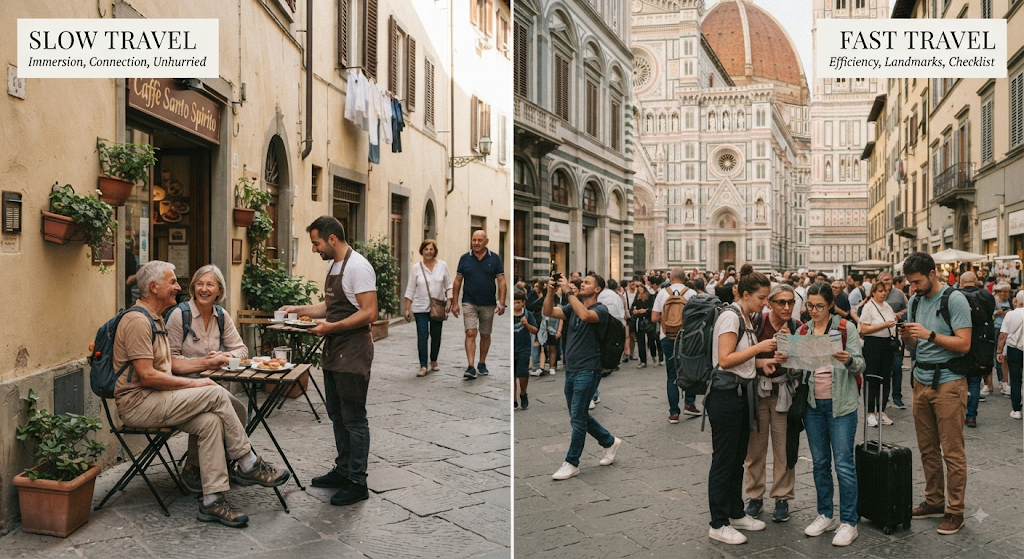
Somewhere along the way, travel started being measured by how many places you can visit, not how well you actually experienced any of them. Slow travel pushes back against that — fewer destinations, more time in each, and a very different kind of trip.
What Fast Travel Actually Gives You
Fast travel — five countries in ten days, a new city every 48 hours — delivers photos, checkmarks, and a broad surface-level sense of many places. It works well for people who genuinely want a highlight-reel overview, or who may not get the chance to return.
What Fast Travel Costs You
The tradeoff is depth. A city seen for one rushed day rarely allows for the kind of unplanned moments — a conversation with a shopkeeper, getting comfortably lost, revisiting a spot that mattered — that tend to be what people actually remember months later.
What Slow Travel Looks Like in Practice
Slow travel means picking fewer destinations and staying longer in each — days or weeks instead of hours. It allows time to settle into a place: understanding the rhythm of daily life there, not just its landmarks.
The Case for Repetition
Returning to the same café, market, or neighborhood multiple times over a longer stay builds a kind of familiarity that a first visit never can. Slow travel often means less novelty per day, but more genuine connection to the place by the end.
It’s Often Kinder to Your Budget and Body Too
Constant movement — new hotels, new transport, new logistics every day or two — is exhausting and expensive. Staying longer in fewer places usually means better accommodation deals, less transit cost, and considerably less travel fatigue.
Choosing What’s Right for the Trip
Fast travel isn’t wrong — sometimes a short window genuinely calls for covering more ground. But when time allows, slow travel tends to leave a much stronger, more personal impression of a place than a checklist of destinations ever does.
Bottom Line
A trip isn’t measured by how many pins you can drop on a map. Spending real time in fewer places, letting a destination unfold slowly instead of rushing through it, often leaves you with something a fast itinerary simply can’t — an actual sense of having been somewhere, not just passed through it.


