Traveling With a Chronic Illness: What I’ve Learned

Reframe What “Good Travel” Looks Like

A trip built around rest days, shorter distances and flexible plans isn’t a lesser trip. It’s simply one designed around your actual body instead of an Instagram itinerary.

Before You Book

  • Research hospitals and pharmacies near your destination
  • Check if your medication is legal and available there
  • Confirm your travel insurance covers your condition
  • Choose accommodation with easy access — lifts, ground floor, proximity to help

Packing That Actually Protects You

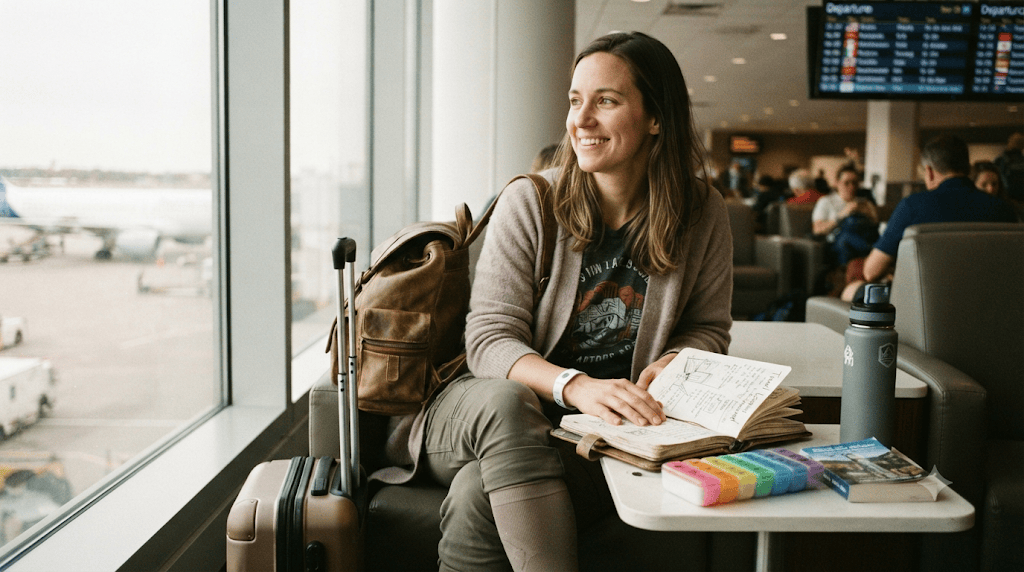
  1. Carry medicines in original packaging with prescriptions
  2. Pack extra doses in case of delays
  3. Split medication between two bags in case one is lost
  4. Carry a simple medical summary card with your condition, medications and emergency contact

Pacing the Trip Itself

Plan one main activity a day instead of three. Build in buffer time between travel legs. Choose destinations with slower transitions over multi-city sprints when your body needs it.

Communicate Without Over-Explaining

You don’t owe anyone your full medical history. A simple “I need to go slow today” or “I have a condition that needs regular breaks” is enough for travel companions, guides or hotel staff.

The Emotional Part

Cancelling a plan or resting through half a trip can feel like failure. It isn’t. Chronic illness travel is still travel — just measured in what you experienced, not how much ground you covered.

Bottom Line

Traveling with a chronic illness asks for more preparation and self-compassion, not less courage. The world is still there to see — just at the pace your body can actually enjoy it.
How to Plan a Multi-Generational Family Trip Without Chaos

Accept That One Itinerary Won’t Fit Everyone

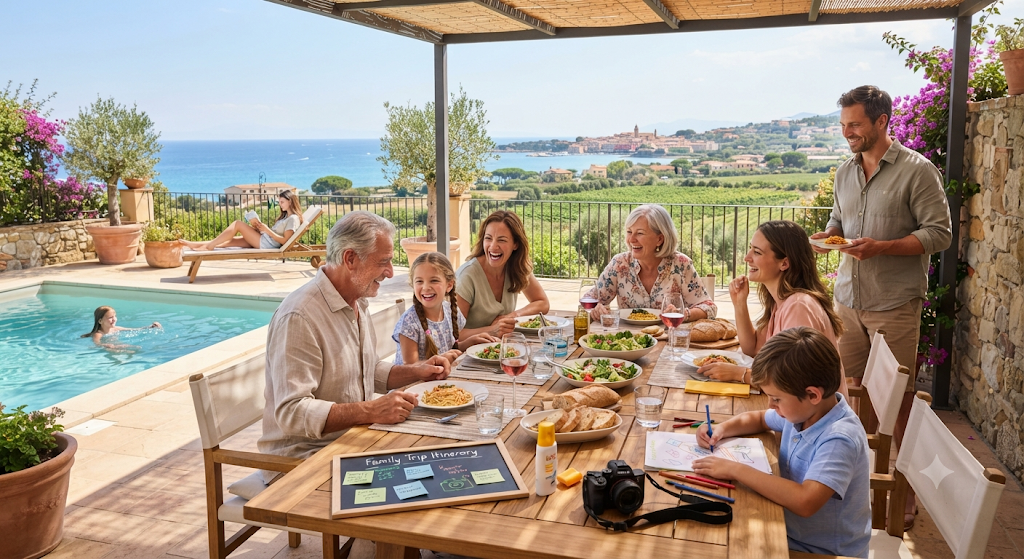
Grandparents want rest and familiar comforts, parents are managing kids and logistics, and younger family members want to actually explore. Trying to build a single schedule that satisfies all three is where most multi-generational trips start to strain. The fix isn’t compromise on every activity — it’s building in optional branches within the same trip.

Choose a Base, Not a Circuit

A single well-located base with day trips radiating out works far better than a moving itinerary with multiple hotel changes. It cuts down on the packing-unpacking cycle that’s exhausting for kids and genuinely hard on older joints, while still giving everyone new things to see each day.

Talk Budget Before You Talk Destination

Money is the fastest way a family trip turns tense, especially across generations with different financial comfort zones. Deciding upfront how costs will be split — evenly, by income, or with one generation treating a portion — avoids the awkward math happening in real time at checkout.

Build In Deliberate Together-Time and Apart-Time

Not every meal or activity needs the whole group. Scheduling a few must-do shared moments — one big dinner, one shared excursion — while leaving other blocks open for smaller groups to split off keeps the trip feeling like a choice rather than an obligation.

Plan for the Medical “What Ifs” Early

With older and younger travelers in the same group, having a shared understanding of medications, allergies, and the nearest reliable hospital at each stop isn’t paranoia — it’s the kind of prep that lets everyone actually relax once the trip starts.

Bottom Line

A multi-generational trip works when it’s designed around flexibility, not around forcing everyone into the same pace. Plan for difference, and the trip becomes a lot less chaotic than it looks on paper.

Traveling During Your Pregnancy: What Actually Works

The Second Trimester Is Usually the Sweet Spot

Most of the nausea and extreme fatigue of the first trimester has typically eased by the second, and the size and discomfort of the third haven’t set in yet. This is why most doctors and experienced travelers point to weeks 14–27 as the most comfortable window for trips, though every pregnancy is different enough that this is a general pattern, not a guarantee.

Get the Green Light First, Not as an Afterthought

A quick check-in with your doctor before booking — not just before departure — helps you plan around any pregnancy-specific risk factors, flag destinations with limited medical access, and get clarity on any airline documentation you might need closer to your due date.

Comfort Gear Is Not Optional Luxury

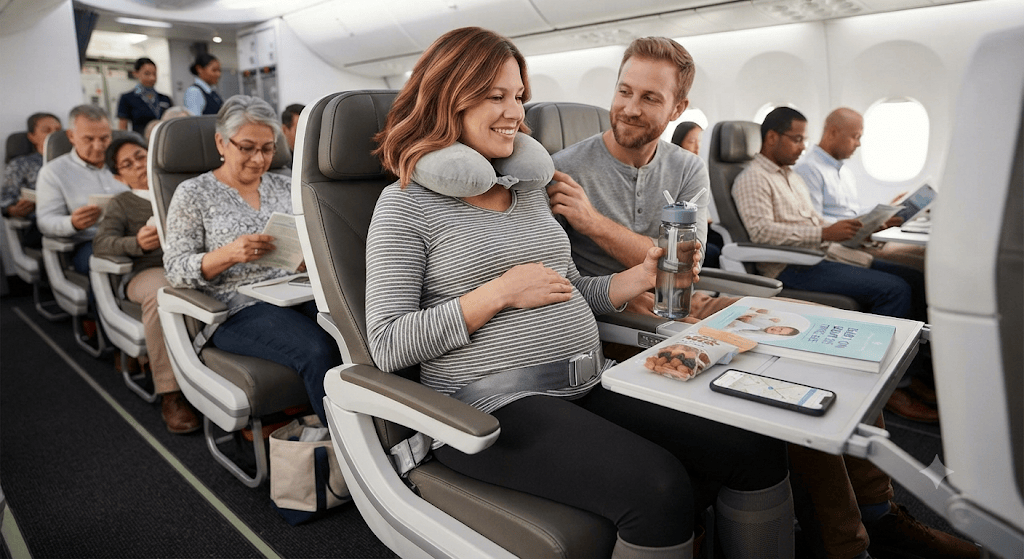
A compression sock pair, a travel pillow that actually supports your lower back, and snacks that settle an unpredictable stomach aren’t indulgences on a pregnancy trip — they’re the difference between a manageable journey and a miserable one. Packing light matters more than usual, since you’ll have less patience for wrestling heavy bags.

Build In More Stops Than You Think You Need

Long stretches without movement increase discomfort and circulation issues. Choosing itineraries with natural breaks — a stopover flight instead of one long haul, a road trip with planned rest points — makes a real difference in how your body handles the trip.

Know Where the Nearest Hospital Is, Always

This isn’t about expecting something to go wrong — it’s about removing one more thing to figure out under stress if it does. Knowing the nearest reliable medical facility at every stop is a five-minute research task that buys real peace of mind.

Bottom Line

Traveling while pregnant isn’t off-limits — it just asks for more intentional planning than your usual trips did. Get the medical go-ahead, pack for comfort, and build slack into the schedule.

Women Who Turned Their Hobby Into a Travel Business

It Usually Starts With One Trip

Almost every woman-led travel business in India traces back to the same origin story: a solo trip, a backpacking detour, or a family holiday that turned into an obsession. What began as a hobby — planning itineraries for friends, documenting hidden trails, or running a small travel Instagram page — slowly turned into paying work. The hobby-to-business pipeline is especially visible among Indian women travel creators and curators, several of whom have been publicly recognized for building travel brands out of what started as personal passion projects.

Why Travel Businesses Are a Natural Pivot

Unlike many entrepreneurial paths, travel businesses built from a hobby don’t require a sudden reinvention. The credibility is already there — years of trip planning, local contacts, packing hacks, and a following that trusts your recommendations. That trust converts directly into bookings, sponsored trips, and curated tour packages.

The Real Work Behind the Wanderlust

What doesn’t show up on the Instagram grid is the operational side — vendor negotiations, safety protocols for group trips, cancellation policies, and the unglamorous admin of running any small business. Many women in this space talk about the shift from “traveling for fun” to “traveling as logistics,” where the joy has to be actively protected once it becomes work.

Turning Passion Into a Sustainable Model

The women who make it last usually specialize — solo women’s trips, offbeat treks, slow-travel itineraries, or culturally immersive experiences — rather than trying to compete with big travel agencies on price. Niche builds loyalty, and loyalty is what keeps a hobby-turned-business alive past the first excited year.

Bottom Line

A hobby becomes a business the moment someone else is willing to pay for your judgment. For India’s women travel entrepreneurs, that judgment was built one trip at a time — long before it ever became a job.

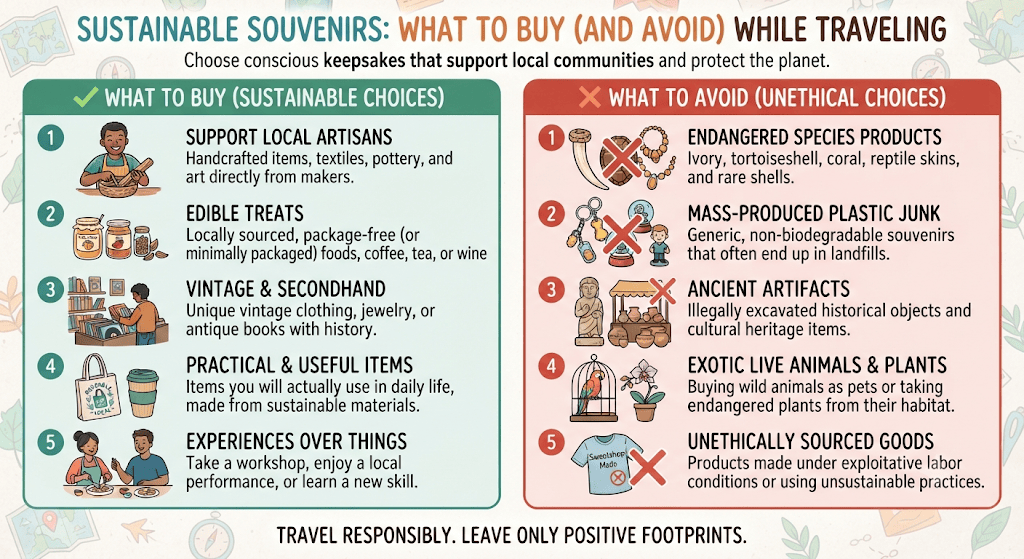
Sustainable Souvenirs: What to Buy (and Avoid) While Traveling

Souvenir shopping feels like a harmless, even supportive part of travel — but not every souvenir actually benefits the place it comes from, and some genuinely work against it. A little awareness turns souvenir shopping into something that actually gives back.

What to Look For

  • Handmade, locally produced items — textiles, pottery, woodwork — made by artisans in the region you’re visiting, rather than imported items simply sold there
  • Products from cooperatives or artisan collectives, which often ensure fairer pay reaches the actual makers rather than being absorbed by middlemen
  • Items made from sustainably sourced materials, particularly relevant for wood, shell, or plant-based products
  • Food items and spices sourced and packaged locally, which support regional agriculture directly

What to Avoid

  • Wildlife products — anything made from coral, ivory, animal skins, shells, or feathers, which often drives illegal poaching or environmental damage regardless of how it’s marketed
  • Mass-produced “local” items that are actually manufactured elsewhere and shipped in, offering no real benefit to the local economy despite the packaging
  • Ancient or archaeological artifacts, genuine or convincingly fake, which are frequently illegal to export and contribute to looting when authentic
  • Single-use or excessive packaging, which undercuts the sustainability of an otherwise reasonable purchase

Ask Before You Buy

A simple question to the seller — “who makes this, and where?” — often reveals a lot. Sellers proud of local, artisan-made goods are usually happy to share the story behind them; vague or evasive answers are often a signal the item isn’t what it’s marketed as.

Consider the Souvenir’s Actual Life After the Trip

A souvenir that ends up unused in a drawer within a year has the same environmental footprint as any other unnecessary purchase, regardless of how ethically it was sourced. Choosing something genuinely useful or meaningful — rather than buying for the sake of having bought something — reduces this kind of eventual waste.

Supporting the Economy Beyond Souvenirs

Buying meals, tours, and accommodations from local, small-scale businesses often has a bigger positive economic impact than souvenir shopping alone — souvenirs are one part of a broader pattern of how travel spending reaches (or bypasses) the local community.

Bottom Line

A souvenir can genuinely support a destination’s artisans and economy, or it can quietly contribute to exploitation, environmental harm, or a local economy that sees none of the benefit. A little curiosity about where an item actually comes from turns an ordinary purchase into a more meaningful one.

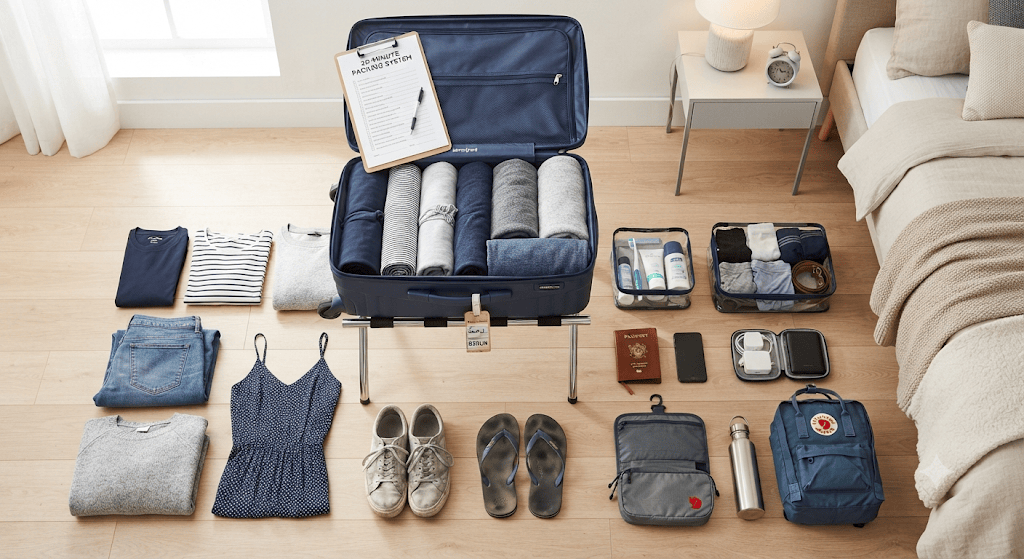
Packing for a Trip in Under 30 Minutes: A Practical System

Packing has a way of expanding to fill however much time you give it — an hour of deliberation over outfit combinations, second-guessing what to bring, refolding things that were already fine. With a repeatable system, most trips can be packed in well under 30 minutes.

Keep a Standing “Base Kit” Ready

Toiletries, chargers, adapters, and basic first-aid items are needed on nearly every trip, yet get re-packed from scratch each time. Keeping a dedicated, always-ready pouch with these essentials means one major packing category is already done before you even start.

Use the “3-Day Rule” for Clothing

Rather than packing a different outfit for every single day, plan around a small set of mix-and-matchable pieces that can be worn in different combinations across roughly three days, then repeated with minor variation — this alone cuts packing decisions dramatically for longer trips.

Pick a Color Scheme Before Choosing Items

Selecting clothes from within one or two coordinating color families means almost anything you grab can be paired with anything else, removing the need to individually plan each outfit combination in advance.

Lay Everything Out Before Packing the Bag

A quick flat layout of everything you’re bringing — clothes, essentials, extras — lets you spot immediately what’s missing or excessive, which is far faster than packing and repacking directly into the bag while second-guessing choices.

Roll, Don’t Fold

Rolling clothing instead of folding saves both space and time, and tends to reduce wrinkling as a side benefit — a small technique that speeds up the actual packing motion once everything is laid out and ready.

Use a Fixed Packing Order

Packing in the same sequence every time — bottom-heavy items first, then clothing, then anything fragile or frequently accessed on top — removes the decision fatigue of figuring out bag organization from scratch on every trip.

Keep a Reusable Packing Checklist

A saved checklist (digital or printed) covering your standard trip essentials means packing becomes a quick scan-and-confirm process rather than trying to mentally reconstruct everything you might need each time.

Accept That Minor Forgetting Is Fine

Most forgotten items are replaceable at the destination without much hassle. Letting go of the need to pack “perfectly” removes a significant chunk of the deliberation time that slows packing down in the first place.

Bottom Line

Fast packing isn’t about rushing — it’s about removing repeated decisions through a standing system: a ready base kit, a simple color scheme, and a fixed process. Once the system is set up once, most trips genuinely can be packed in well under half an hour.

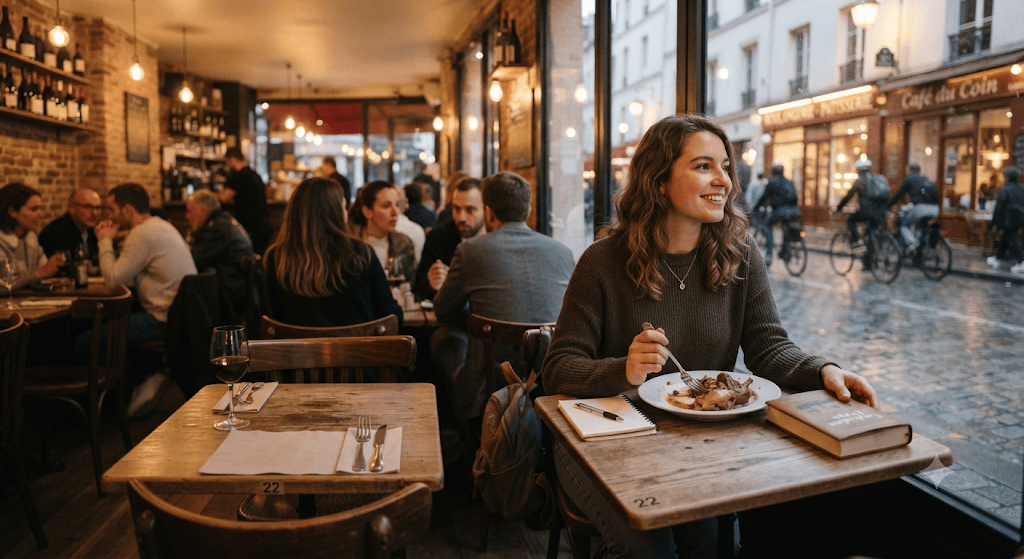
Solo Dining While Traveling: Getting Comfortable With Your Own Company

Solo travelers often say the same thing: navigating a new city alone feels fine, but sitting down alone at a restaurant table still triggers a wave of self-consciousness unlike almost anything else about traveling solo. Here’s how to work through that, and eventually enjoy it.

Why It Feels Different From Other Solo Moments

Walking around a city alone feels purposeful — you’re clearly doing something. Sitting at a table alone, with nothing to visibly “do,” can feel exposed in a way that triggers an irrational worry that everyone around you is noticing and judging. In reality, almost no one is paying attention at all.

Start With Lower-Pressure Settings

Cafés, casual street-food spots, or counter seating at a small eatery are far less intimidating first steps than a formal sit-down restaurant. Building comfort in lower-stakes settings first makes the transition to a proper solo restaurant meal feel much less daunting.

Bring Something, But Don’t Hide Behind It

A book, journal, or phone can ease the initial self-consciousness, but constantly staring at it defeats part of the purpose of solo dining — actually noticing the place you’re in. A middle ground works well: something to glance at occasionally, without using it as a permanent shield.

Choose Seating That Feels Comfortable

Many restaurants offer counter seating, window tables, or people-watching spots that feel more natural for solo diners than a large table clearly meant for groups. Requesting this specifically, rather than defaulting to wherever you’re seated, makes a real difference.

Order With Confidence, Not Apology

There’s no need to explain or apologize for dining alone — a confident, simple order communicates that this is a normal, deliberate choice, not something requiring justification to the staff or anyone else in the room.

Use the Time Intentionally

Solo meals are a rare, uninterrupted window to actually notice a place — the way people talk, the specific flavors, the atmosphere — attention that’s often lost in group settings where conversation dominates. Framing it as an experience rather than something to get through changes how it feels.

It Gets Easier Fast

Almost every solo traveler describes the same arc — intense self-consciousness the first time or two, followed by growing comfort, and eventually genuine enjoyment of solo meals as one of the more reflective parts of traveling alone.

Bottom Line

Solo dining feels like the hardest part of traveling alone mostly because it’s unfamiliar, not because anyone is actually watching. A few deliberate first attempts in lower-pressure settings usually turns this into one of the more rewarding parts of solo travel, not the most dreaded.

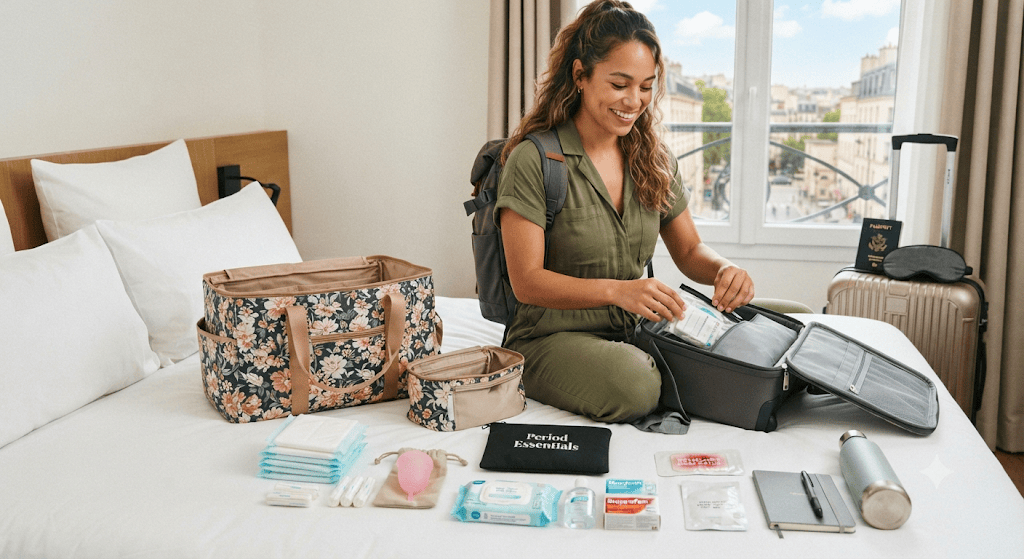
Traveling on Your Period: Products, Prep, and Peace of Mind

A trip landing right on your period can feel like an added complication on top of everything else travel already requires. With a bit of preparation, though, it’s entirely manageable — and doesn’t need to change how much you enjoy the trip.

Choosing the Right Product for the Trip

  • Menstrual cups work well for longer trips with limited access to frequent changing facilities, since they can be worn for extended periods safely
  • Period underwear is a low-effort backup or standalone option, especially useful on travel days involving long transit
  • Tampons or pads remain simplest for shorter trips or destinations where familiarity and convenience matter more than sustainability

Trying any new product well before the trip — not for the first time while traveling — avoids unnecessary stress from an unfamiliar routine.

Packing Smart

Carrying more supplies than you think you’ll need, plus a few extra just in case of delays or unexpectedly heavy flow days, avoids the stress of hunting for specific products in an unfamiliar place, especially abroad where preferred brands may not be available.

Managing Cramps While in Transit

Packing pain relief medication in your carry-on (not checked luggage), along with a small heating patch for long flights or train journeys, helps manage discomfort without needing to search for a pharmacy immediately upon arrival.

Hygiene During Long Travel Days

Wet wipes, a small pouch for used products, and hand sanitizer make managing hygiene easier during long flights, train rides, or bus journeys where clean facilities may not always be readily available.

Planning Activities Around Your Cycle, If Helpful

For trips with flexible itineraries, scheduling more intense activities (like a long trek or a full day of sightseeing) around lighter flow days, where possible, can make the overall trip feel more comfortable — though it’s entirely optional, not a requirement.

A Quick Pre-Trip Checklist

  • Pack more supplies than the trip length suggests you’ll need
  • Carry pain relief in your immediate hand luggage
  • Research pharmacy or product availability at your destination in advance
  • Pack a small, discreet hygiene pouch for transit days

Bottom Line

A period during travel isn’t a reason to alter plans or feel anxious about the trip — a little product preparation and a small hygiene kit handle most of what actually comes up. It’s a manageable, ordinary part of travel, not a genuine obstacle to it.

Women-Only Travel Groups: Are They Actually Safer?

Women-only travel groups have grown significantly in recent years, often marketed primarily around one promise: safety. But does traveling exclusively with other women actually reduce risk, or does the reassurance outpace the reality? Here’s a closer look.

What These Groups Typically Offer

Most women-only travel groups combine shared accommodation, pre-vetted itineraries, and — often the biggest draw — the reassurance of not navigating an unfamiliar destination entirely alone. Many also include a female trip leader with local knowledge of the destination.

Where the Safety Argument Genuinely Holds

Numbers do offer some real protection — a group is generally a less appealing target for harassment or theft than a lone traveler, and shared accommodation reduces the vulnerability of staying somewhere unfamiliar and unverified alone. A trip leader who knows the destination well also removes a lot of the guesswork that creates risk for solo, first-time visitors.

Where the Promise Gets Overstated

Group travel doesn’t eliminate risk — it changes its shape. Groups can still be pickpocketed, still encounter unsafe situations in transit, and group dynamics themselves can sometimes create their own friction or discomfort that has nothing to do with external safety at all.

It’s Not a Substitute for Basic Precautions

Some travelers relax basic safety habits once in a group setting, assuming numbers alone provide protection — skipping the same location-sharing or research they’d otherwise do solo. The safety benefit of a group is additive, not a replacement for individual awareness.

The Real Value May Be Different Than Advertised

For many participants, the standout benefit of women-only trips isn’t safety in the strictest sense — it’s the comfort of shared understanding, not needing to explain certain concerns, and often a stronger sense of connection with fellow travelers than mixed-group trips tend to produce.

What to Actually Check Before Booking One

  • The organizer’s track record and reviews from past participants, not just marketing claims
  • What’s actually included in terms of guide presence, accommodation vetting, and emergency support
  • Group size, since very large groups can dilute both the safety benefit and the personal connection that’s often the real draw

Bottom Line

Women-only travel groups do offer genuine practical benefits, but “safer” isn’t an automatic guarantee just because the group is exclusively female — it depends heavily on how well-organized and experienced the specific group actually is. They’re a solid option for many first-time or hesitant travelers, but not a replacement for ordinary travel safety awareness.

How to Plan a Girls’ Trip That Works for Every Budget in the Group

Group trips rarely fall apart over the destination — they fall apart over money. Someone wants a nicer stay, someone else is watching every rupee, and nobody wants to be the one who brings it up first. Here’s how to plan around that honestly.

Talk Budget Before Talking Destination

Choosing a destination first and discussing budget later almost guarantees mismatch — a dream location might be unaffordable for one or two people who then either overspend or drop out. Getting a rough number from everyone upfront should shape the destination choice, not follow it.

Use a Range, Not a Fixed Number

Asking “what’s your budget?” often gets vague or overly generous answers out of politeness. Asking for a comfortable range instead — “what’s the most and least you’d want to spend?” — tends to surface more honest numbers.

Separate “Must-Do” From “Nice-to-Have” Expenses

Splitting the trip into non-negotiables (accommodation, transport) and optional extras (spa day, a fancy dinner, shopping) lets everyone opt into the shared essentials while choosing individually on the optional spending, rather than forcing a single shared standard on everything.

Choose Accommodation With Flexible Options

Picking a stay with multiple room types — some shared dorms or triple rooms alongside private options — lets people self-select their comfort level and cost without an awkward conversation about who’s paying for what kind of room.

Avoid the “We’ll Split Everything Evenly” Trap

Splitting every cost evenly sounds fair but often isn’t — someone who skips the expensive dinner still ends up paying an equal share. Tracking who actually spent what, and settling based on real usage, avoids resentment that builds quietly over a trip.

Use a Shared Expense App

A simple shared-expense tracking app removes the awkwardness of manually calculating who owes what, and keeps the money conversation transparent and low-drama throughout the trip rather than as one big confrontation at the end.

Give Space for Someone to Opt Out of Certain Plans

Not every activity needs full group participation. Letting people skip an expensive add-on without guilt-tripping keeps the trip enjoyable for everyone, rather than pressuring the group into a single, uniformly priced experience.

Bottom Line

A girls’ trip that respects different budgets isn’t less fun — it’s usually more relaxed, because nobody’s quietly stressed about money the whole time. A little upfront honesty about spending goes further toward a good trip than any destination choice ever could.