The Rise of Women-Led Bird watching Tours in India

A Field That’s Been Mostly Male

Wildlife guiding in India has historically skewed heavily male, and birdwatching has been no exception, even though India is one of the world’s most visited destinations for it. That’s beginning to shift — slowly, through training programs and community initiatives that are putting binoculars in the hands of women who’d never held one before.

From First-Time Birders to Leading Tours

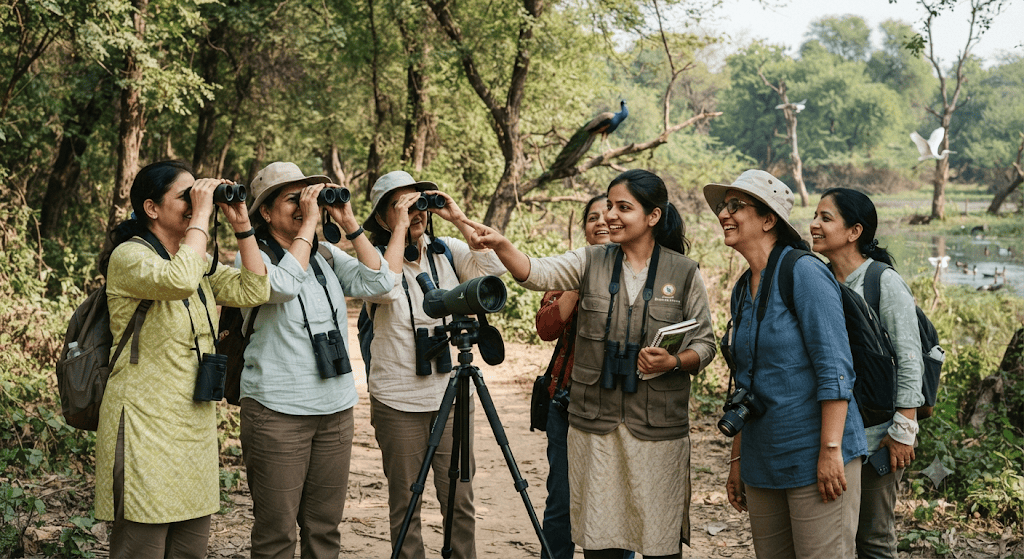
In Tadoba, a workshop introduced a group of women — many holding binoculars for the first time — to birdwatching as a guiding skill. Within months, the same women were leading birding teams during an annual bird race and actively contributing to citizen science challenges through platforms like eBird. What started as training became a new professional identity.

A Growing, Visible Community

Bird Count India’s ongoing “Women in Birding” profile series has featured women birders from cities, villages, coastal regions, mountains, forests and islands across the country — naturalists, researchers, hobbyists and citizen scientists, each with a different route into the field. Annual events like Big Bird Day have also become spaces where women birders explicitly build community and swap field notes, not just species counts.

Why This Matters for Travel

A women-led or women-friendly birding tour often changes more than who’s holding the binoculars — it can mean different pacing, different safety considerations and local knowledge shaped by a different relationship to the landscape. For women travellers specifically, it can also mean a more comfortable group dynamic for early-morning or remote outings.

How to Find and Support These Tours

  1. Look for women naturalists and guides at wildlife reserves and sanctuaries
  2. Follow regional birding clubs — many now have women coordinators
  3. Join citizen science birding events, which often include guided women-led walks
  4. Ask tour operators directly whether they employ women naturalists

Bottom Line

Birdwatching rewards patience over physical strength, which may be exactly why more women are finding their place in it — first as hobbyists, then increasingly as the ones leading others into the field.
How to Choose a Responsible Wildlife Safari Operator in India

Why the Operator You Choose Matters

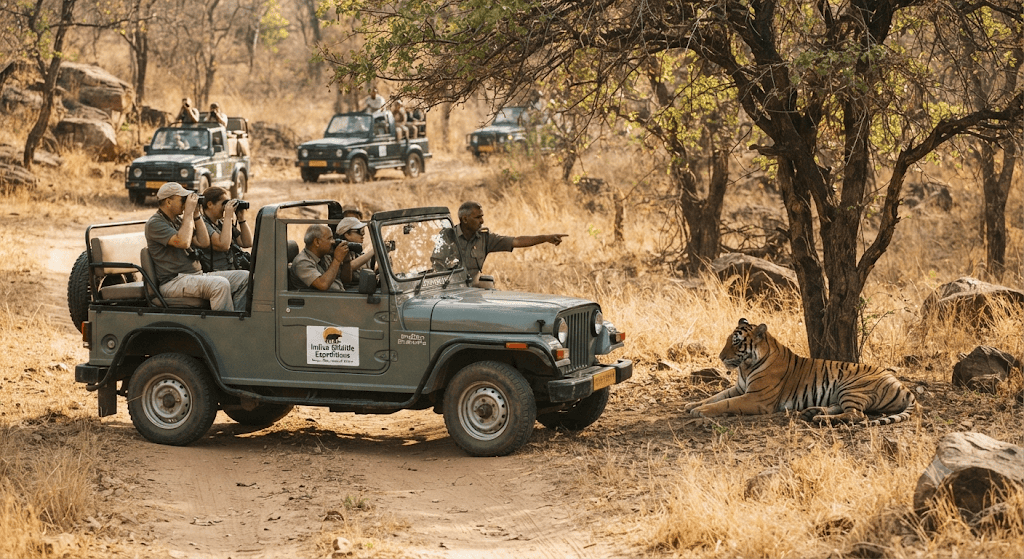
Tiger reserves and sanctuaries run on strict carrying-capacity rules — limits on how many vehicles and tourists can enter at a time. The National Tiger Conservation Authority’s own 2012 guidelines require tourist vehicles to stay a minimum distance apart to avoid crowding animals, and cap how much of a reserve’s area can be used for tourism at all. A good operator works within these limits. A bad one pressures forest guides to bend them for a better photo.

Recent Rules Are Getting Stricter, Not Looser

In November 2025, the Supreme Court tightened controls further — pushing tiger safaris toward buffer and non-forest land and banning night tourism in core zones. That direction matters for travellers too: an operator who still promises unrestricted night drives or guaranteed close-up sightings in core areas is not one working within current rules.

Signs of a Responsible Operator

  • Follows official carrying-capacity and vehicle-distance rules without complaint
  • Employs and trains local guides and drivers
  • Limits group size and vehicle speed inside the park
  • Briefs guests on not baiting animals, playing loud sounds or leaving the vehicle
  • Supports, or is transparent about, conservation or anti-poaching contributions
  • Doesn’t promise a guaranteed sighting — no ethical operator can promise wild animal behaviour

Questions to Ask Before Booking

  1. How many vehicles does your group send in per slot?
  2. What happens if we don’t spot the animal — do you follow the vehicle to force a sighting?
  3. Are your naturalists trained and are guides from the local community?
  4. What’s your policy on maintaining distance from animals?

Red Flags

  • Ads promising “100% tiger sighting”
  • Vehicles clustering around one animal
  • No mention of forest department permits
  • Guides encouraging loud calls or off-road driving to chase wildlife

Bottom Line

A responsible safari operator protects the very thing you paid to see. Choosing one carefully means fewer crowded jeeps around a stressed animal — and a better, more honest wildlife experience for you.

Women Rangers and Forest Guards Protecting India’s Wildlife

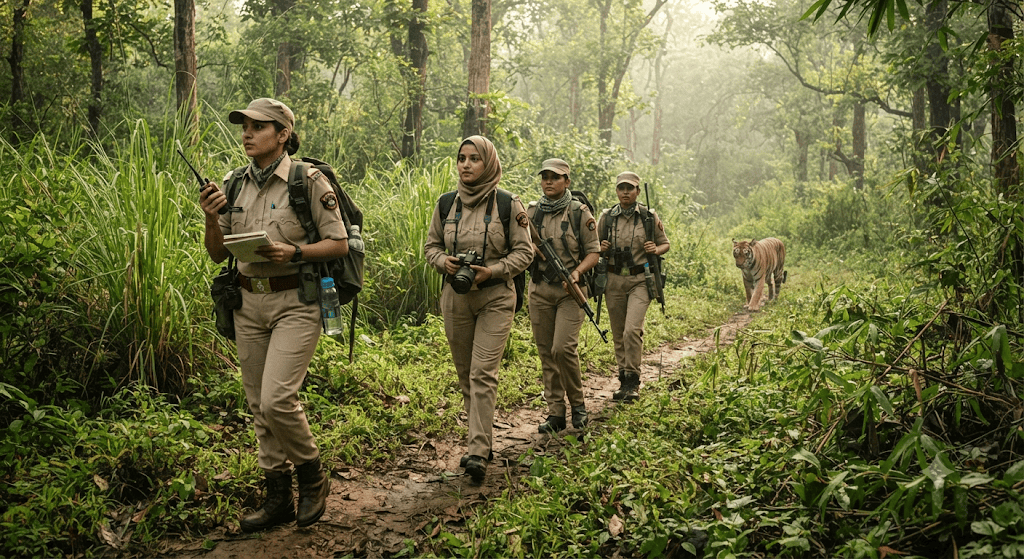
Forest protection has long been seen as a man’s domain in India — long patrols, physical risk, remote postings. But across the country’s reserves, thousands of women are now doing exactly this work, often in some of India’s most challenging terrain.

Gir National Park: The Lionesses of Gujarat

<cite index=”1-1″>Gujarat’s Gir Forest appointed its first batch of 51 women forest guards in 2007</cite>. These women patrol vast stretches of forest protecting the world’s only wild population of Asiatic lions, regularly handling wildlife rescues — from injured lion cubs to venomous snakes — as part of routine duty rather than exceptional heroics.

Kaziranga’s “Van Durgas,” Assam

<cite index=”3-1″>At Kaziranga National Park, female forest guards known locally as “Van Durgas” come from rural communities and work to protect wildlife and habitat across the park’s roughly 430 square kilometers</cite>. <cite index=”4-1″>The park now includes around 40 female rangers across roles like Range Officers, Forest Guards, and Foresters</cite>, alongside a dedicated women’s unit within the Special Rhino Protection Force guarding the endangered greater one-horned rhinoceros from poaching.

Dudhwa Tiger Reserve, Uttar Pradesh

<cite index=”6-1″>Dudhwa Tiger Reserve has recruited young men and women as forest watchers</cite>, with officials describing it as a pioneering effort to bring women into forest protection roles that had rarely included them before.

Gurukula Botanical Sanctuary, Western Ghats

<cite index=”7-1″>In Kerala’s Western Ghats, an all-female team of 27 women serves as guardians of the region’s rare and threatened plant species</cite>, working to protect biodiversity in one of the world’s most ecologically significant and endangered mountain ranges.

Why This Shift Matters

Beyond conservation outcomes, women forest guards often bring specific advantages — better rapport with village women during community conflict resolution, and a visible signal to younger women in these regions that this kind of work is possible for them too. Several of the women in these programs have spoken about how their entry inspired others locally to apply.

The Work Isn’t Symbolic

These aren’t ceremonial postings. Women forest guards conduct real patrols, handle wildlife emergencies, and in some cases carry weapons as part of anti-poaching units — work that comes with genuine physical risk and long stretches away from family, often in remote, difficult terrain.

Bottom Line

India’s forests are being protected, in real and growing numbers, by women who chose this work deliberately — not as an exception, but as a profession. Their presence is reshaping who gets to be seen as a protector of India’s wildlife, one patrol at a time.

A Weekend Guide to a Nearby Eco-Tourism Spot

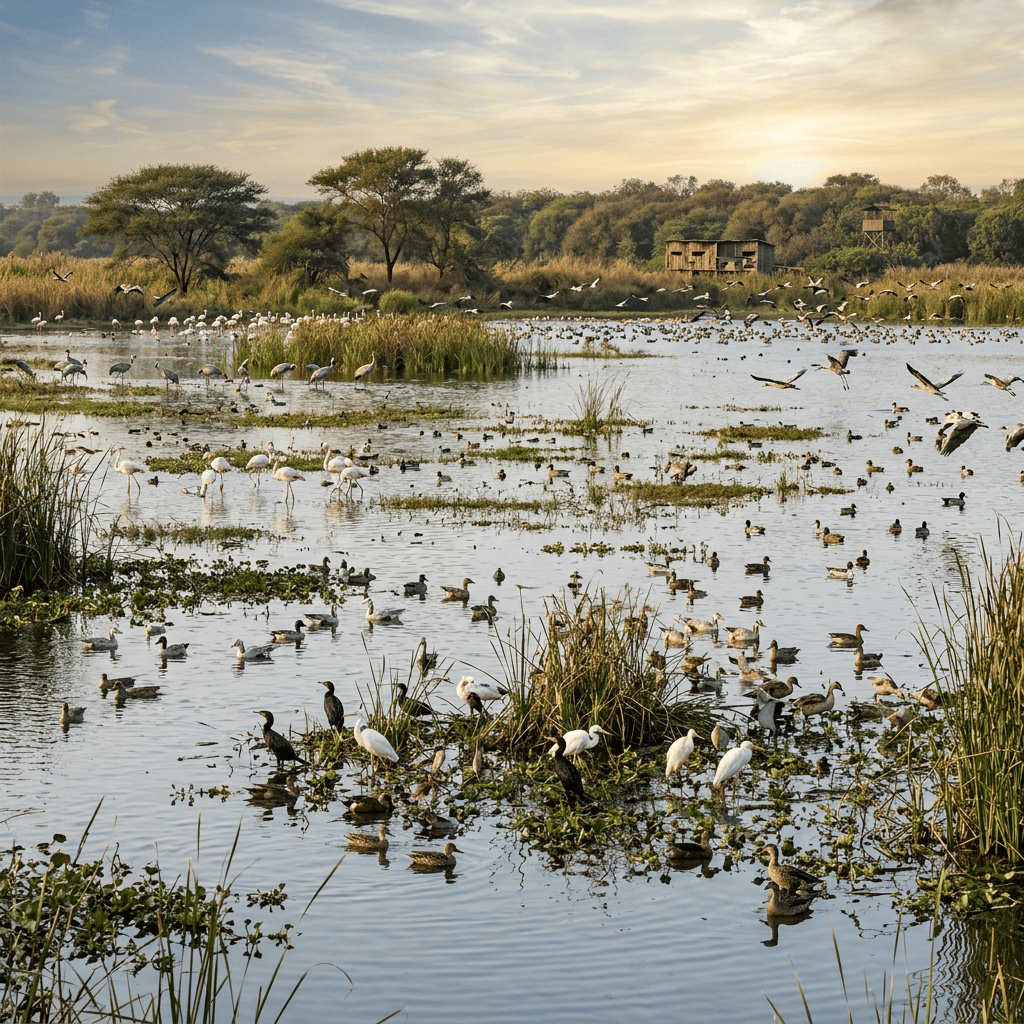
Wetland populated with numerous waterbirds including flamingos, egrets, and ducks, surrounded by trees and vegetation under a warm sunset sky

If you’re in Delhi NCR and craving a break from concrete and traffic, you don’t need to travel far. Sultanpur National Park, in Gurugram district, is one of the region’s best-kept eco-tourism gems — and it makes for a perfect one-day or half-day weekend trip.

About the Park

Sultanpur is a wetland sanctuary spread across roughly 142 hectares, located about 15 km from Gurugram and around 50 km from Delhi on the Gurgaon–Farukh Nagar Road. It began as a bird sanctuary in the early 1970s after ornithologist Dr. Salim Ali flagged the wetland’s ecological importance to the Haryana government, and it was upgraded to national park status in 1989. Today, it holds the distinction of being Haryana’s first Ramsar-designated wetland — a mark of international recognition for wetland conservation.

What You’ll See

The park is home to over 250 species of resident and migratory birds. Winter (roughly October to March) is peak season, when migratory visitors like Greater Flamingos, Northern Pintails, Eurasian Wigeons, and Bar-headed Geese arrive from as far as Central Asia and Siberia. Beyond birds, you may also spot jackals, mongooses, and nilgai (blue bulls) wandering the grounds.

Getting Around

The park has a network of walking trails circling the central marsh, along with four watchtowers (machans) for uninterrupted birdwatching. There’s also an Educational Interpretation Centre for first-time visitors who want context on the ecosystem before heading out on the trails.

Weekend Plan

  • Morning (7–10 AM): Best time for birdwatching, since birds are most active early. Carry binoculars if you have them.
  • Mid-morning: Walk the marsh-side trails and climb a watchtower or two.
  • Before noon: Head back before the sun gets too strong, especially outside winter months.

Practical Tips

  • Entry has a nominal fee, with separate charges for camera equipment — check current rates before you go.
  • The nearest railway stations are Gurugram, Garhi Harsaru, and Farrukhnagar; the nearest airport is Indira Gandhi International.
  • Winter is the best season to visit; summers get hot, and monsoon can make some patches harder to access.
  • Basic facilities like parking, toilets, and drinking water are available on site.

Why It’s Worth the Trip

You don’t always need a hill station or a beach for a proper reset. A few hours by a quiet wetland, watching flamingos wade through still water, does the job just as well — and it’s close enough to fit into a single weekend morning.